You are flying to South Korea with fresh fruit, dried snacks, seeds, or a small plant packed in your luggage. Will airport customs allow you to bring them into the country?
South Korea prohibits travelers from importing fresh fruits and fruit-bearing vegetables under its general plant quarantine rules. Other plants, seeds, and agricultural products may require declaration, inspection, and supporting certificates. The rules apply even when the items are intended for personal use or given as gifts.
Here is how to distinguish prohibited items from products that may be eligible for inspection, and what to do before leaving the airport.
Why Korea Restricts Plants and Agricultural Products
South Korea applies plant quarantine controls to prevent foreign pests and plant diseases from entering the country.
A piece of fruit or a small seed packet may seem harmless, but plant material can carry insects, pathogens, or other organisms.
The Animal and Plant Quarantine Agency (APQA) is responsible for the relevant plant quarantine system.
The official Incheon International Airport plant quarantine guide explains that plants brought from abroad must be declared and inspected.
It also identifies fresh fruits and fruit-bearing vegetables as prohibited imports under the general passenger rules.
These restrictions are separate from ordinary baggage weight limits or airline food policies.
An airline allowing an item in checked baggage does not mean Korean quarantine authorities will permit its importation.
Can You Bring Fresh Fruit Into Korea?
Generally, no.
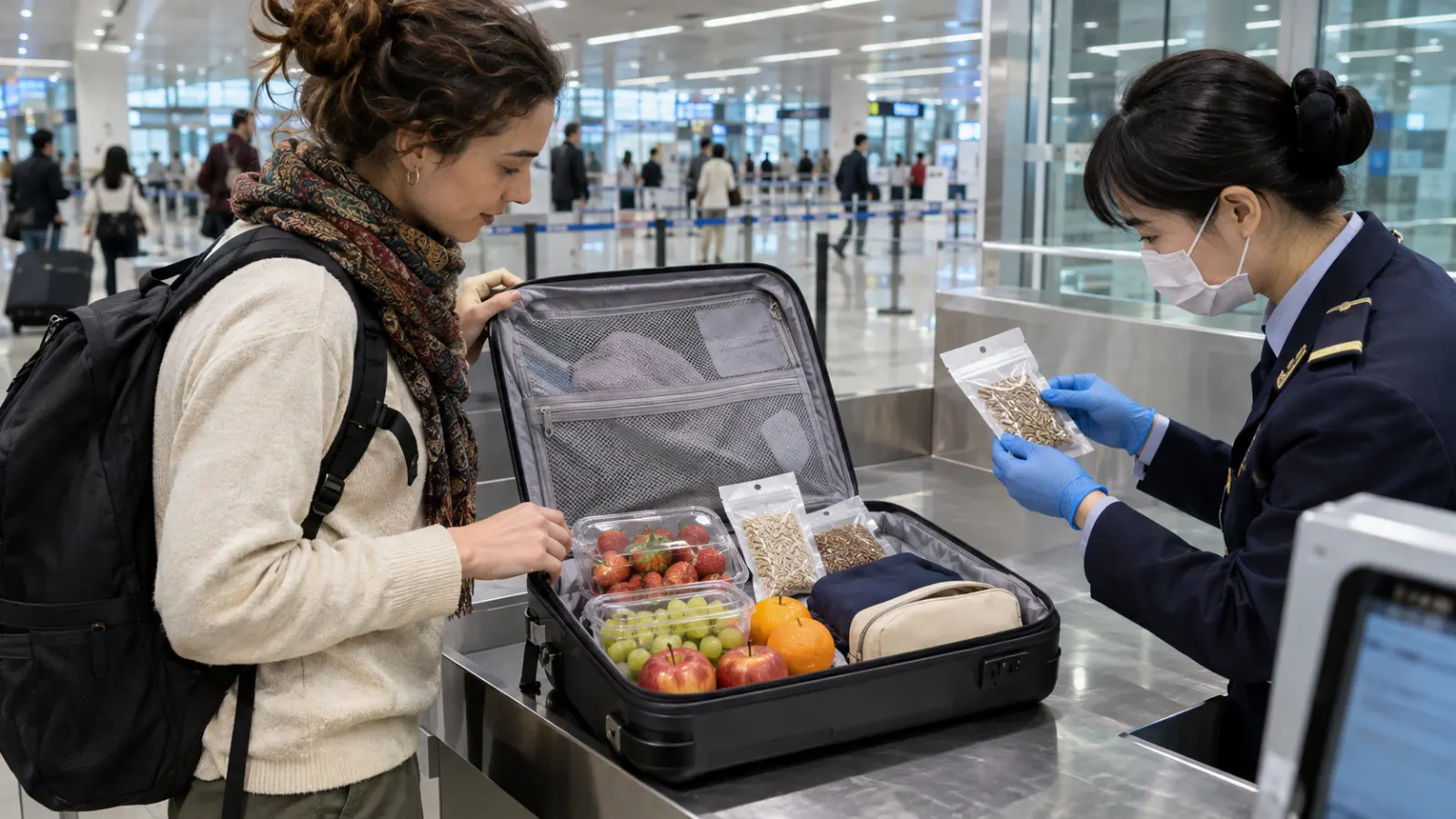
Incheon International Airport's official guidance identifies all fresh fruits and fruit-bearing vegetables as prohibited imports.
Examples of items travelers should not pack for entry include:
- Fresh apples
- Oranges
- Mangoes
- Grapes
- Fresh tomatoes
- Other fresh fruits and fruit-bearing vegetables
Do not assume that a small quantity is exempt.
The restriction is not based solely on whether the fruit is commercially packaged or intended for resale.
A single piece of fruit carried as a snack can still be subject to the prohibition.
What If You Bought Fruit at the Departure Airport?
Buying an item inside an airport does not automatically exempt it from Korean import rules.
If you purchase fresh fruit before boarding an international flight, do not assume that it can be brought through Korean arrival procedures.
Consume or otherwise handle the item in accordance with the airline's and destination airport's rules before reaching the Korean customs and quarantine process.
Do not attempt to conceal it in your luggage.
Can You Bring Seeds Into Korea?
Seeds are treated differently from ordinary processed food.
According to the airport's official plant quarantine information, seeds, seedlings, bulbs, and other plants intended for cultivation require a phytosanitary certificate issued by the exporting country.
A phytosanitary certificate is an official document issued by a plant protection authority.
It supports the quarantine process by certifying relevant plant-health information.
However, possessing a certificate does not automatically guarantee that the plant or seed is eligible for import.
The specific species, country of origin, and applicable restrictions still matter.
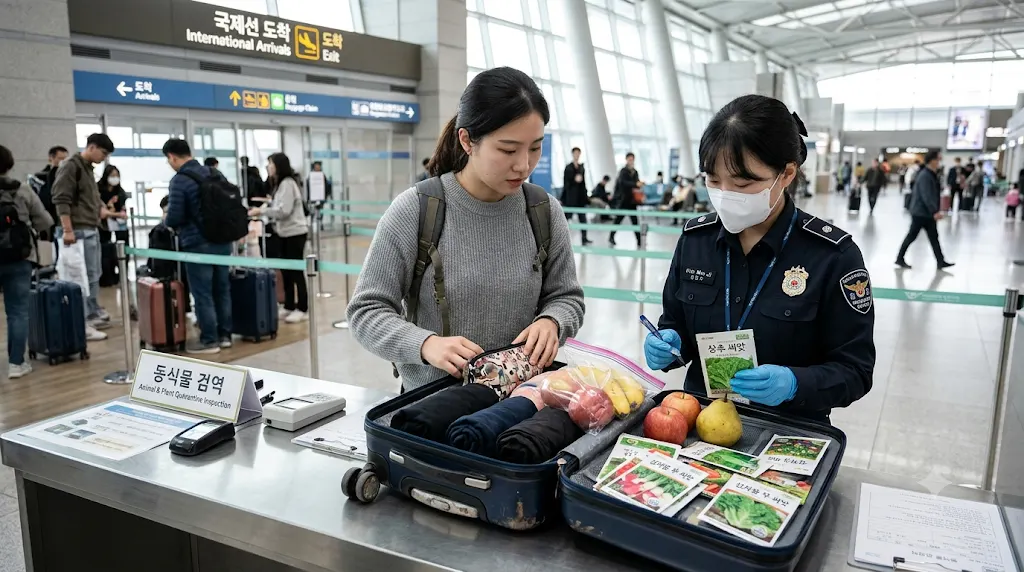
Before Packing Seeds
If you intend to bring seeds for planting:
- Identify the exact plant species.
- Check whether importation from the country of origin is permitted.
- Determine whether a phytosanitary certificate is required.
- Obtain the appropriate official certificate before departure.
- Declare the seeds upon arrival.
- Follow the inspection instructions of the Korean quarantine authority.
If you cannot confirm the requirements before traveling, do not assume that a commercial seed packet is sufficient.
What About Potted Plants and Cuttings?
Live plants and plant parts can also be subject to quarantine requirements.
For example, a small potted plant purchased abroad is not automatically treated as an ordinary personal souvenir.
The soil, roots, plant species, and origin may create additional restrictions.
The general passenger guidance requires declaration and inspection of plant products.
If you are moving to Korea and want to bring a houseplant, contact APQA before arranging transport.
Do not rely only on a shipping company's statement that it can carry the item.
Transportation acceptance and import eligibility are separate questions.
Are Processed Foods Allowed?
Some processed plant-based foods are treated differently from fresh agricultural products.
The official Incheon Airport guidance identifies cooked or prepared plant-based foods, including examples such as kimchi and rice cakes, as products not subject to the same plant quarantine inspection requirement.
However, this does not mean every packaged food is unrestricted.
A product may contain ingredients subject to separate animal quarantine, food safety, or customs requirements.
For example, a packaged snack containing meat or other animal-derived ingredients may raise questions beyond plant quarantine.
What About Dried Fruit?
Do not assume that every dried fruit product is automatically permitted.
The treatment can depend on the product's processing method, ingredients, origin, and classification.
The official airport guidance reviewed for this article does not establish a universal exemption for all dried fruits.
If you are carrying an unusual dried agricultural product, confirm its eligibility with APQA before departure.
What Happens at the Airport?
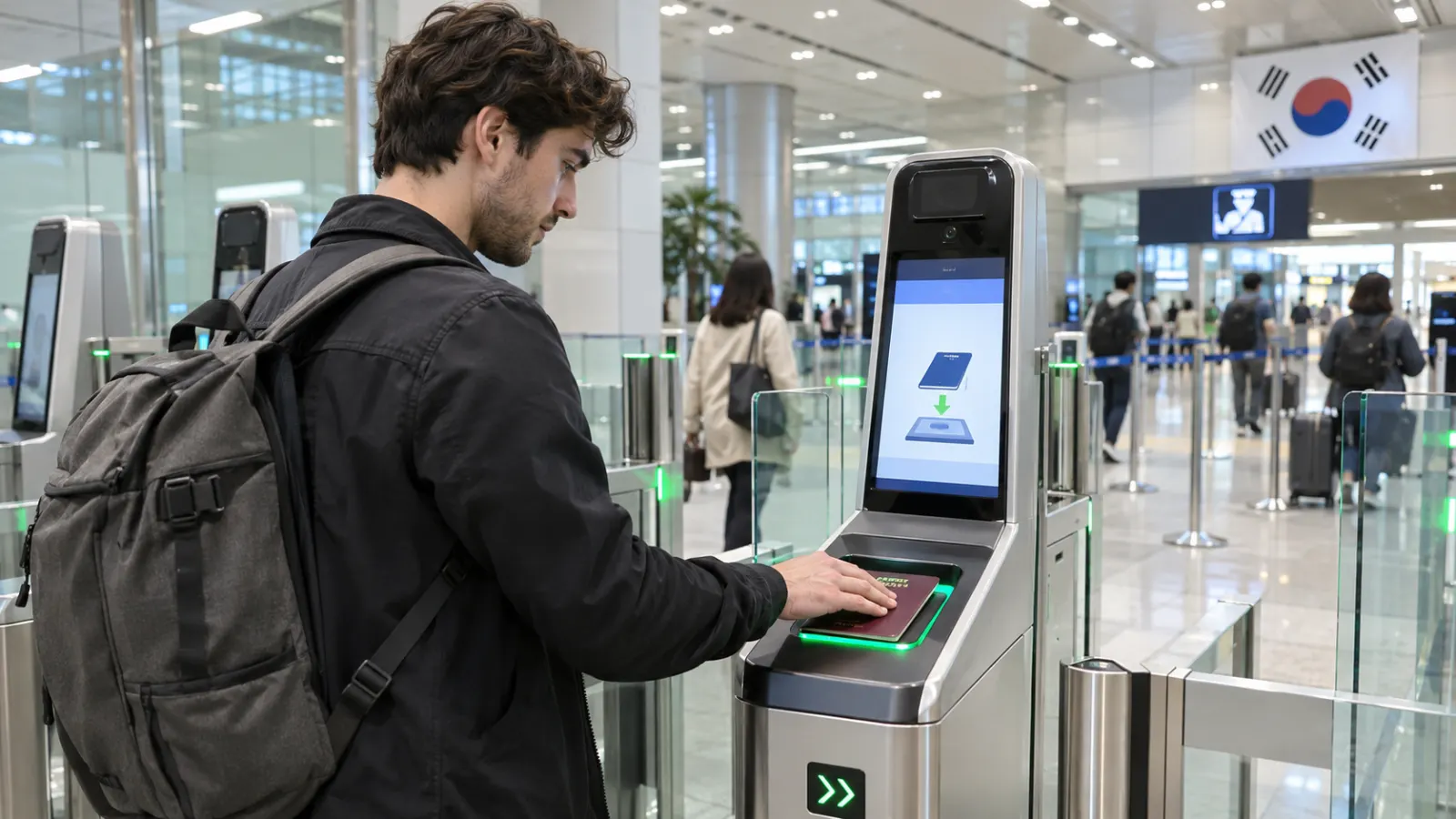
When entering South Korea, travelers carrying plants or plant products subject to declaration must follow the quarantine procedure.
Step 1: Identify Items Before Arrival
Check your luggage for:
- Fresh fruits or vegetables
- Seeds
- Bulbs
- Seedlings
- Live plants
- Other agricultural or plant materials
Do this before reaching the customs and quarantine inspection area.
Step 2: Declare the Items
If you are carrying items requiring plant quarantine declaration, inform the appropriate officials.
Do not assume that declaring an item means it will be admitted.
Declaration allows the authorities to determine how the item must be handled.
Step 3: Present Supporting Documents
For eligible plants or seeds requiring phytosanitary certification, provide the appropriate documents.
The certificate must meet the applicable import requirements.
Step 4: Follow the Inspection Result
The quarantine authority determines whether the item may enter Korea.
Depending on the item and applicable rules, an inspection may result in admission, further action, or refusal.
Do not remove an item from quarantine control without authorization.
What Happens If You Fail to Declare Plants?
The official Incheon Airport guidance warns that fines can be imposed for illegally importing plants without undergoing quarantine inspection.
The precise consequences depend on the violation and applicable rules.
Do not assume that a small item will automatically be overlooked.
If you discover that you packed a prohibited or questionable plant product, disclose it to the relevant officials rather than attempting to conceal it.
Does Checked Baggage Make a Difference?
No general exemption applies simply because an item is packed in checked luggage rather than carried onboard.
Quarantine restrictions concern what enters the country.
A prohibited fresh fruit does not become permissible because it is inside a suitcase.
Likewise, a plant requiring a phytosanitary certificate does not become exempt because the airline accepted it as baggage.
Always check both airline transport rules and Korean import requirements.
Who Should You Contact Before Traveling?
The Animal and Plant Quarantine Agency operates plant quarantine services at Incheon International Airport.
The airport's official quarantine information lists the following plant quarantine contacts:
| Airport terminal | Contact |
|---|---|
| Terminal 1 | 032-740-2079 |
| Terminal 2 | 032-740-2002 or 032-740-2020 |
For more detailed plant import requirements, consult the Animal and Plant Quarantine Agency.
If you plan to bring seeds, a live plant, or another unusual agricultural product, provide the scientific or commercial species name and country of origin when asking about eligibility.
That information is often necessary to determine which rules apply.
Common Mistakes to Avoid
Mistake 1: Assuming Personal Gifts Are Exempt
A fruit or plant does not become exempt merely because it is intended for a friend.
Mistake 2: Treating Seeds Like Ordinary Packaged Snacks
Seeds intended for cultivation can require official phytosanitary documentation.
Mistake 3: Assuming Airport Purchases Are Automatically Allowed
The place of purchase does not override Korean import restrictions.
Mistake 4: Confusing Airline Baggage Rules With Quarantine Rules
Airlines and quarantine authorities regulate different aspects of travel.
Mistake 5: Assuming Every Processed Food Is Permitted
Processed products may still be subject to other customs, animal quarantine, or food safety requirements.
Before You Fly: A Plant Quarantine Checklist
- Remove prohibited fresh fruits and fruit-bearing vegetables from luggage intended for entry.
- Identify any seeds, plants, bulbs, or agricultural products.
- Check whether the specific product is eligible for import.
- Obtain required phytosanitary documentation before departure.
- Declare items subject to quarantine upon arrival.
- Follow the inspection result before taking items into Korea.
These procedures are based on Incheon International Airport and Korean quarantine authority information checked on November 11, 2026.
Import eligibility can vary by plant species, country of origin, and product condition, so confirm unusual items directly with APQA.
Quick Summary
- Fresh fruits and fruit-bearing vegetables are prohibited under Korea's general passenger plant quarantine rules.
- Seeds, seedlings, bulbs, and plants intended for cultivation may require phytosanitary certification and inspection.
- Processed foods are not automatically subject to the same restrictions, but their ingredients and classification matter.
- Declare plant products when required and confirm uncertain items with the Animal and Plant Quarantine Agency before flying.