Korean taxis are cheap by big-city standards, available at almost any hour, and very easy to use once you know the app. Taxis in Korea can be hailed on the street, at a stand, or through an app like Kakao T, and the main trap for visitors is not the ride itself but payment, language, and surcharges. Knowing which taxi to pick and how the fare works avoids most of the friction.
Here is how the system works, what to expect on the meter, and how to deal with the problems that come up.
The Quick Answer: How to Get a Taxi
- Street hailing: look for a car with a lit "empty" sign on the dashboard or roof and raise your hand. This works well in busy areas.
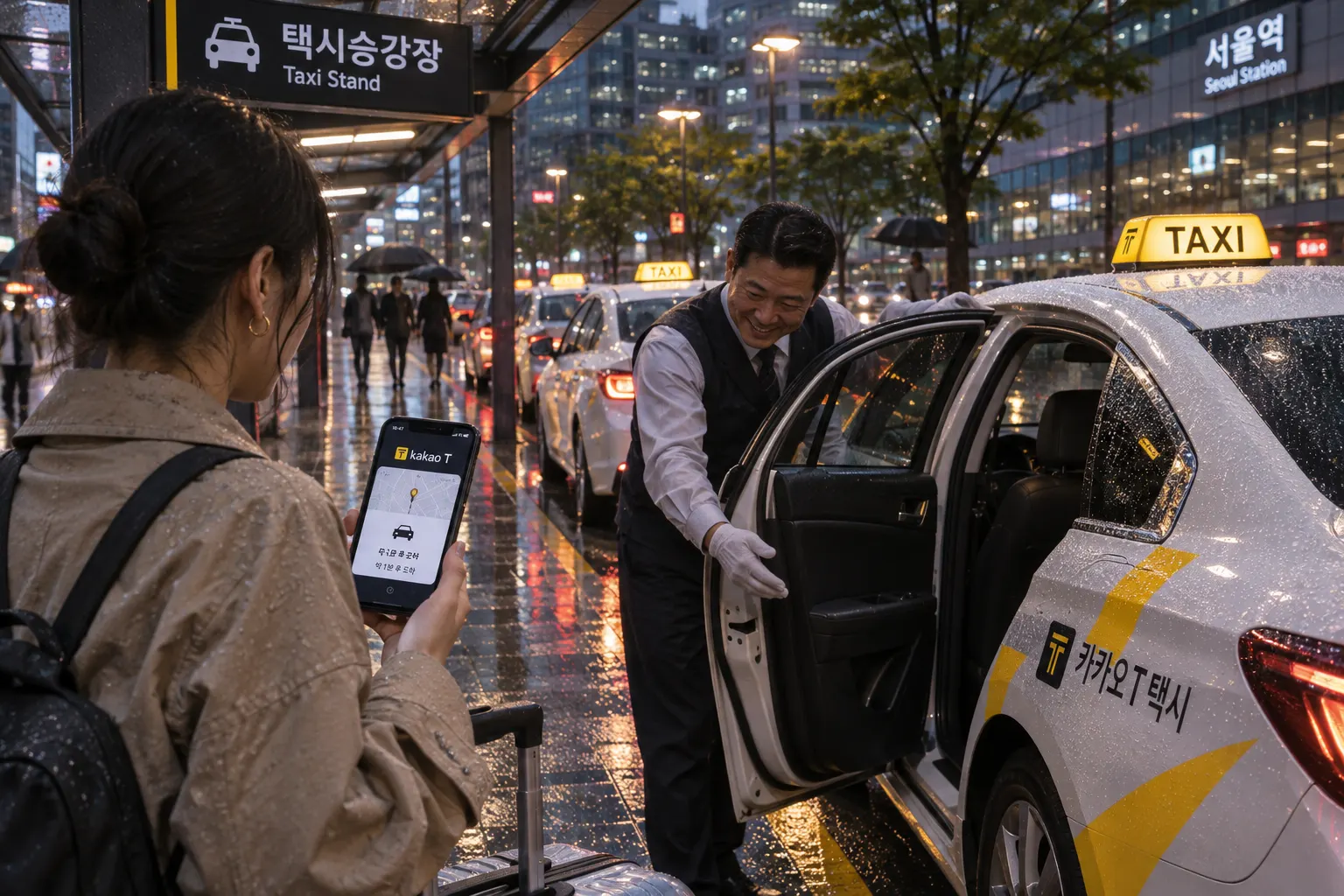
- Taxi stands: found near stations, hotels, and shopping areas, where taxis queue.
- Apps: Kakao T is the most widely used taxi app, and Uber operates as a taxi-hailing service in Korea through a local partnership. Check which app currently works best with your payment method.
At peak times, in the rain, or in less central areas, an app is usually faster than waving at the road.
Types of Taxis
- Regular taxis (일반택시) are the standard option and the cheapest.
- Deluxe taxis (모범택시) are black cars with higher fares, a more consistent service level, and usually no extra call fee.
- Large or van taxis suit groups or luggage and cost more.
Some app tiers promise a higher service level in exchange for a higher call fee. Choose them when you value reliability over price.
How Fares Work
Taxis use a meter. Seoul's fares have been raised several times in recent years, so check the posted fare rather than relying on an older figure. The main components are:
- Base fare for the first stretch, then distance and time charges
- Late-night surcharge, which starts in the late evening and rises in the early hours
- Call fee, added when you book through an app, which can rise during peak demand, and priority call options cost extra
- Tolls, which are paid by the passenger on toll roads
Tipping is not expected, so round-ups are a courtesy, not a custom.
Paying for the Ride
You can usually pay by cash, a credit or check card, a T-money card, or through the app. Payment is where foreign visitors run into the most trouble:
- Foreign cards may not be accepted by every driver's terminal, so carry some cash or a T-money card as a backup, as covered in the payment norms guide.
- App accounts may require a Korean phone number or a verified payment method. Kakao T has been expanding English and foreign-card support, but check what your own setup allows.
- Uber can be easier for some visitors because payment runs through your Uber account, though availability and rules change.
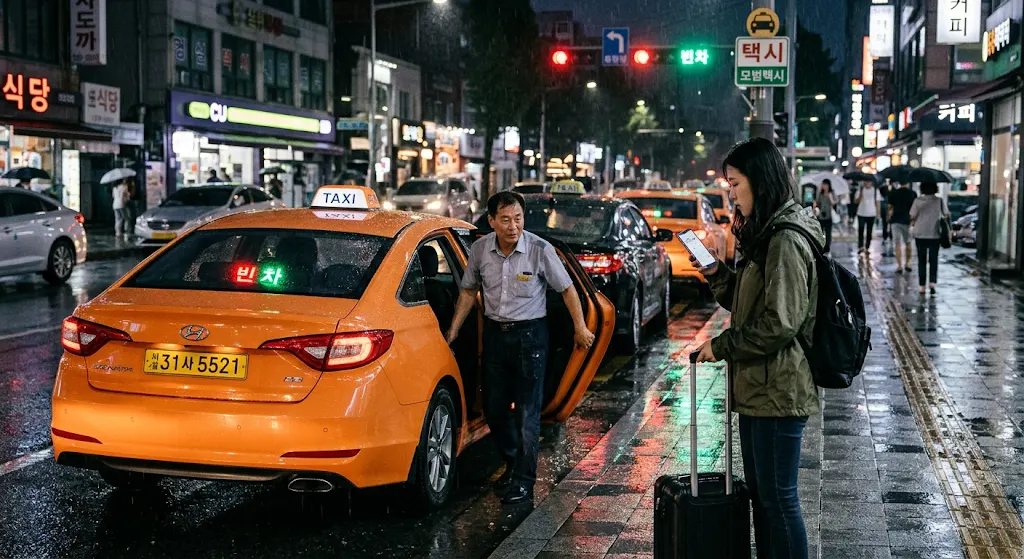
Telling the Driver Where to Go
You do not need to speak Korean if you prepare:
1. Set the destination in the app, which sends it to the driver.
2. Show the address in Hangul on your phone, copied from Naver Map or Kakao Map, if you hail on the street.
3. Name a landmark or subway exit if the address is unclear.
Most drivers use navigation, and many will confirm the destination with a nod or a repeat of the name.
Late at Night and After the Subway Stops
Subway service in big cities runs until around midnight or a little after. After that, taxis are the main option, along with night buses in some cities, such as Seoul's owl buses. Expect surcharges and long waits for taxis around closing time in busy nightlife districts, so book through the app early or walk to a quieter street.
When Things Go Wrong
- A driver refuses your ride. Refusing a passenger is not allowed. You can report it through the app or the city's call center, such as Seoul's 120 Dasan Call Center, which can assist in several languages.
- You left something in the car. Use the ride history in the app to contact the driver, or call the taxi company or the call center with the time and route.
- The fare seems wrong. Check that the meter was running and look at the receipt, which shows the route and fare.
Use licensed taxis only, and wear your seatbelt, since the rules apply in the back seat too.
Common Mistakes
- Relying on a foreign card alone. Carry cash or a T-money card.
- Hailing at a busy corner at closing time. Use an app or walk a short distance.
- Forgetting the call fee and surcharges. The final fare can differ from the estimate.
- Not having the destination in Hangul. It saves time and confusion.
- Taking unlicensed rides. Stick to marked taxis and app-booked cars.
Quick Summary
- In Korea you can hail taxis on the street, at stands, or by app, and Kakao T and Uber are the main apps, with payment support differing by account.
- Regular taxis are the cheapest, deluxe taxis cost more, and fares include a base charge, late-night surcharges, and app call fees.
- Carry cash or a T-money card as backup, and show your destination in Hangul if you do not use an app.
- After the subway stops, expect surcharges and waits, and report refusals or lost items through the app or the city call center.