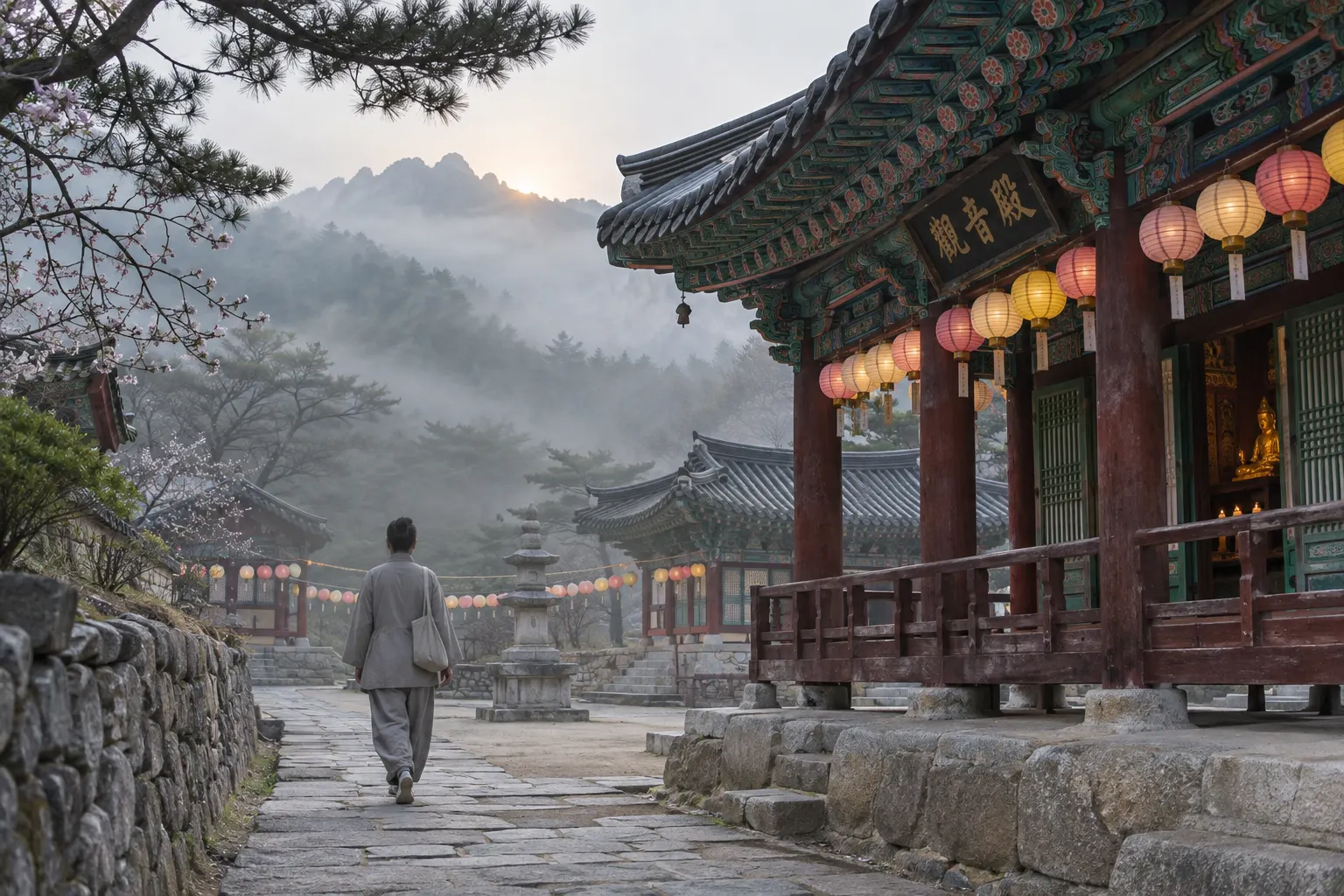
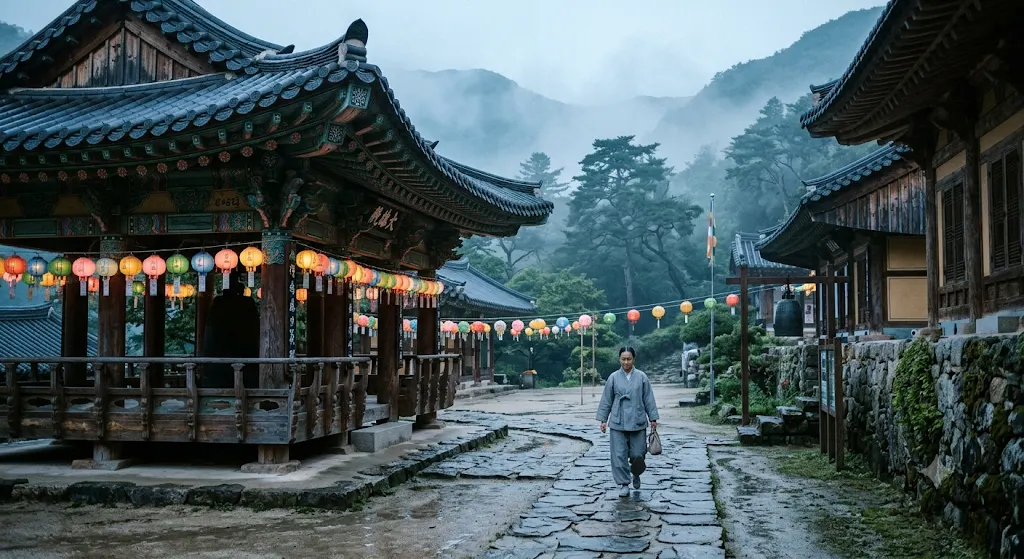
A temple stay in Korea is an overnight program at a working Buddhist temple, where you sleep in a simple room, eat temple food, and join meditation and chanting alongside the monks. You do not need to be Buddhist, and no Korean is required at temples that welcome foreign guests. The real adjustments are the early wake-up, the quiet rules, and the very basic facilities, so knowing the routine beforehand makes the stay far more enjoyable.
Here is how the programs work, what they cost, and what to expect from the first evening to the morning check-out.
The Quick Answer: Two Types of Programs
- Rest-type (휴식형): a quieter stay with a lighter schedule, suited to people who mainly want to relax in the temple setting.
- Experience-type (체험형): a guided program with meditation, prostrations, tea, lantern making, and other activities.
Many temples offer both. Stays commonly run one or two nights, with shorter day programs also available.
How to Book
The official temple stay program lists participating temples, programs, and prices. Its English site is https://eng.templestay.com, where you can choose a temple, check availability, and book online. Some programs offer English-speaking guidance, but not all, so confirm this before paying.
Weekends, autumn foliage season, and major holidays fill up quickly, so book a few weeks ahead for popular temples. Cancellation rules vary by temple, so read them at checkout.
What It Costs
Prices vary by temple and program, but an overnight stay often falls somewhere around 50,000 to 100,000 KRW per person, usually including lodging, meals, and activities. Day programs generally cost less. Confirm the current price and what is included on the booking page.
A Typical Schedule
Schedules differ, but most overnight programs follow a similar rhythm:
1. Afternoon arrival: check in, receive loose temple clothing, and get a short orientation.
2. Early evening: a simple dinner, then evening chanting (예불).
3. Night: meditation or a tea talk, with lights out around 9 pm.
4. Before dawn: wake-up around 3:30 or 4 am, followed by dawn chanting and meditation.
5. Morning: a formal temple meal (발우공양), activities such as 108 prostrations or a walk, and check-out late morning.
The early start is the part visitors remember most. Going to bed on time helps.
Temple Food and Rules
Temple food (사찰음식) is vegetarian, and traditionally avoids strong-flavored vegetables such as garlic and onion. The formal meal has its own etiquette, where you take only what you can finish and clean your bowl. Tell the temple about allergies when you book.
Common rules include:
- No alcohol or smoking
- Quiet during set periods and in prayer halls
- Phones silenced, and sometimes restricted during programs
- Modest clothing and shoes removed before entering buildings
- Photography limited inside the main hall, and permission needed before photographing monks
You are not expected to convert or practice. Respectful participation is enough.
What to Bring
- Warm socks and layers, since rooms can be cold, especially in winter
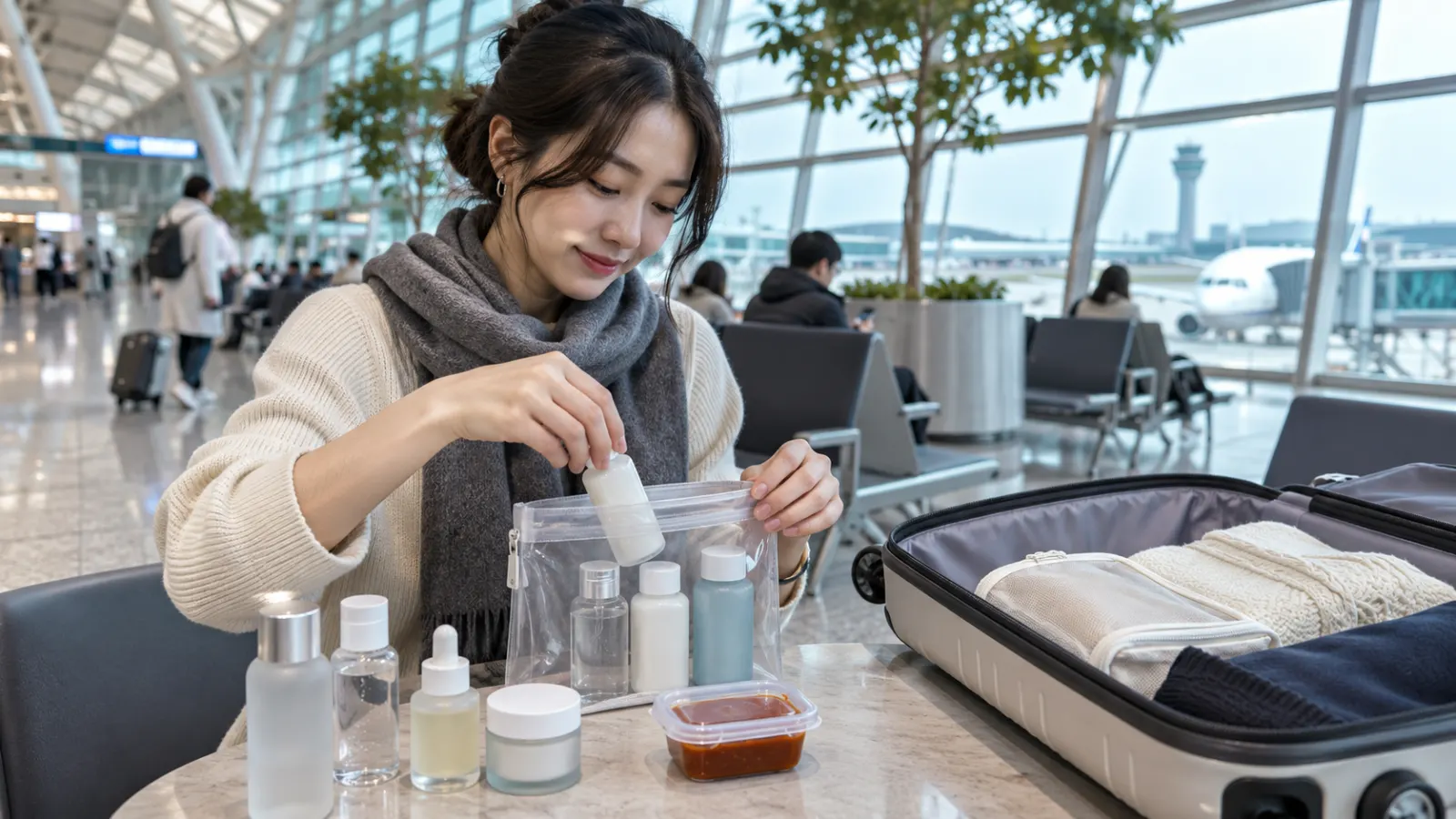
- Basic toiletries, because supplies can be limited
- A small flashlight or phone light for early walks
- Comfortable underlayers, since temple clothes are loose and unisex
Rooms are usually shared by gender, with sleeping mats on a heated or unheated floor. Private rooms are limited, so ask if you need one.
Choosing a Temple
- City temples, such as Bongeunsa in Seoul, are convenient and suit shorter schedules.
- Mountain and coastal temples, such as Haeinsa and Beomeosa, add scenery and a stronger retreat feel, but need more travel time.
- Specialty programs, such as Golgulsa's martial arts experience, suit visitors who want something more active.
Check how to reach the temple, because some require a bus plus a taxi or walk, and arrival times can be strict.
Common Mistakes
- Expecting a spa-style stay. Facilities are basic and the schedule is firm.
- Arriving late. Programs start at set times.
- Not checking English support. Guidance may be in Korean only.
- Skipping warm clothes. Cold rooms are a common complaint.
- Treating it as a photo stop. Respect the quiet and the monks' privacy.
Quick Summary
- Temple stays are overnight programs at Buddhist temples with meditation, temple food, and chanting, open to visitors of any background.
- Book through the official Templestay site, and expect prices around 50,000 to 100,000 KRW per night, with weekends and autumn filling early.
- Plan for a very early wake-up, vegetarian meals, quiet rules, and simple shared rooms.
- Pack warm layers and toiletries, confirm English support, and check transport to the temple before you go.