Finance
How Korean Digital Tax Filing (Hometax) Works for Freelancers
By New In Korea TeamPublished Updated
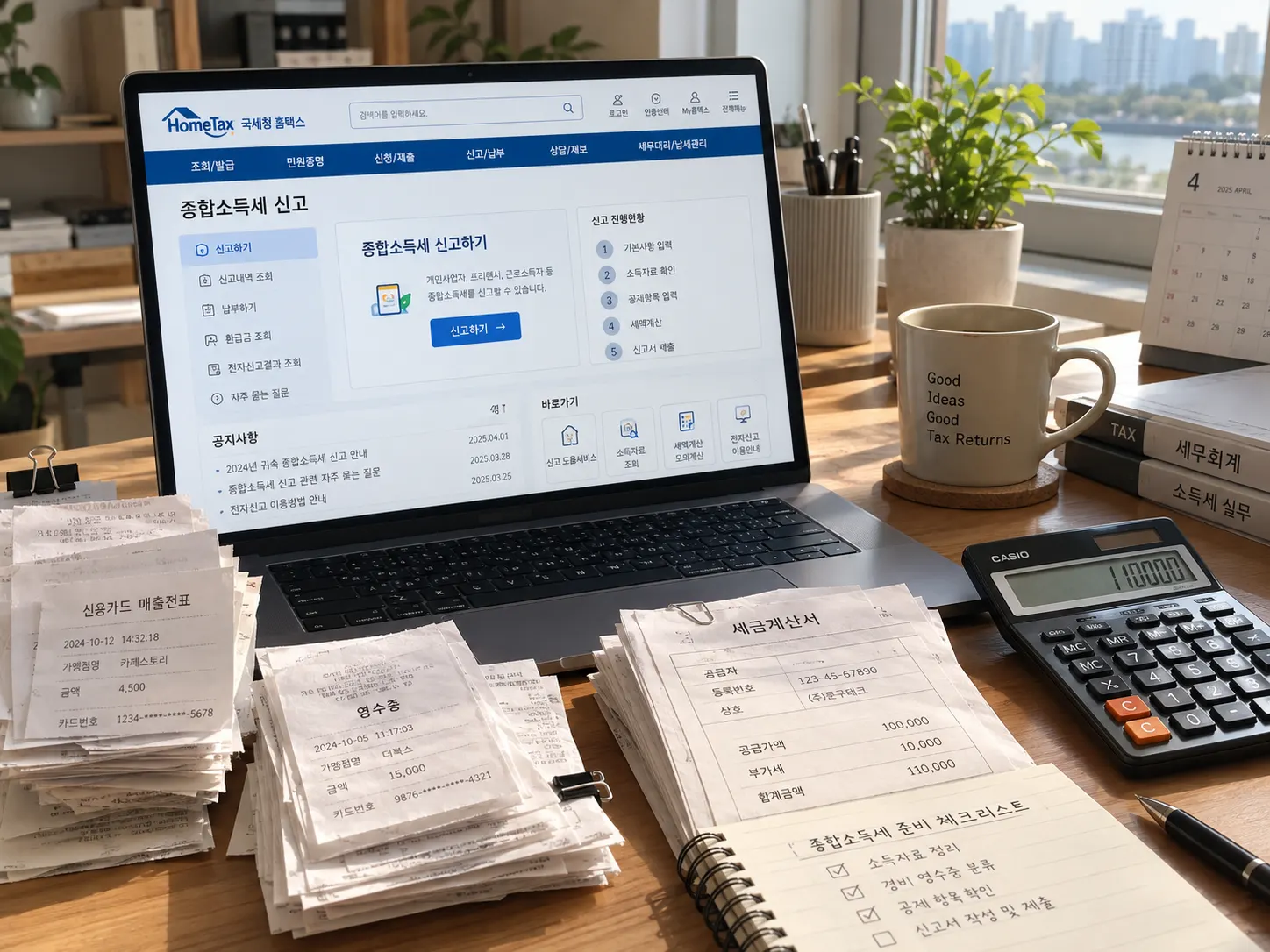
If you're a freelancer or sole proprietor in Korea trying to file taxes through Hometax for the first time, and found the interface overwhelming with Korean-only menus and unfamiliar terminology, understanding the actual filing workflow, what documents you need pulled together beforehand, and which specific filings apply to your situation helps you navigate this system methodically rather than getting lost in an unfamiliar government portal.
Here's how Hometax tax filing actually works for freelancers and small business owners in Korea.
What Hometax Actually Handles
- Hometax (홈택스), run by the National Tax Service, serves as the central digital portal for the majority of Korean tax administration, VAT filing, income tax filing, tax invoice issuance, and various certificate requests, functioning as the primary interface between individual taxpayers and businesses and Korea's tax authority.
- For freelancers specifically registered as sole proprietors, as covered in how to register as a freelancer in Korea, Hometax becomes a regularly used tool rather than something accessed only once annually, VAT filing occurs twice yearly, income tax filing annually, and tax invoicing happens as needed for client billing.
- Access requires your business registration number and appropriate digital verification, generally a Korean digital certificate or increasingly simplified authentication methods, similar to the verification patterns covered in how Korean websites verify identity, setting up this access properly before you actually need to file avoids a time-pressured scramble near a filing deadline.
VAT Filing for Freelancers
- VAT filing occurs twice per year, covering the first and second halves of the year respectively, with specific filing deadlines you'll need to track, understanding your specific filing calendar and marking these deadlines matters significantly given the penalties for late filing.
- Gathering your income and expense documentation before beginning the actual filing process, invoices issued, business expense receipts, and any tax invoices received from vendors, having this organized in advance makes the actual Hometax filing process considerably smoother than attempting to gather documentation while simultaneously navigating the filing interface.
- Understanding your specific VAT exemption or simplified treatment status, some freelance categories, as covered in how business registration categories affect foreign entrepreneurs, qualify for VAT exemption or simplified treatment, confirming your specific category's actual VAT obligation before filing matters for accuracy.
Annual Income Tax Filing
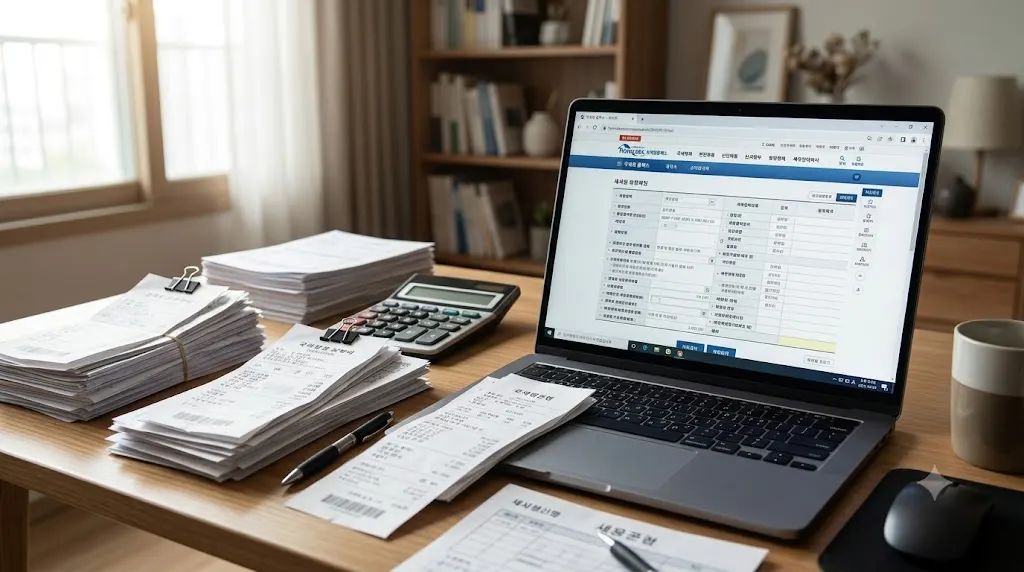
- Annual income tax filing (종합소득세 신고) happens in May for the previous year's income, distinct from the year-end tax settlement process that applies primarily to standard employees, as covered in how year-end tax settlement works for foreign workers, freelancers file this annual comprehensive income tax return instead.
- Deductible business expenses meaningfully reduce your taxable income, keeping organized records of legitimate business expenses throughout the year, rather than trying to reconstruct this documentation during filing season, matters significantly for accurate and favorable filing.
- Understanding whether you need professional help for your specific filing complexity, a simple, single-income-source freelance situation may be manageable independently through Hometax's guided filing process, while more complex situations, multiple income sources, significant deductions, or general unfamiliarity with the system, often benefit from working with a Korean tax accountant, particularly for your first filing cycle.
Practical Tips for Using Hometax as a Foreign Freelancer
- Use the browser and system requirements Hometax specifies, older government platforms in Korea sometimes have specific technical requirements, particular browsers or security software, checking current requirements before attempting to file avoids technical frustration unrelated to the actual tax content itself.
- Take advantage of Hometax's guided filing wizards where available, rather than attempting to navigate the full manual filing interface, many routine filings offer a more guided, step-by-step process considerably more manageable for someone unfamiliar with the full system.
- Keep records of previous filings accessible, both for your own reference and because certain follow-up questions or corrections sometimes reference prior filing history, maintaining organized digital records of your own filing history alongside the official Hometax records provides useful backup.
Common Mistakes Foreign Freelancers Make
- Missing filing deadlines, given the twice-yearly VAT and annual income tax filing calendar, not tracking these specific dates proactively can result in penalty charges for late filing.
- Not maintaining organized expense documentation throughout the year, attempting to reconstruct a full year's business expense records during filing season, missing legitimate deductions simply due to disorganized recordkeeping.
- Attempting a complex first filing entirely independently without any professional guidance, when the language barrier combined with genuine system complexity often makes at least an initial consultation with a tax professional worthwhile for a first-time freelance filer.
- Not understanding their specific VAT treatment category, filing with an incorrect assumption about exemption or simplified treatment status, leading to either overpayment or an eventual correction requirement.
Quick Summary
- Hometax serves as Korea's central digital tax portal, handling VAT filing, annual income tax filing, and tax invoicing for freelancers and small business owners, requiring your business registration number and appropriate digital verification for access.
- VAT filing occurs twice yearly and annual income tax filing happens in May, understanding your specific filing calendar and gathering documentation in advance makes the actual filing process considerably smoother.
- Deductible business expenses meaningfully reduce taxable income, maintaining organized records throughout the year rather than reconstructing them during filing season matters for accurate, favorable filing.
- Working with a Korean tax accountant for at least your first filing cycle, particularly given language and system complexity, is a reasonable investment before attempting independent filing in subsequent years.