Opening a Korean Bank Account as a Foreigner: What You Need to Know

Opening a bank account is one of the first practical tasks many foreigners face after arriving in South Korea. Whether you are an international student, an employee, a digital nomad, or a long-term resident, having a local bank account makes daily life significantly easier. It allows you to receive salary payments, pay rent, use local payment apps, subscribe to mobile phone plans, and shop online with fewer restrictions.
However, many newcomers are surprised to learn that opening a Korean bank account is not always as simple as walking into the nearest branch. Requirements vary depending on your visa, residency status, and the bank's internal policies.
Here's what you should know before your first visit.
Why You May Need a Korean Bank Account
While international credit cards are accepted at many stores, they are not universally supported across Korea's digital ecosystem. A Korean bank account is commonly used for:
- Receiving salary
- Paying rent or utility bills
- Automatic monthly payments
- Mobile phone contracts
- Korean online shopping
- Local payment services
- Government refunds or insurance payments
If you plan to stay for more than a few weeks, opening an account can save considerable time and inconvenience.
Who Can Open One?
Most foreigners with legal status in Korea can open a bank account. Typical eligible groups include:
- International students
- Employees
- Researchers
- Permanent residents
- Marriage visa holders
- Long-term visa holders
- Some short-term residents, depending on circumstances
Tourists generally have fewer options, although policies differ between banks.
Documents You Should Prepare
Banks may request different documents depending on your circumstances, but the following are commonly required:
- Passport
- Residence Card, if issued
- Korean phone number
- Korean address
- Visa information
- Proof of employment or enrollment, when applicable
Some branches may ask for additional documents if you intend to use the account for business purposes or international transfers. Bringing more documentation than you think you'll need can help avoid multiple visits.
Why Banks Sometimes Ask Many Questions
Foreign customers are occasionally surprised by detailed questions during account opening. This is normal. Banks are required to comply with financial regulations designed to prevent fraud, money laundering, and identity theft.
Staff may ask questions such as:
- Why are you opening the account?
- Will you receive salary?
- Will you transfer money overseas?
- Are you a student or employee?
- Approximately how much money will move through the account?
These questions are routine and should not be interpreted as suspicion.
Your First Account May Have Limits
Many newcomers receive an account with temporary transaction limits. For example, there may be restrictions on:
- Daily transfer amounts
- ATM withdrawals
- Online banking transfers
These limits often become less restrictive after your identity and account usage have been verified over time. If you expect to receive a salary or make larger transfers, ask the bank whether additional verification can increase your limits.
Online Banking and Mobile Apps
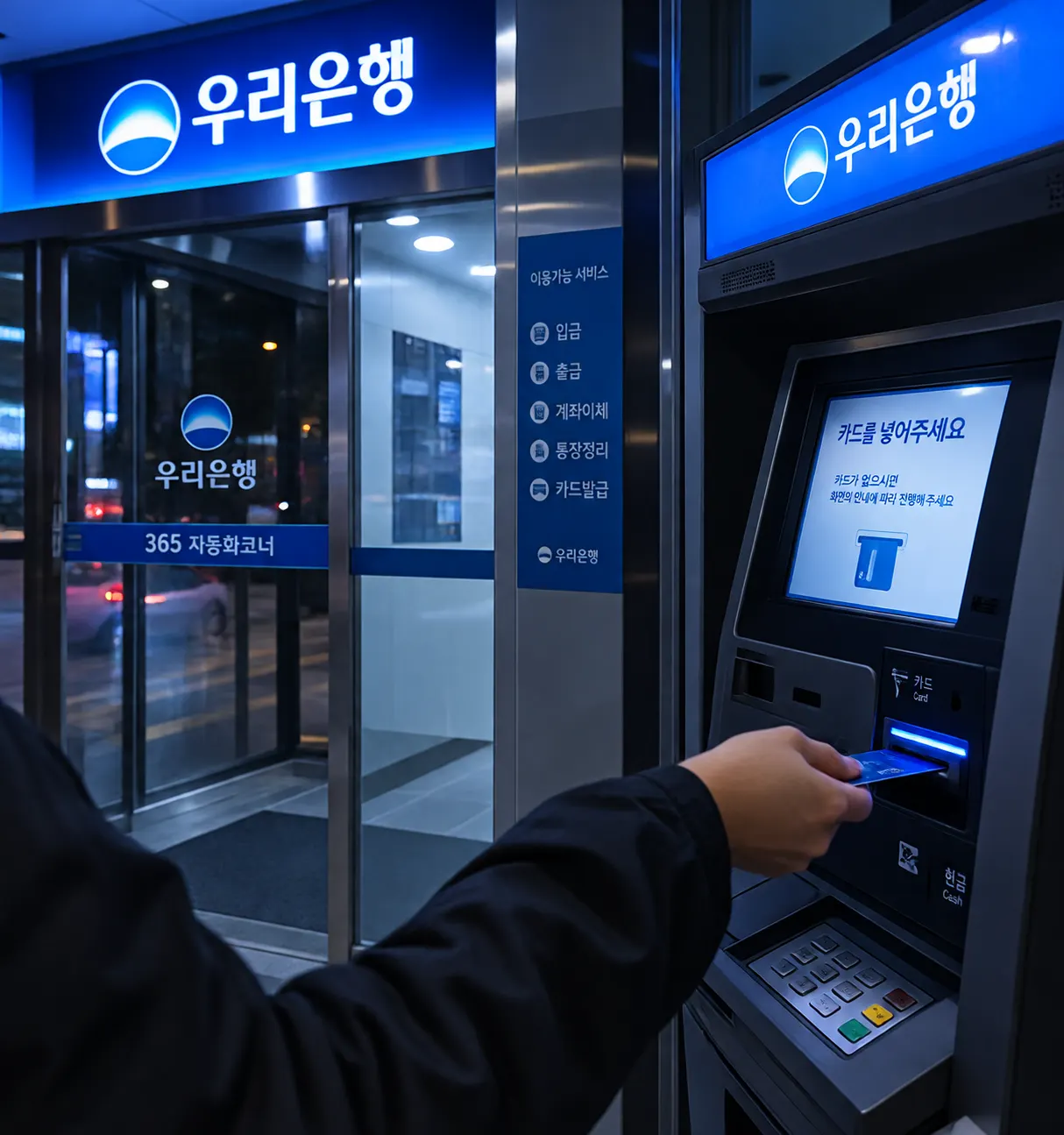
Most Korean banks offer excellent mobile banking applications. After opening your account, consider activating:
- Internet banking
- Mobile banking
- SMS transaction alerts
- Debit card services
Some features may require:
- Korean phone number verification
- Identity authentication
- Additional security registration
If you are not comfortable reading Korean, ask whether an English version of the app is available.
International Transfers
Many foreigners regularly send money abroad. Before choosing a bank, compare:
- Overseas transfer fees
- Exchange rates
- Supported countries
- Processing times
- Mobile transfer options
For people receiving income from overseas employers or supporting family members abroad, these differences can save significant money over time.
Common Mistakes Newcomers Make
Avoid these common problems:
- Waiting until payday to open an account
- Assuming every branch follows identical procedures
- Forgetting to bring proof of address
- Not activating online banking immediately
- Assuming foreign cards can replace local banking for every service
Planning ahead makes the process much smoother.
Choosing the Right Bank
There is no single "best" bank for every foreigner. Instead, consider:
- Branch location near your home or workplace
- English-language support
- Mobile app quality
- International transfer options
- ATM availability
- Customer service hours
Convenience is often more valuable than choosing a bank solely because someone recommended it online.
Final Thoughts
Opening a Korean bank account may involve more paperwork than some newcomers expect, but the long-term benefits are substantial. Once your account is active, everyday tasks, from paying utility bills to receiving your salary, become much easier.
Preparing the correct documents, understanding possible transaction limits, and selecting a bank that matches your needs will help you avoid unnecessary delays and make your transition to life in Korea much smoother.
Quick Summary
- Most long-term foreign residents can open a Korean bank account.
- Prepare your passport, residence documents, phone number, and proof of residence or employment.
- Initial transaction limits are common and may increase later.
- Activate online and mobile banking as soon as possible.
- Compare international transfer services if you regularly move money overseas.