Korean Cash Receipts Explained: Why Foreign Residents Should Ask for One
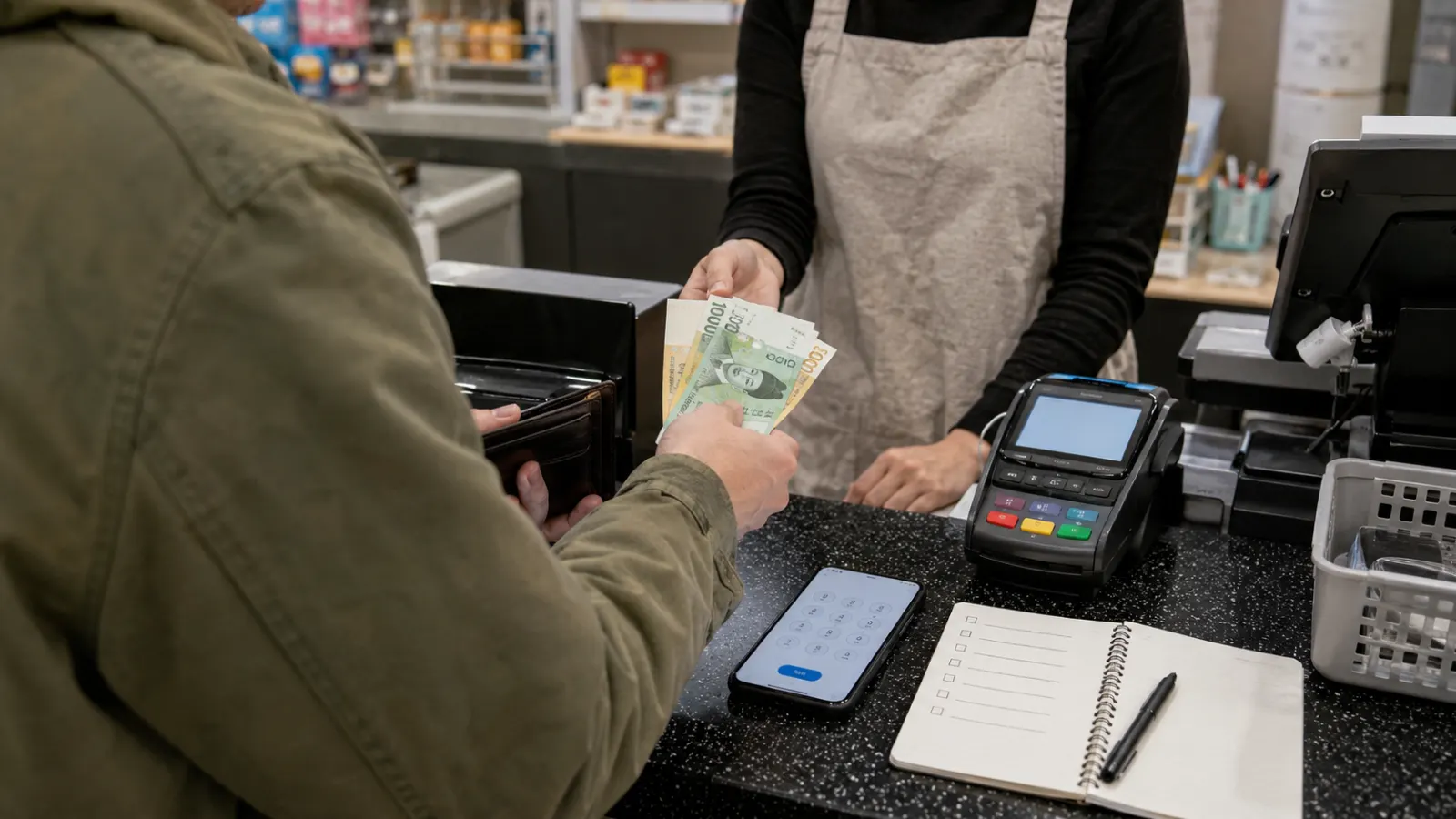
A cashier in Korea may ask for your phone number after you pay with cash. New foreign residents often assume this is for a store membership, delivery notification, or marketing message. In many cases, the cashier is actually asking whether you want a cash receipt, known as a hyeongeum yeongsujeung.
A Korean cash receipt is more than proof that you paid. It can create an electronic record of a cash transaction and may be useful when preparing an employee’s year-end tax settlement. The system is easy to ignore when you first arrive, but understanding it can make cash spending easier to track.
What is a Korean cash receipt?
A cash receipt is an electronic record issued when a customer pays with cash or another qualifying cash-like method.
The transaction information is sent through Korea’s tax system instead of existing only as a small paper receipt. Depending on how it is issued, it may be connected to the customer’s phone number or another registered identification method.
The National Tax Service describes the system as a way of recording cash purchases and allowing qualifying purchases to be reviewed for tax-settlement purposes.
A cash receipt does not mean the government can see what you bought in personal detail through a store receipt. The important record is generally the merchant, date, and transaction amount.
What the cashier may ask
A cashier may say: “Hyeongeum yeongsujeung piryohaseyo?” This means, “Do you need a cash receipt?”
They may then ask for:
- Korean mobile phone number
- Cash-receipt card
- Business registration number
- Another accepted identification method
For ordinary personal spending, a registered mobile number is commonly used. If you do not want one, you can say: “Gwaenchanayo,” meaning, “No, thank you.”
If you want one, you can provide the number connected to your tax record.
It is different from a paper receipt
A paper receipt shows what you purchased and can help with returns, exchanges, warranties, or expense reimbursement. A cash receipt is mainly an electronic transaction record. You may need both.
For example, if you buy an appliance with cash, the cash receipt may help record the payment for tax purposes. The itemized paper receipt may still be necessary if the product is defective or needs warranty service.
Do not throw away the paper receipt merely because a cash receipt was issued.
Why employees may care about cash receipts
Korean employees commonly complete a year-end tax settlement through their employer. Certain qualifying spending records can be reviewed during that process.
Cash receipts issued under the taxpayer’s registered information may appear in the National Tax Service system and can potentially be considered when eligible spending deductions are calculated. Exact tax benefits depend on the person’s income, tax status, spending category, and current rules.
A cash receipt does not guarantee a refund. It is simply one record that may be included in the tax calculation.
Foreign employees should not assume that only Korean citizens can use the system. The NTS publishes foreign-worker tax guidance that includes cash-receipt usage in year-end settlement materials.
Does your phone number work automatically?
Not always.
A Korean phone number used for cash receipts may need to be registered or connected correctly within the tax system. Giving an unregistered number may not create the result you expect.
This can become confusing after:
- Changing phone numbers
- Changing mobile carriers
- Receiving a new residence card
- Correcting a legal name
- Using a number registered to another person
- Canceling a Korean phone account
Long-term residents should check whether their current number is correctly connected before relying on it. If your records do not appear, check the National Tax Service’s current guidance or ask a tax office or qualified tax professional how to register or correct the information.
Personal and business cash receipts are different
A cashier may ask whether the receipt is for personal deduction or business expense evidence. These are not the same purpose. An employee buying personal items normally needs a personal cash receipt.
A registered business purchasing goods or services for commercial use may require expense evidence connected to the business registration number. Do not provide a business number for personal spending just because you own a business. The transaction should reflect its real purpose.
Freelancers and business owners should ask their accountant how different purchases should be documented before using one method for everything.
When you may not need one
A cash receipt is generally relevant to qualifying cash transactions. If you pay by credit or check card, the payment already creates an electronic card record. You also may not need to request a personal cash receipt when:
- The employer is reimbursing the expense under another documentation process
- The purchase is being recorded as a business expense
- The transaction does not qualify
- Another person is the actual taxpayer claiming it
- You are a short-term tourist with no Korean tax-settlement use
Tourists can still ask for an ordinary paper receipt when they need proof of purchase.
What if the store does not ask?
You can request one by saying: “Hyeongeum yeongsujeung haejuseyo.” This means, “Please issue a cash receipt.”
Make the request during payment whenever possible. Correcting a transaction later may be less convenient and can depend on the merchant’s system. Check the payment screen or receipt to confirm that it was processed.
Common mistakes foreign residents make
The most common mistakes include:
- Thinking the phone-number request is a loyalty program
- Providing a number registered to someone else
- Assuming a cash receipt guarantees a tax refund
- Confusing a cash receipt with an itemized store receipt
- Using a business number for personal spending
- Changing phone numbers without updating tax records
- Waiting until tax season to check whether receipts were recorded
These problems are easier to prevent than correct months later.
A practical setup
If you work in Korea and expect to complete year-end tax settlement:
- Confirm that your legal and phone information is current.
- Register the correct cash-receipt identification method.
- Request cash receipts for qualifying cash purchases.
- Keep itemized receipts for returns and warranties.
- Review recorded transactions before the employer’s tax deadline.
- Ask a tax professional about unclear business or personal expenses.
Cash receipts are a small part of Korea’s tax system, but they explain why cashiers frequently ask for a phone number after a cash payment.
Quick Summary
- A Korean cash receipt is an electronic record of a qualifying cash transaction.
- Foreign employees may use recorded cash spending as part of year-end tax settlement when eligible.
- The phone number should be correctly connected to the taxpayer’s records.
- Keep the ordinary itemized receipt when you may need a return, warranty, or reimbursement.