Finance
How Korean Freelancer Invoicing and Tax Invoices Actually Work
By New In Korea TeamPublished Updated

If you're freelancing in Korea and a client has asked for a "tax invoice" (세금계산서) rather than just a standard invoice, and you're not sure how this specific document differs from a regular bill or how to actually issue one, understanding Korea's tax invoicing system matters significantly for getting paid properly and staying compliant with your registered freelance business obligations.
Here's how Korean tax invoicing actually works for freelancers and small business owners.
Why Tax Invoices Matter Beyond a Standard Bill
- A tax invoice (세금계산서) is a formally recognized document for Korean tax purposes, distinct from simply emailing a client an informal invoice summary, it specifically documents a transaction for VAT purposes and serves as the official record both you and your client use for their respective tax filings.
- Business clients generally require a proper tax invoice, rather than an informal bill, specifically because they need this documentation to claim their own business expense deductions and VAT credits, a client unable to properly document their payment to you through a tax invoice may face their own tax complications, understanding this matters for why clients specifically request this document rather than accepting an informal invoice.
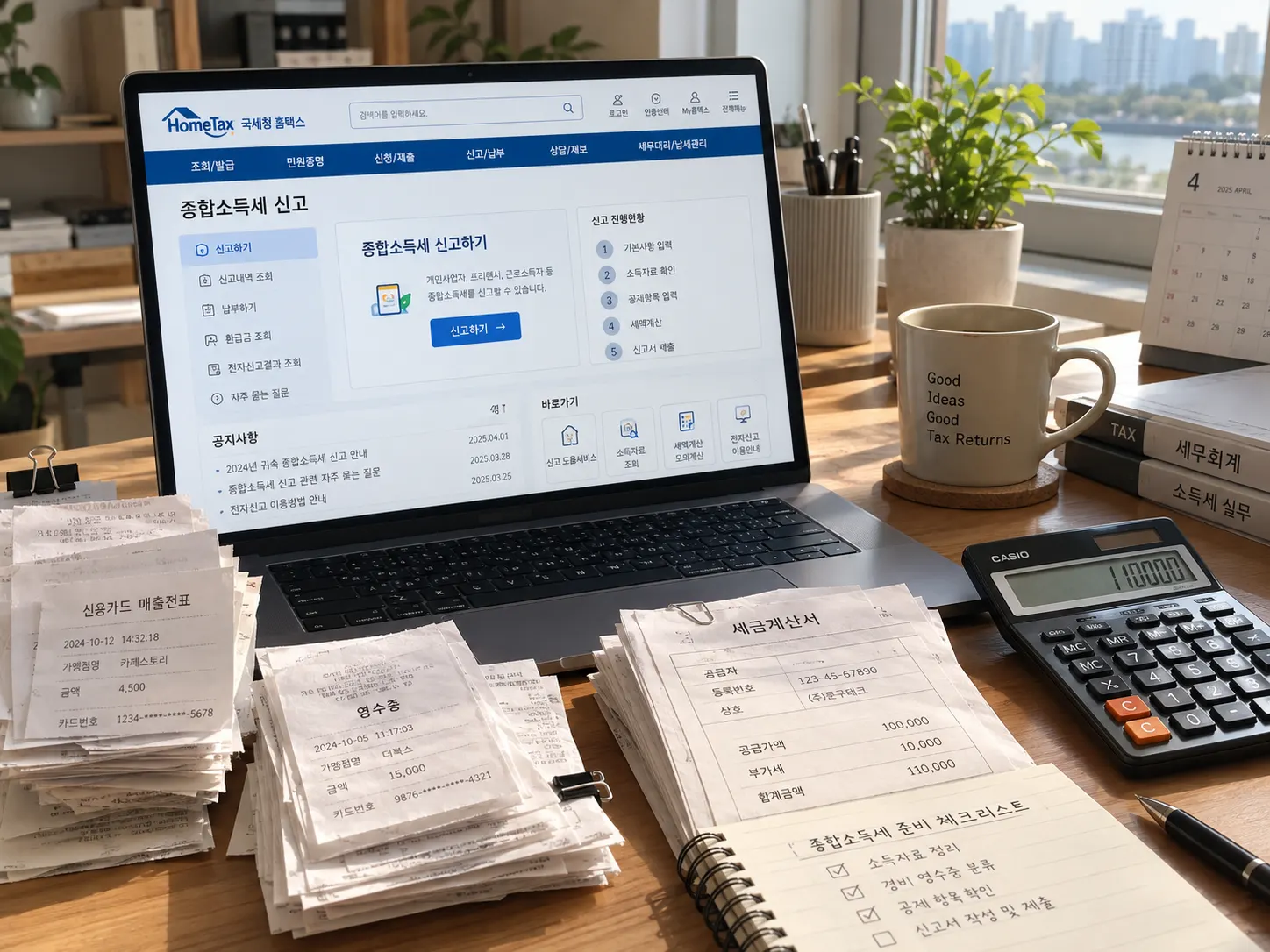
- Issuing tax invoices properly connects directly to your Hometax filing obligations, as covered in how Hometax filing works for freelancers, tax invoices you issue factor directly into your VAT filing calculations, understanding this connection helps you see tax invoicing as part of your broader ongoing tax compliance rather than a separate, isolated administrative task.
How to Actually Issue a Tax Invoice
- Electronic tax invoice issuance through Hometax or a connected accounting platform represents the standard modern method, rather than paper-based invoicing, most freelancers issue electronic tax invoices directly through the Hometax system or through accounting software that integrates with it.
- Required information generally includes your business registration number, the client's business registration number (if they're a registered business), the transaction amount, VAT amount calculated separately, and transaction date, understanding this specific required information set helps you gather what you need before attempting to issue the invoice.
- Timing requirements matter for proper tax invoice issuance, generally needing to be issued within a specific timeframe relative to the actual transaction or payment, understanding your specific timing obligation avoids a compliance issue from late issuance.
Simplified vs. Standard Tax Invoices
- Some freelance categories qualify for simplified invoicing treatment rather than the full standard tax invoice process, as touched on in how business registration categories affect foreign entrepreneurs, certain smaller-scale or specific category freelance businesses have a somewhat streamlined invoicing obligation.
- Understanding your specific registered business category's actual invoicing requirement, rather than assuming the most complex standard process universally applies, matters for accurately understanding your actual ongoing compliance obligation.
- Clients working with individual consumers rather than other registered businesses sometimes have different invoicing expectations, a tax invoice specifically matters most for B2B transactions where the client needs this documentation for their own business tax purposes, understand whether your specific client relationship actually requires this formal document.

Common Situations Freelancers Encounter
- A client requesting a tax invoice before payment, some clients specifically require receiving the tax invoice as a condition of processing payment, rather than issuing it after payment, understanding your specific client's actual process and timing expectation avoids a payment delay from a misunderstanding about invoice timing.
- Correcting an issued tax invoice, if an error occurs after issuance, a specific correction process exists rather than simply reissuing informally, understanding this formal correction mechanism matters if you discover an error after already submitting an invoice.
- International clients, for freelance work performed for clients outside Korea, invoicing requirements can differ meaningfully from domestic B2B tax invoicing, worth understanding your specific cross-border situation's actual requirement rather than assuming domestic tax invoice rules apply identically.
Common Mistakes Foreign Freelancers Make
- Sending informal invoices when a client specifically needs a proper tax invoice, creating confusion or payment delay when the client actually required this specific formal document for their own compliance purposes.
- Not understanding the connection between tax invoices issued and VAT filing obligations, treating invoicing and later tax filing as entirely separate tasks rather than understanding how issued invoices directly feed into their filing calculations.
- Missing specific timing requirements for invoice issuance, issuing a tax invoice considerably later than required relative to the transaction, creating a compliance issue.
- Not understanding whether their specific registered business category qualifies for simplified invoicing treatment, potentially over-complicating their invoicing process relative to what their specific situation actually requires.
Quick Summary
- Korean tax invoices (세금계산서) represent a formally recognized tax document distinct from an informal bill, business clients generally require this specific document for their own tax compliance purposes.
- Electronic tax invoice issuance through Hometax or connected accounting platforms represents the standard modern method, requiring specific information including both parties' business registration numbers and calculated VAT amount.
- Tax invoices issued directly connect to your VAT filing obligations, understanding this relationship helps you see invoicing as part of ongoing tax compliance rather than an isolated task.
- Understanding your specific registered business category's actual invoicing requirement, and your specific client relationship's actual documentation needs, helps you issue invoices appropriately without over- or under-complicating the process.