How Korean Public Libraries and Study Spaces Actually Work
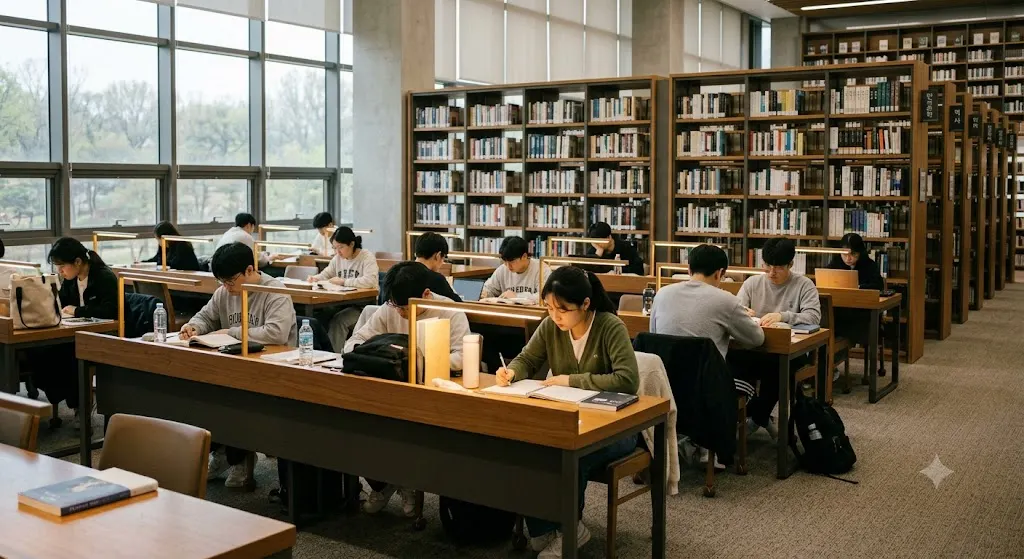
If you're looking for a quiet, free place to read, study, or work in Korea beyond the paid study cafes covered elsewhere, and wondered whether public libraries are genuinely accessible and useful for foreign residents, Korea's public library system is considerably more developed and resource-rich than many newcomers initially assume, offering not just books but genuinely useful study spaces, digital resources, and community programs worth understanding how to access.
Here's how Korean public libraries actually work, and how foreign residents can make good use of them.
Registering for a Library Card as a Foreign Resident
- Most Korean public libraries allow registration with an ARC and proof of address, similar baseline documentation requirements to many other Korean administrative processes, registration is generally free and straightforward once you have these documents.
- Registration is typically done in person at your local branch, though some library systems have begun offering online registration options, checking your specific district's library system for current registration procedures avoids an unnecessary in-person trip if online registration is available.
- Library systems are generally organized by district or city, meaning your specific registered library card may have full borrowing privileges primarily within your local district's library network, though many library systems have inter-library arrangements allowing broader access, worth understanding your specific library card's actual scope.
What Korean Public Libraries Actually Offer
- Extensive Korean-language book collections, along with a smaller but often genuinely useful selection of English and other foreign-language materials, particularly at larger central branches or libraries in areas with significant foreign resident populations.
- Dedicated study spaces and reading rooms (열람실), often a major draw for both Korean and foreign patrons, offering quiet, free study environments as a genuine alternative to paid study cafes, particularly popular among students and those preparing for exams.
- Digital resources and databases, many library systems offer e-book lending, academic database access, and other digital resources accessible with your library card, sometimes even remotely once registered, worth exploring your specific library's digital offerings beyond just physical book borrowing.
- Community programs and events, language classes, cultural programs, and sometimes specific programs aimed at multicultural or foreign resident communities, worth checking your local library's program calendar for offerings relevant to your specific interests or needs.
Using Library Study Spaces Effectively
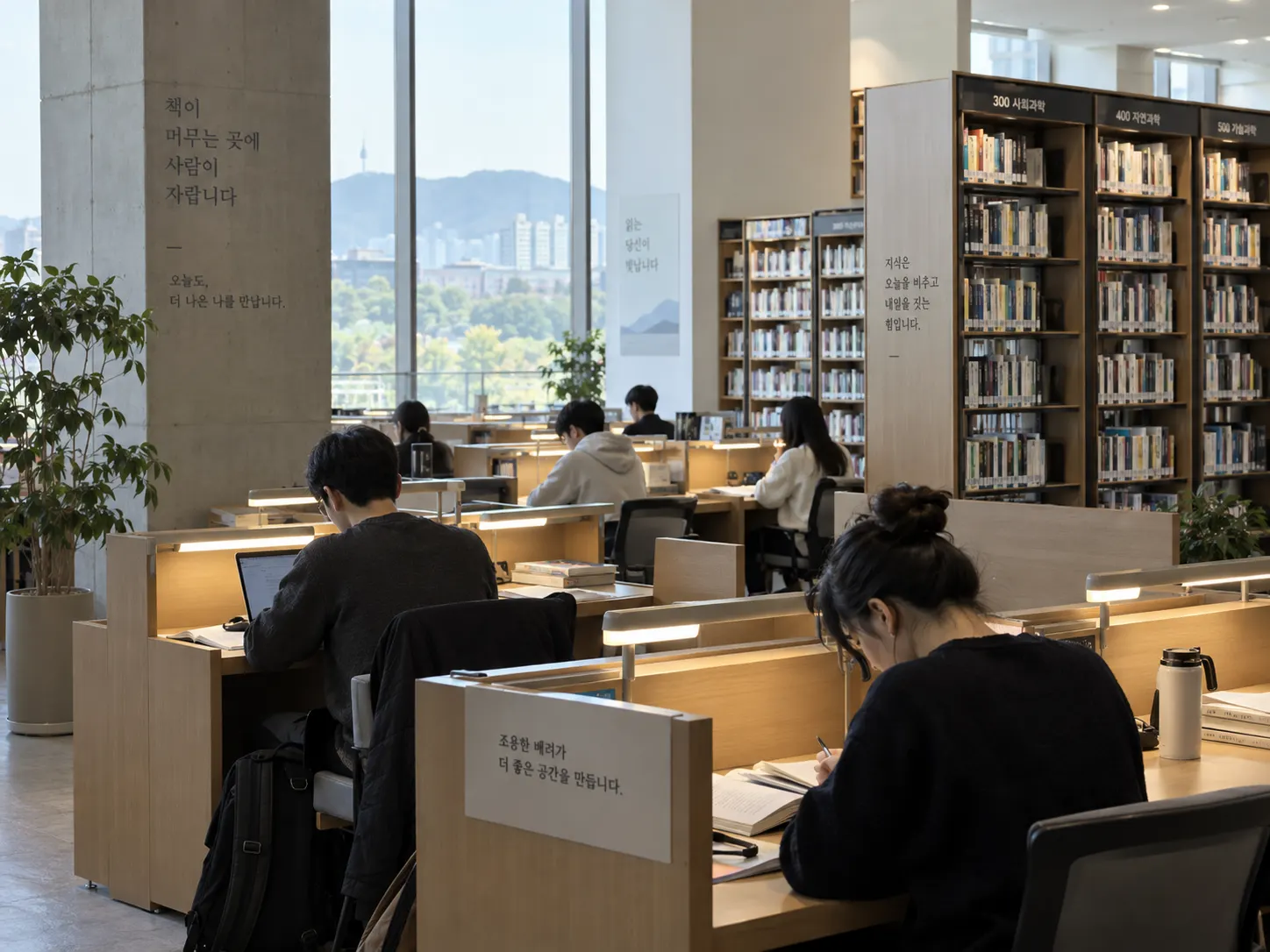
- Understand your specific library's reservation system for study seats, particularly at popular locations during exam seasons, many libraries use an electronic seat reservation system requiring you to check in and out, understanding this system before arriving avoids confusion or losing your reserved spot.
- Respect quiet study norms, Korean library reading rooms generally maintain a genuinely strict quiet environment, more so than some other countries' more casual public library atmosphere, understanding and respecting this norm matters for using the space appropriately.
- Check specific operating hours, some libraries offer extended or even 24-hour access to specific reading room sections, particularly relevant during exam periods, while general library sections follow more standard hours, understanding your specific library's actual schedule for the section you want to use matters for planning your visit.
Common Misunderstandings Foreign Residents Have
A frequent assumption among new foreign residents is that public libraries in Korea are primarily geared toward Korean-language materials and Korean citizens specifically, underestimating both the genuine foreign-language resource availability at many branches and the straightforward registration process for foreign residents with proper documentation. In practice, Korean public libraries function as a genuinely accessible, free public resource for foreign residents, worth exploring rather than assuming a citizenship-based barrier that doesn't actually exist for basic registration and use.
Another common misunderstanding involves treating libraries purely as a book-borrowing service, missing the genuinely valuable study space and digital resource offerings that many foreign residents, particularly students, come to rely on as an ongoing part of their routine once they understand these resources exist.
Finding Libraries With Better Foreign-Language Resources
- University libraries, if you're affiliated with a Korean university as a student or sometimes as a community member depending on the specific institution's policy, often offer stronger English and other foreign-language academic resources than a general public library branch.
- Larger central district or city libraries generally maintain more substantial foreign-language collections than smaller neighborhood branches, worth specifically checking a larger central branch if foreign-language material availability matters significantly for your needs.
- Some libraries in areas with significant international resident populations have specifically developed stronger multicultural resource sections, worth researching your specific district's library system reputation for this if you're choosing where to prioritize registration.
Quick Summary
- Registering for a Korean public library card is generally free and straightforward with an ARC and proof of address, typically done in person at your local branch, though online registration is increasingly available.
- Beyond book lending, Korean public libraries offer genuinely valuable study spaces, digital resources, and community programs, functioning as a much richer resource than many foreign residents initially assume.
- Understanding your specific library's seat reservation system and quiet study norms, particularly stricter than some other countries' public library atmosphere, matters for using study spaces effectively.
- Larger central branches and university libraries generally offer stronger foreign-language resources than smaller neighborhood branches, worth checking specifically if this matters for your particular needs.