What to Know Before Renting an Officetel in Korea
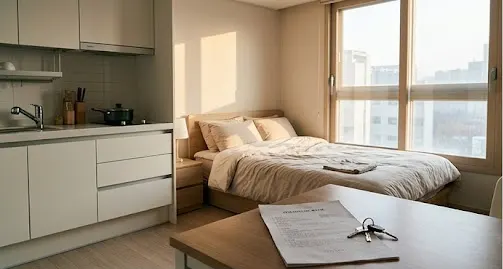
If you're apartment hunting in Korea for the first time, you've probably come across the term "officetel" and wondered whether it's an office, a hotel, or an apartment. It's technically all three, and that ambiguity is exactly why so many foreigners misunderstand what they're signing up for. Before you commit to a lease, it helps to know how officetels actually work, what the deposit system means, and where the hidden costs are.
Here's what to check before renting one.
What an Officetel Actually Is
An officetel (오피스텔) is legally classified as commercial real estate, even though most of them function as small residential studios. This classification matters because it affects taxes, utility rates, and sometimes even what kind of lease terms are offered, compared to a standard residential apartment (아파트) or villa (빌라).
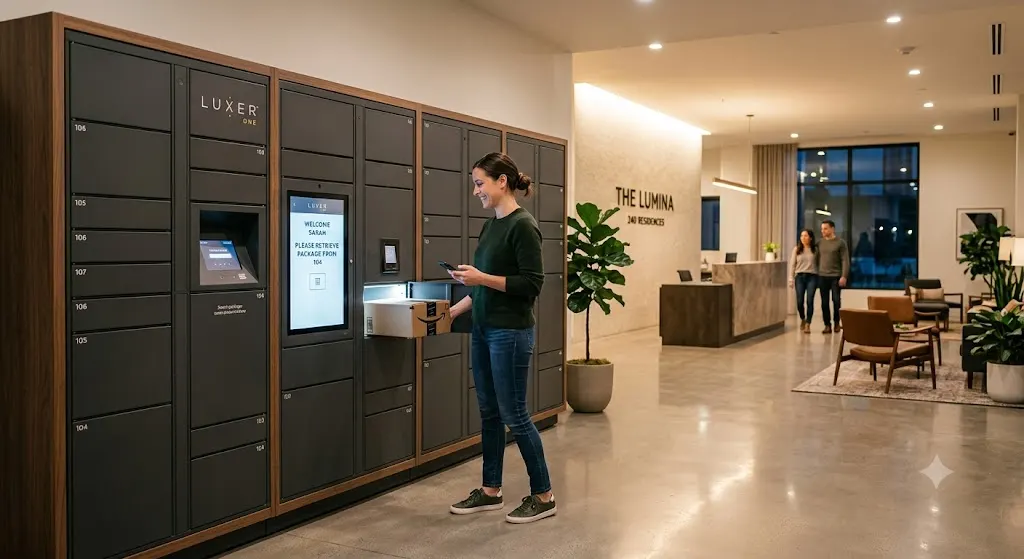
In practice, officetels are popular with foreigners, students, and young professionals because they're usually located near subway stations, come partially furnished, and often include building amenities like a gym, rooftop, or package delivery lockers that older residential buildings don't have.
Understanding Korea's Deposit System
This is where most newcomers get confused, because Korea's rental system doesn't work like a typical monthly rent model.
- Wolse (월세): a smaller deposit (often 5–20 million KRW) plus monthly rent, similar to renting abroad but with a larger upfront deposit than most Western renters expect.
- Jeonse (전세): a much larger lump-sum deposit, sometimes 70–90% of the unit's market value, paid instead of monthly rent, and returned in full at the end of the lease. This is uncommon for foreigners without significant savings or a Korean guarantor, and increasingly less available even for Korean renters.
- Banjeonse (반전세): a hybrid, a mid-sized deposit with reduced monthly rent, sometimes offered as a middle ground.
For most foreign renters, wolse is the realistic option. A typical officetel deposit for wolse runs somewhere between 5–15 million KRW, with monthly rent from about 500,000 to 1,200,000 KRW depending on the city, size, and building age.
What Actually Gets Checked Before You Move In
A few things matter more in Korea than in many other rental markets, and skipping them is a common mistake:
- Confirm the landlord actually owns the property. Ask for the deungibu deungbon (등기부등본), a property registry document that shows ownership and any existing liens or mortgages on the unit.
- Check for existing debt on the building. If the landlord has a large mortgage relative to the deposit you're paying, there's real risk of not getting your deposit back if the building is foreclosed on, a scenario that has affected renters in some Korean cities in recent years.
- Clarify who pays maintenance fees (관리비). Officetels typically charge a separate monthly maintenance fee, often 100,000–200,000 KRW, covering building upkeep, internet, and sometimes water — this is on top of rent and easy to overlook when comparing listings.
- Ask about key money and agency fees. Real estate agent fees are usually split between landlord and tenant, but the exact percentage can vary, so confirm it before signing anything.
Where Foreigners Commonly Get Stuck
A frequent misunderstanding is treating the deposit like a security deposit abroad, something you might partially lose to normal wear and tear. In Korea's wolse system, the deposit is meant to be returned in full at lease end, assuming no unpaid rent or serious damage, so a landlord withholding it without clear justification is a legitimate dispute, not a routine deduction.
Another mistake is signing a lease without a Korean-speaking third party reviewing it, or without using a licensed real estate agent (공인중개사). Unlicensed listings, particularly ones found through informal expat Facebook groups, carry more risk of misrepresented terms or, in rare cases, outright scams.
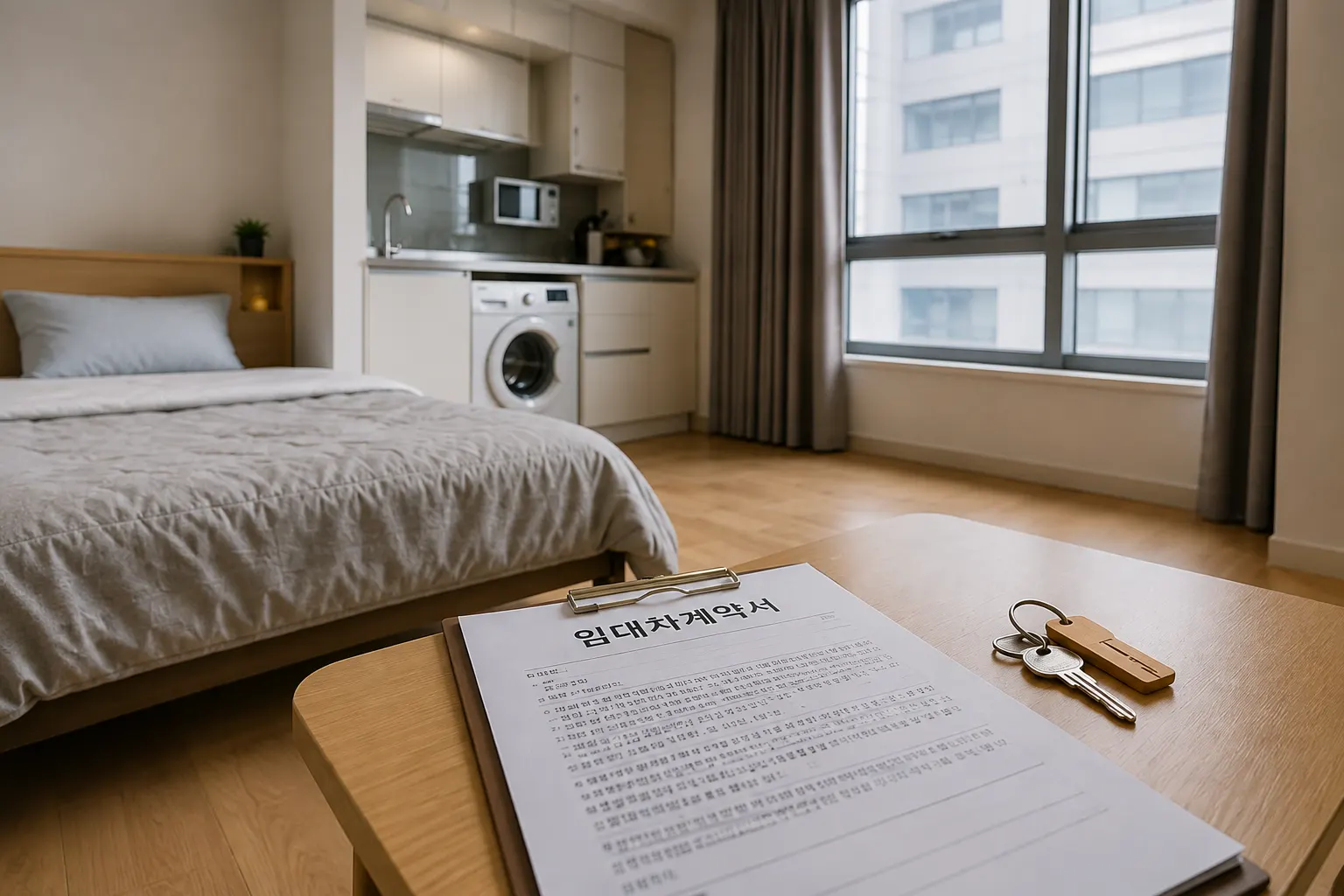
Foreigners also sometimes assume officetel rent includes furniture and appliances as standard. Many do come furnished with a bed, washer, and basic kitchen appliances, since that's part of what makes them attractive to short-term renters, but this varies significantly by building and should be confirmed, not assumed, before signing.
Lease Length and Early Termination
Standard leases are typically one or two years. Breaking a lease early in Korea is more restrictive than in some countries, you're generally responsible for finding a replacement tenant or covering the agent's fee for re-listing, since the landlord isn't obligated to release you from the deposit-return timeline early. If there's a real chance you'll relocate within a year, it's worth negotiating this upfront rather than assuming flexibility later.
Realistic Cost Snapshot
- Deposit (wolse): roughly 5–15 million KRW for a typical foreigner-friendly officetel
- Monthly rent: roughly 500,000–1,200,000 KRW depending on city and size
- Maintenance fee: roughly 100,000–200,000 KRW per month
- Agency fee: usually a fraction of one month's rent, split with the landlord, though exact amounts vary by region
Quick Summary
- Officetels are legally commercial units but function as residential studios, popular with foreigners for their location and furnishings.
- Most foreign renters use the wolse system (deposit plus monthly rent),