Booking KTX Trains in Korea: A Practical Guide for Foreign Travelers
KTX trains make it possible to travel between major Korean cities quickly, but booking can still confuse international visitors. Similar station names, multiple train types, busy travel periods, payment issues, and unofficial resale sites can turn a simple trip into an avoidable problem.
The most reliable approach is to choose the correct station first, book through an official channel, and understand the ticket rules before travel day.
What is KTX?
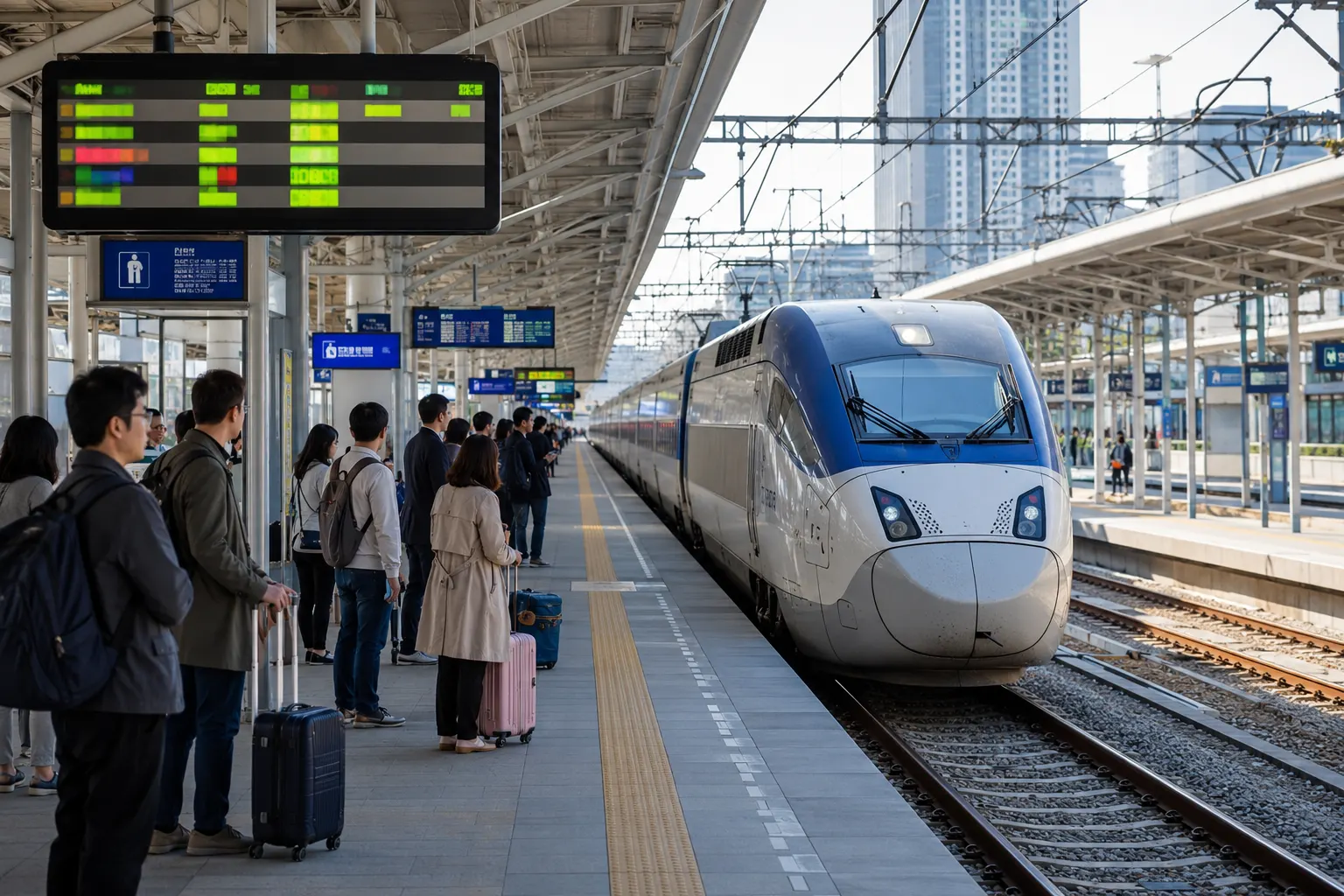
KTX is Korea’s high-speed rail service. It connects Seoul with major destinations such as Busan, Daegu, Daejeon, Gwangju, Mokpo, Gangneung, and other cities through different rail lines.
Not every KTX train follows the same route, and not every destination uses the same Seoul-area station. Other train types may include:
- KTX-Sancheon
- ITX services
- Saemaeul-class services
- Mugunghwa trains
- Tourist or regional trains
A slower train may be useful when the destination has limited high-speed service or when a cheaper fare matters more than travel time.
Choose the correct station
The city name alone may not be enough.
In the Seoul metropolitan area, relevant departure stations can include Seoul Station, Yongsan Station, Cheongnyangni Station, Suseo Station, and others. SRT high-speed trains commonly use Suseo rather than Seoul Station.
In other cities, stations can be located far from the tourist center. Gyeongju Station, for example, may require additional local transportation depending on where you are staying. Before booking, check:
- Exact station name
- Distance from your accommodation
- First subway or bus connection
- Required arrival time
- Destination-side transportation
- Whether the train is KTX or SRT
A faster train is not always the fastest door-to-door option.
Use official booking channels
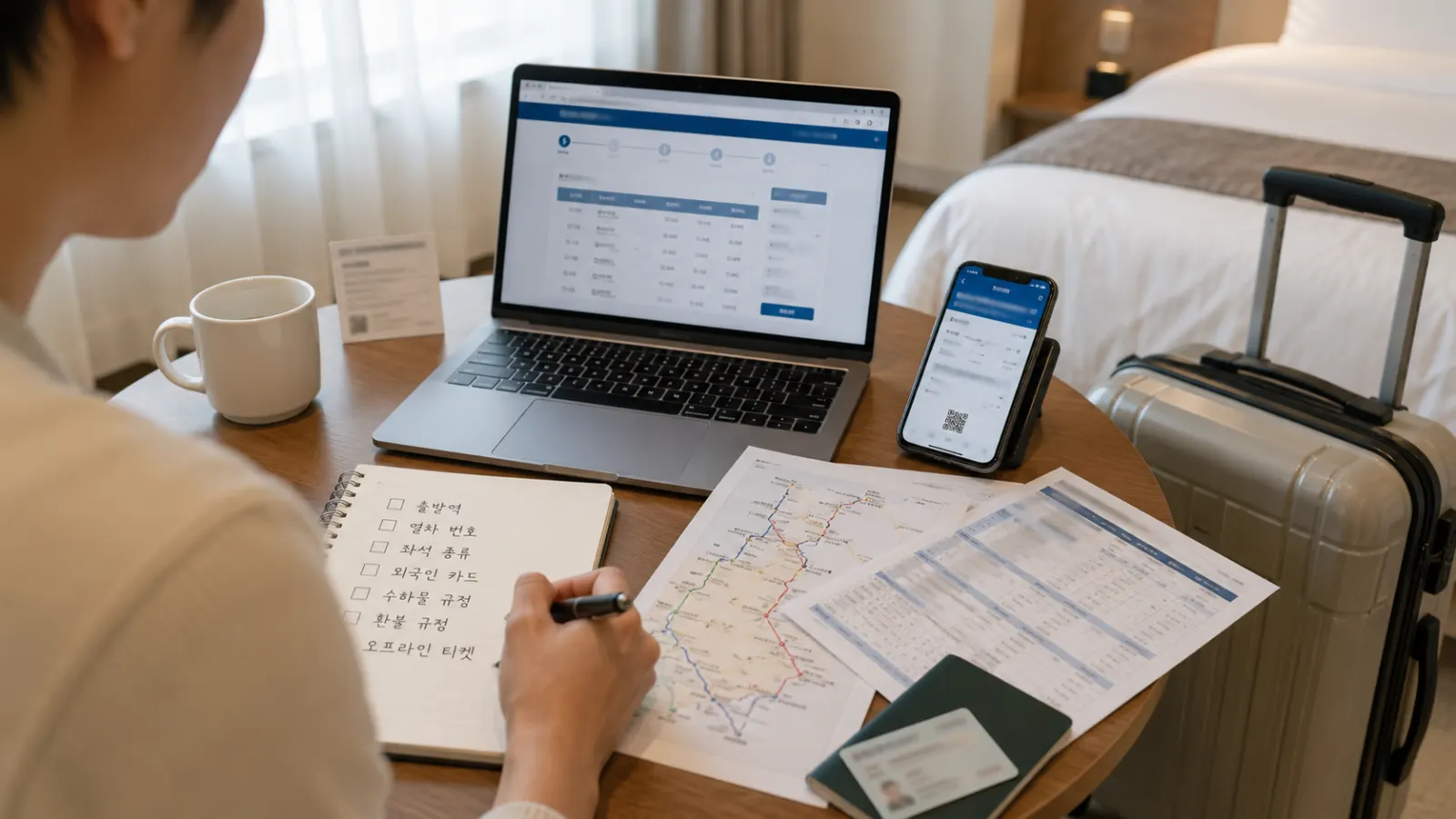
KORAIL operates an official foreign-language reservation service for KTX and other KORAIL trains. Foreign travelers may be able to search schedules, purchase tickets, and retrieve reservations through the official website or supported app channels. Be cautious with third-party sites that add service fees, provide unclear refund rules, or imitate official branding.
An official ticket should clearly show:
- Travel date
- Departure station
- Arrival station
- Train number
- Departure time
- Car number
- Seat number
- Passenger information where required
Save the ticket offline in case mobile data is unavailable at the station.
KTX and SRT are not the same booking system
KTX and SRT both operate high-speed trains, but they are not interchangeable brands or reservation systems. A traveler staying near southern Seoul may find Suseo convenient. Someone connecting from central Seoul may prefer KTX from Seoul Station or Yongsan. Check which company operates the selected train before attempting to find or change the reservation.
Going to Seoul Station for an SRT ticket from Suseo can cause a serious travel-day problem.
When should you book?
For ordinary weekdays outside holidays, seats may be available relatively close to departure. Demand increases sharply for:
- Friday evenings
- Sunday afternoons
- Public holidays
- Long weekends
- Lunar New Year
- Chuseok
- School vacation periods
- Major festivals
- Popular seasonal routes
Book early when your travel date is fixed. Holiday booking periods may follow special reservation schedules, and tickets can sell out quickly. Do not assume standing tickets or same-day alternatives will be available. If your preferred train is full, check nearby departure times, another Seoul-area station, slower trains, buses, or a different travel date.
First class or standard class?
Standard class is comfortable enough for most trips. First class usually provides more space and may include small additional amenities depending on the train. Choose first class when:
- You need more personal space
- You are carrying work equipment
- You want a quieter journey
- Standard class is sold out
- The fare difference is acceptable
Choose standard class when cost matters and you only need reliable transportation. The travel time is generally determined by the train and route, not the class of seat.
Seat direction and location
Some travelers care about facing the direction of travel. Seat layouts and direction can vary by train type and whether the train reverses during operation. Other useful considerations include:
- Window versus aisle
- Distance from doors
- Luggage storage
- Quiet preferences
- Traveling as a pair or group
- Accessibility
- Proximity to restrooms
Large suitcases may not fit comfortably above every seat. Arrive early enough to find an appropriate luggage area, especially on busy services. Do not block aisles or emergency equipment.
Foreign card payment problems
International cards may work on official reservation systems, but payment failures can still occur because of card security settings, browser issues, name formats, or bank authorization.
If payment fails:
- Check that overseas and online payments are enabled.
- Enter cardholder information exactly.
- Try another supported browser.
- Disable aggressive pop-up blocking.
- Contact the card issuer.
- Try another card.
- Purchase at a station ticket counter or machine if necessary.
Avoid repeatedly retrying until your bank blocks the card. Keep screenshots of errors, but never share full card numbers or security codes with unofficial support accounts.
Do you need to print the ticket?
Digital tickets are commonly used, but the exact format depends on the booking channel. Save the QR code or reservation screen locally. A screenshot can be helpful, although some systems may require the original app or page. If you collect a ticket at a station, bring the booking information and the card or identification requested by the reservation system.
Do not rely only on an email that requires internet access to load.
Boarding the train
Korean rail stations generally do not use the same airport-style check-in process found in aviation. Find the platform number on the station display, confirm the train number and destination, and wait near the section corresponding to your car. Train doors may close promptly. Arriving at the station only one or two minutes before departure is risky, especially in large stations where platforms require a long walk.
A practical arrival target is earlier when:
- You do not know the station
- You need to collect a ticket
- You have large luggage
- You are traveling with children
- You need accessibility assistance
- The station is crowded
Check the station name carefully when getting off. Some trains make short stops.
Changing or canceling a ticket
Refund and change rules can depend on timing, ticket type, booking channel, and proximity to departure. A fee may apply when canceling late. Missing the train without changing the ticket can reduce or eliminate the amount recoverable. Before buying, check:
- Cancellation deadline
- Refund fee
- Whether changes require cancellation and rebooking
- How the refund returns to a foreign card
- What happens after departure
- Whether promotional passes have separate rules
Refunds to international cards may not appear immediately.
Rail passes are not always cheaper
International visitors may consider a KORAIL rail pass for multiple journeys.
A pass can be useful for a concentrated itinerary with several eligible long-distance trips. It may be poor value for one round trip or a schedule that uses buses, SRT, domestic flights, or local transport.
Compare the pass price with actual individual fares for your planned trains. Also check reservation requirements. A pass does not necessarily guarantee a seat on a sold-out service.
Train or express bus?
KTX is usually attractive for speed and predictable city-to-city travel. Express buses can be better when:
- The destination has no convenient KTX station
- The bus terminal is closer to your hotel
- Train seats are sold out
- The fare difference matters
- You are traveling to a smaller city
- The route avoids a transfer
Compare total travel time, not only the scheduled ride. A bus that arrives downtown may be more convenient than a train station requiring an additional hour of local travel.
A practical booking checklist
Before paying:
- Confirm the operating company
- Check both station names
- Review the date and departure time
- Confirm standard or first class
- Check the passenger count
- Review cancellation rules
- Save the ticket offline
- Plan transportation to the station
- Check luggage needs
- Reconfirm the train number on travel day
Korea’s rail system is straightforward once the ticket details are correct. Most serious mistakes happen before boarding.
Quick Summary
- Confirm the exact station because major cities can have multiple rail terminals.
- Use official KORAIL channels for KTX reservations and check whether a train is actually operated by SRT.
- Book early for weekends, holidays, and popular routes.
- Save the ticket offline and review refund rules before departure.