Travel
How Domestic Flights Work in Korea and When They're Worth It
By New In Korea TeamPublished Updated
If you're planning travel within Korea and wondering whether flying between cities makes sense compared to KTX, especially for reaching Jeju Island or more distant regional destinations, understanding Korea's domestic flight network, typical costs, and when flying genuinely beats the train helps you choose the right transportation option rather than defaulting to whichever mode comes to mind first.
Here's how domestic flights in Korea actually work, and when they're worth choosing over rail.
When Domestic Flights Make the Most Sense
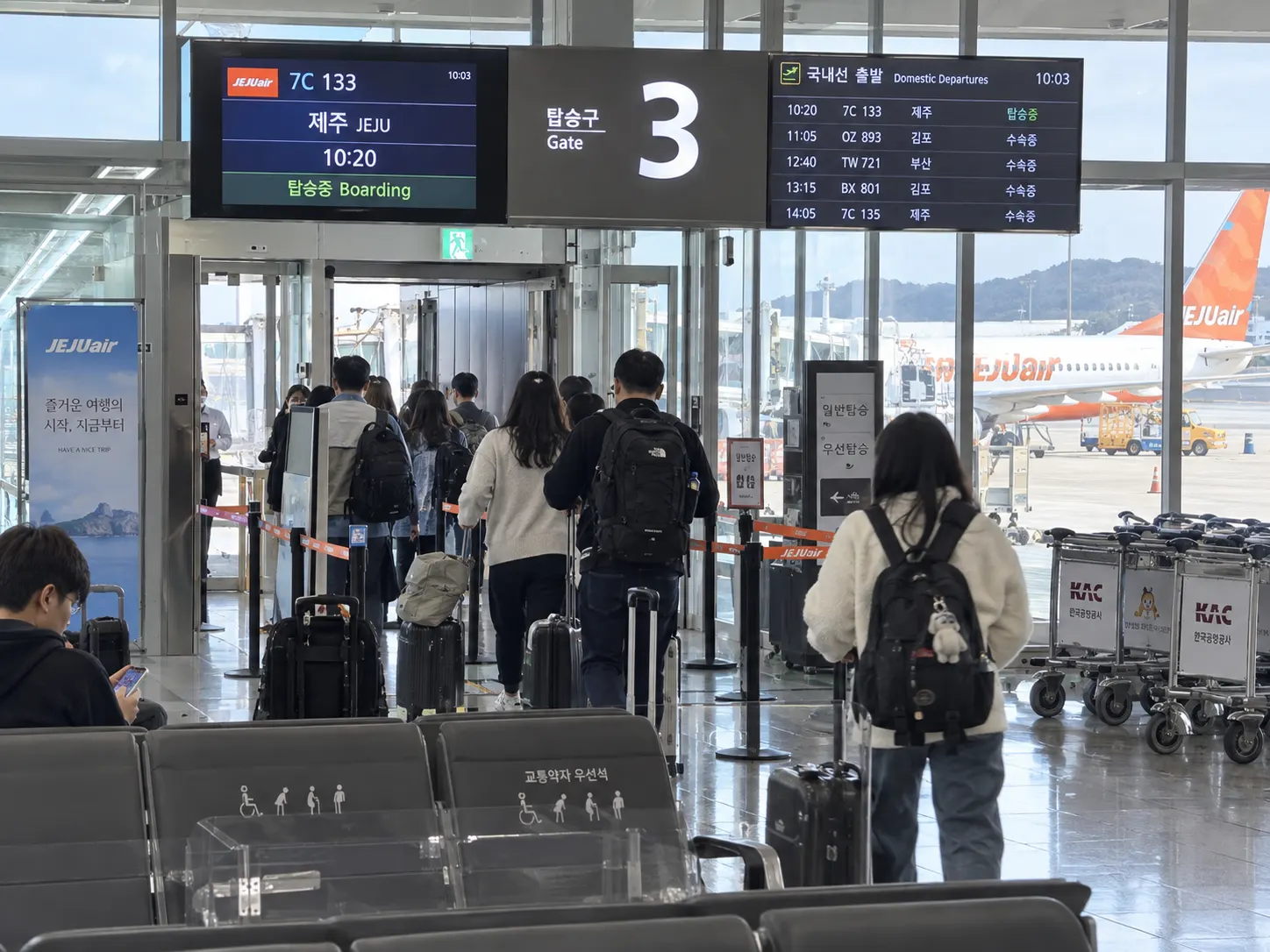
- Jeju Island represents the single most common and genuinely necessary domestic flight route, since Jeju has no rail or bridge connection to mainland Korea, flying (or taking a considerably longer ferry) is the only practical way to reach the island, this route carries extremely high flight frequency given its popularity.
- Longer-distance regional destinations not well served by KTX's fastest routes, certain smaller regional airports connecting to specific cities, sometimes offer meaningfully faster total travel time than rail, particularly when your final destination isn't directly on a major KTX line.
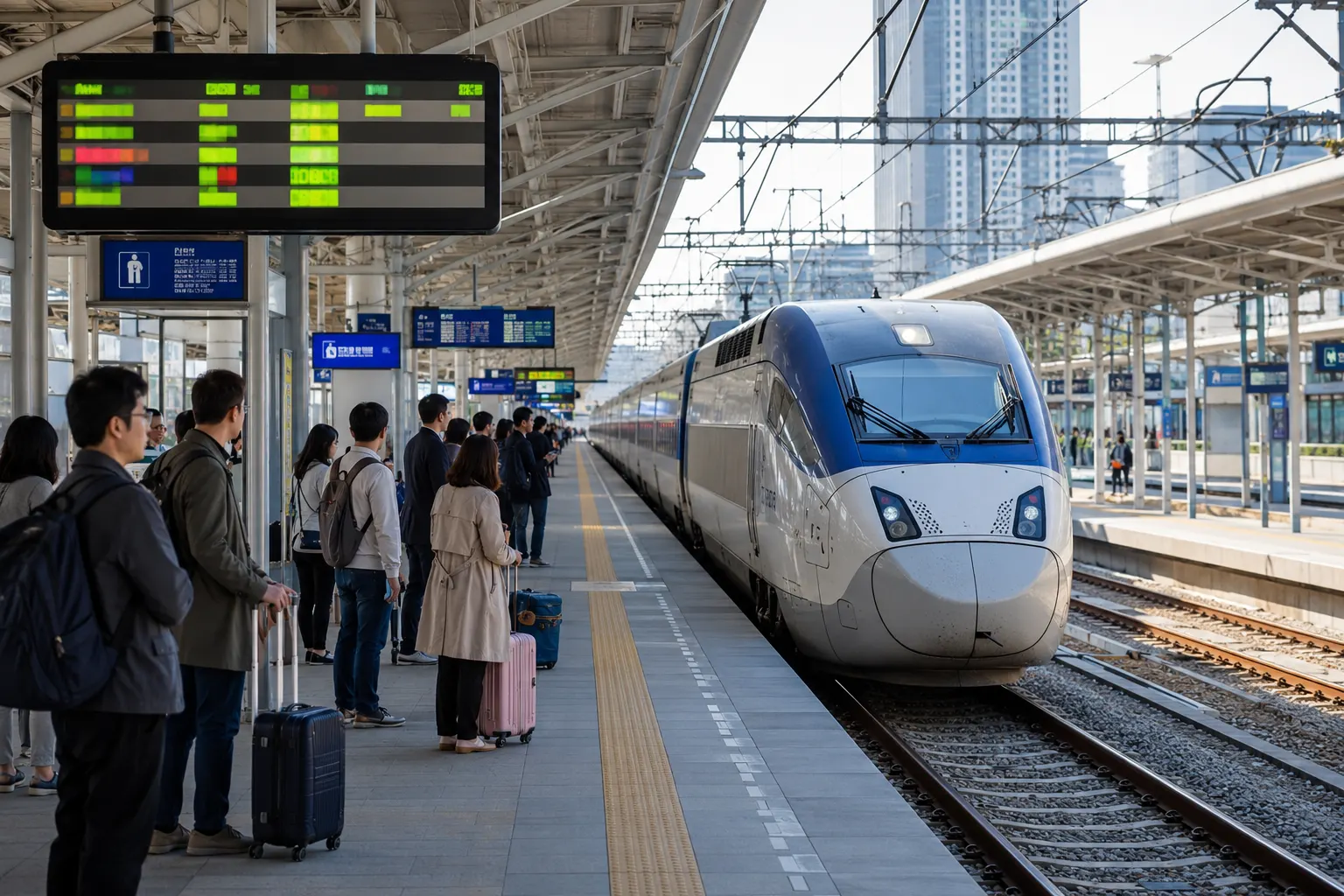
- For most mainland city-to-city travel where KTX offers direct, fast service, as covered in how KTX high-speed rail works, the train often proves more practical once you factor in airport transit time, check-in buffer, and the fact that train stations tend to be more centrally located than airports.
Major Domestic Airlines and Routes
- Korean Air and Asiana operate as the two major full-service domestic carriers, generally offering more frequent schedules and slightly more comprehensive service on major routes.
- Low-cost carriers, including several Korea-based budget airlines, offer competitive pricing on many domestic routes, particularly the heavily trafficked Seoul-Jeju corridor, comparing both full-service and budget carrier options for your specific route often reveals meaningful price differences for comparable flight times.
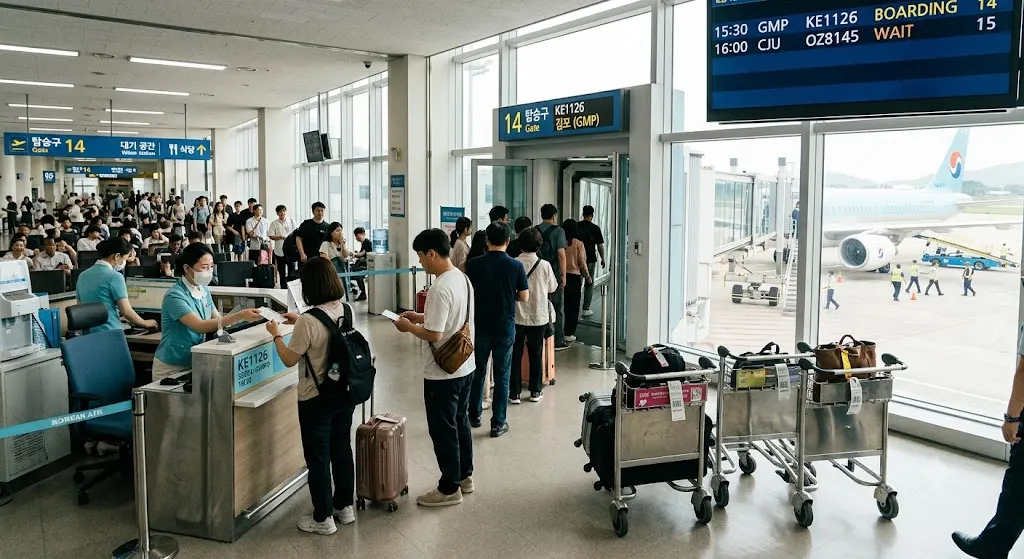
- Gimpo Airport, rather than Incheon International, generally serves as the primary hub for domestic flights from Seoul, understanding this distinction matters since Incheon primarily handles international flights, booking a domestic flight departing from the wrong airport assumption could create real confusion on travel day.
Booking and Practical Considerations
- Domestic flight booking works similarly to international flight booking, directly through airline websites or apps, or through booking aggregator platforms, comparing prices across a few options, particularly between full-service and budget carriers, before booking helps find the best value for your specific route and timing.
- Airport arrival buffer time, while domestic flights generally require less advance arrival time than international flights, still budgeting reasonable buffer time, particularly during peak travel periods like major Korean holidays, avoids a stressful rush.
- Baggage policies, particularly for budget carriers, often differ meaningfully from full-service airline baggage allowances, checking your specific airline's baggage policy before packing, particularly if traveling with sports equipment or larger luggage, avoids an unexpected additional fee.
Comparing Total Travel Time: Flight vs. KTX
- Calculating genuine door-to-door time, rather than just comparing raw flight time to raw train time, factoring in airport transit and check-in buffer versus train station accessibility and boarding simplicity, often reveals KTX as genuinely faster for many mainland routes despite the train's longer raw travel time.
- Weather-related disruption risk differs between the two modes, flights face more significant weather-related delay or cancellation risk, particularly during Korea's winter months or typhoon season, compared to KTX's generally more weather-resilient operation, worth factoring this reliability consideration into your choice for time-sensitive travel.
- Cost comparison varies by specific route and booking timing, sometimes a discounted advance-purchase flight genuinely undercuts KTX pricing for the same route, while other times KTX remains the more economical choice, comparing actual current pricing for your specific travel dates rather than assuming a fixed cost relationship between the two modes matters for genuine cost optimization.
Common Mistakes Travelers Make
- Defaulting to flights for mainland routes well served by KTX, without actually comparing total door-to-door travel time, sometimes choosing a flight that ends up taking longer overall once airport transit and buffer time are factored in.
- Booking from the wrong Seoul airport, confusing Gimpo's domestic flight role with Incheon's international hub function, leading to genuine travel-day confusion if not caught in advance.
- Not comparing budget and full-service carrier pricing, missing potentially meaningful savings available through a budget carrier for routes where both options exist.
- Underestimating weather-related disruption risk for time-sensitive travel, particularly relevant for something like a Jeju trip with tight scheduling, where a KTX-equivalent land option doesn't exist as a fallback if a flight faces weather delay.
Quick Summary
- Domestic flights are most genuinely necessary for reaching Jeju Island, given the lack of rail connection, and can be worthwhile for certain regional destinations not well served by KTX's fastest routes.
- Korean Air, Asiana, and several budget carriers operate domestic routes, comparing both full-service and budget options for your specific route often reveals meaningful pricing differences.
- Gimpo Airport, not Incheon International, generally serves as Seoul's domestic flight hub, an important distinction to confirm before booking to avoid travel-day confusion.
- Calculating genuine door-to-door travel time, rather than comparing raw flight versus train time alone, and factoring in weather-related disruption risk, helps you choose the genuinely faster and more reliable option for your specific trip.