How Korean Express Buses Work for Foreign Travelers
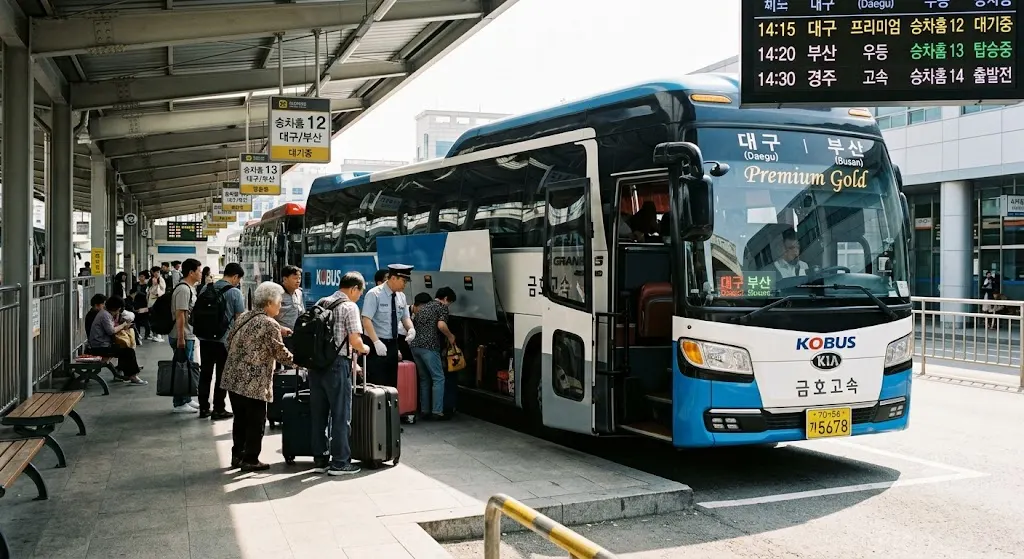
If you are planning a trip between Korean cities and keep seeing buses recommended alongside trains, it helps to know that Korea's express bus network is a real alternative to KTX. Korean express buses are frequent, comfortable, and often cheaper, and they reach many places the high-speed rail does not. The part that trips people up is not the ride itself but which terminal to use and how to book.
Here is how the system works and when a bus is the better choice.
The Quick Answer: Express vs. Intercity Buses
Korea runs two main types of long-distance buses:
- Express buses (고속버스) run between major cities on highways with few stops, and depart from dedicated express bus terminals.
- Intercity buses (시외버스) serve a wider network of smaller cities and towns, make more stops, and use separate terminals.
For a trip such as Seoul to Busan, the express bus is the usual choice. For a smaller town, you may need an intercity bus, or an express bus to a nearby larger city followed by a local connection.
Booking Tickets
The simplest ways to buy tickets:
- Online or in the app. Kobus covers express buses and offers an English interface, and Bus Tago covers many intercity routes. Check whether your payment card is accepted before the day you travel.
- Terminal kiosks and counters. Most major terminals have kiosks with English options and staff at ticket windows.
- Same-day purchase. On ordinary days, seats are often available for same-day travel, but holidays are very different.
During Chuseok, Seollal, and long weekends, popular routes sell out days in advance. If your travel date overlaps a holiday, book as early as the system allows.
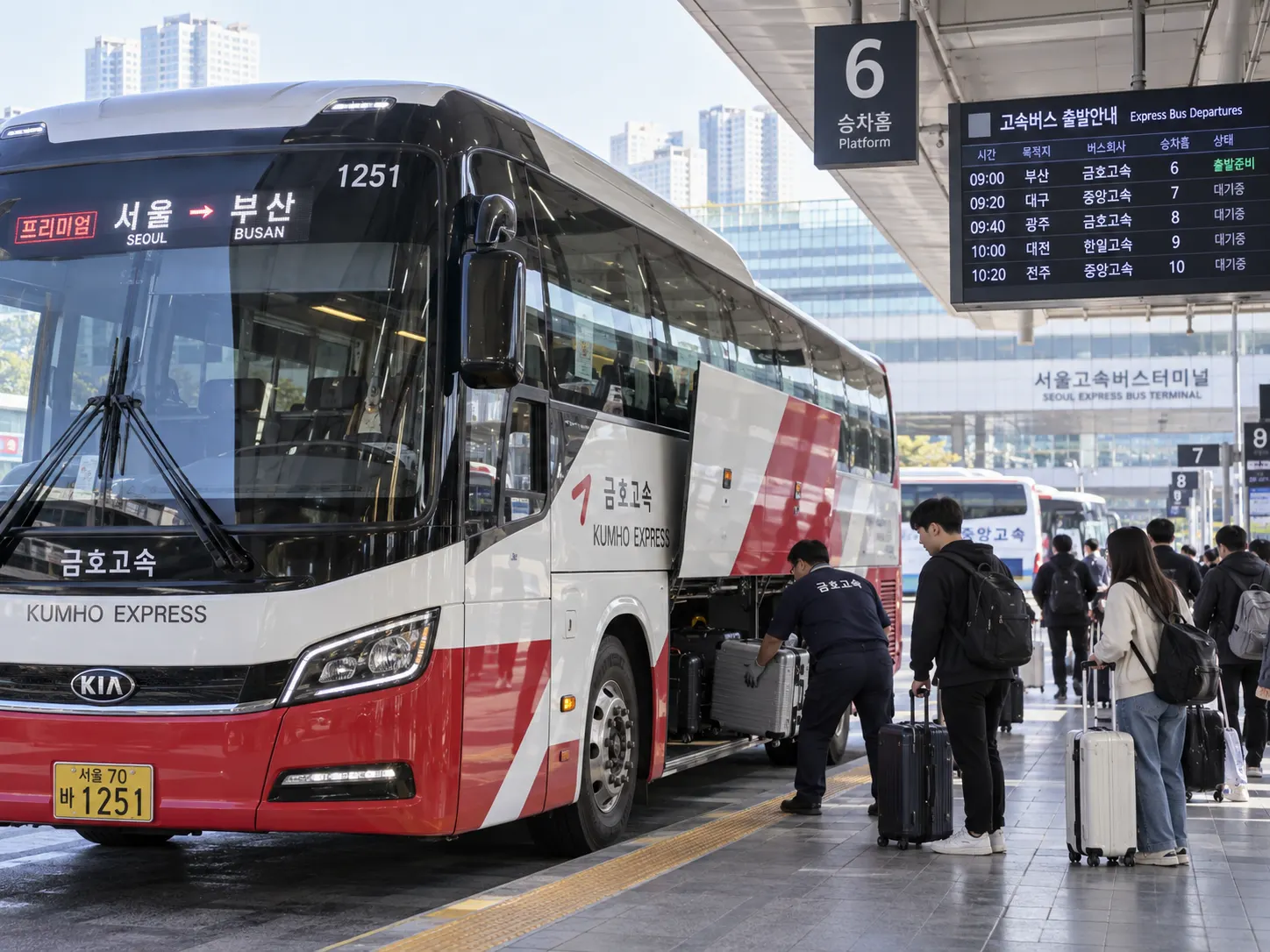
Seat Classes and Typical Costs
Express buses usually offer several seat tiers:
- Standard seats are the cheapest and perfectly comfortable for shorter trips.
- Premium or deluxe seats have wider spacing and a recline that suits long rides.
- First-class style services have fewer, larger seats and cost the most.
As a rough guide, Seoul to Busan often takes about four to five hours and costs somewhere around 25,000 to 45,000 KRW depending on the class and time of day. Check current fares when you book, since prices change.
The Terminal Problem
This is where first-time riders lose time. Seoul has more than one major bus terminal, and your route determines which one you need:
- Seoul Express Bus Terminal in the Gangnam area serves many southbound routes.
- Dong Seoul Terminal on the east side handles routes toward the east and northeast.
- Nambu Terminal serves some southern routes.
Always confirm the departure terminal on your ticket. Arriving at the wrong one is the single most common bus mistake, and the three terminals are not close enough to walk between.
Bus vs. KTX: When to Choose Which
Choose the bus when:
- Your destination is not on a KTX line
- You want a lower fare, especially for off-peak travel
- You value a roomier seat for a long ride
Choose KTX when:
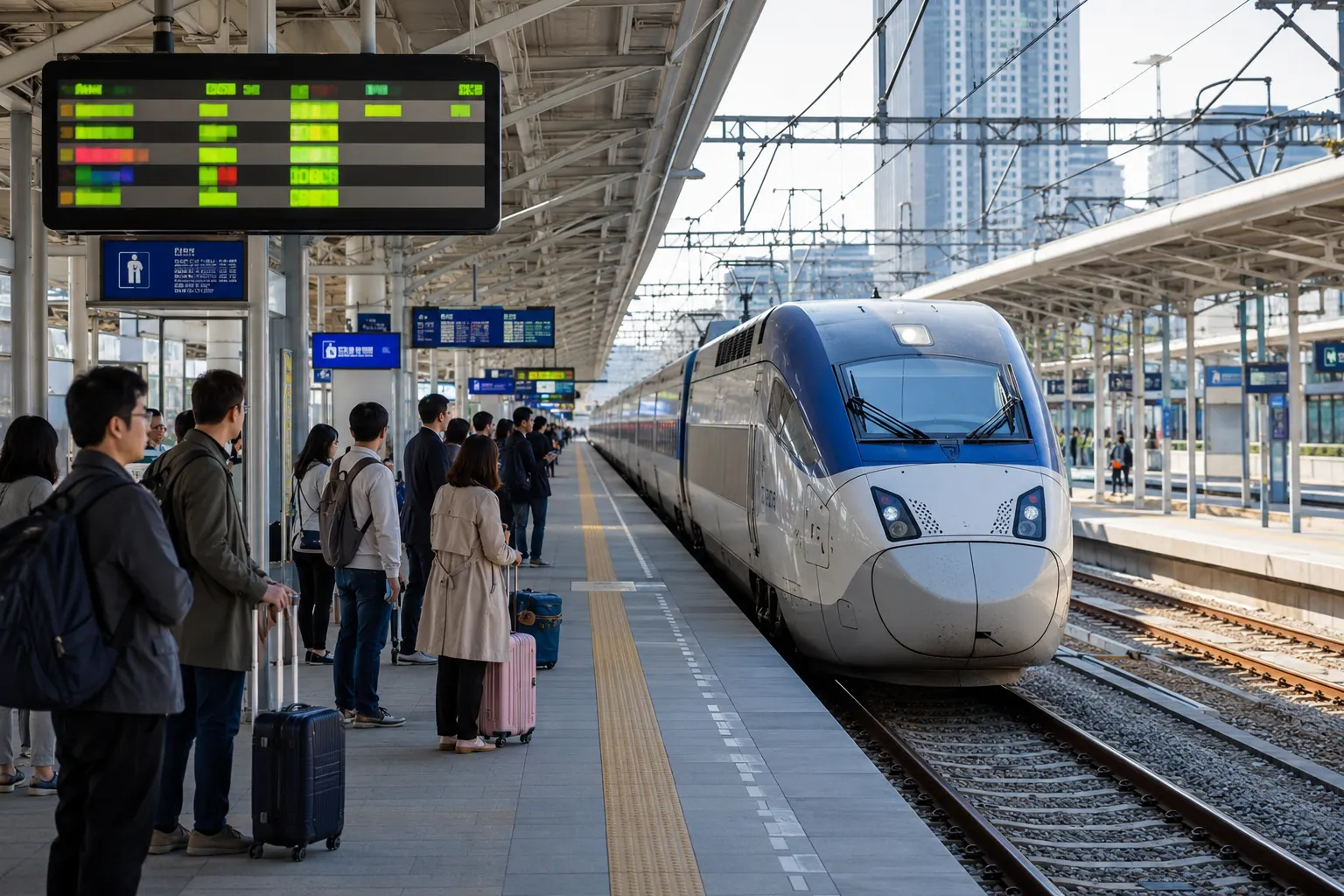
- Time matters most, since high-speed rail is typically faster on the main corridors
- You want a more predictable arrival time, because highway traffic can add delays on weekends and holidays
Practical Tips
- Arrive at least 15 to 20 minutes early and find the boarding gate number on the departure board.
- Rest-stop breaks are usually short, so note the departure time shown on your ticket before getting off.
- Keep your ticket handy, since the driver or an attendant may check it at boarding.
- Large bags go in the luggage hold, so keep your valuables and phone charger with you.
Quick Summary
- Express buses (고속버스) connect major cities, while intercity buses (시외버스) cover smaller towns, and they use different terminals.
- Book through Kobus or Bus Tago, or at terminal kiosks, and reserve early if you are traveling around a major holiday.
- Seoul has several bus terminals, so check your departure terminal before you leave, which is the most common first-time mistake.
- Buses are often cheaper and reach places KTX does not, while KTX is usually faster and more predictable on main routes.