How Korea's KTX High-Speed Rail Works for First-Time Riders
If you're planning to travel between Korean cities and keep seeing "KTX" mentioned as the fast, convenient option, but aren't sure how booking, seating, or station logistics actually work, the system is genuinely straightforward once you understand a few specifics, but a first-timer can easily overpay or miss a train from not knowing the basics. Korea's high-speed rail network connects most major cities efficiently, and understanding how it actually works saves both time and money.
Here's how KTX actually works, how to book smartly, and what first-time riders often get wrong.
What KTX Actually Covers
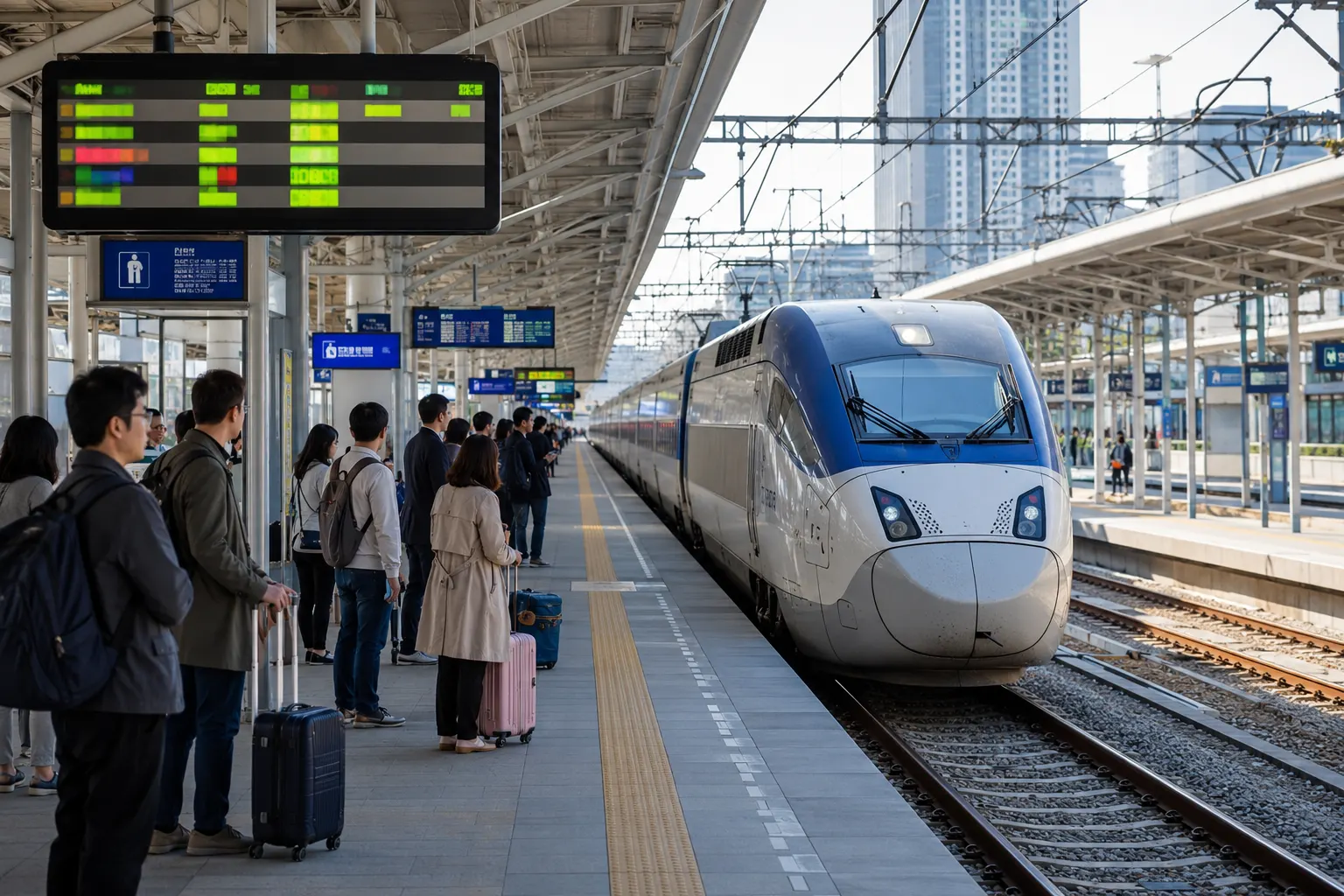
KTX (Korea Train Express) connects Seoul to most major Korean cities at high speed, Busan, Daegu, Daejeon, Gwangju, and several other regional hubs, with travel times dramatically shorter than driving or standard rail for the same distance. A Seoul-to-Busan trip, for example, covering roughly 400km, takes around 2.5 hours on the fastest KTX services, compared to considerably longer by car or standard train.
- SRT (Super Rapid Train) is a separate but similarly fast rail service operating on some of the same routes from a different set of stations (notably Suseo Station rather than Seoul Station), worth checking which service has more convenient stations and timing for your specific trip, since they aren't interchangeable tickets.
- Regular KTX vs. KTX-Sancheon and other variants have slightly different equipment but function similarly for booking purposes, generally not a meaningful distinction for typical passengers beyond minor seating configuration differences.
How to Book Tickets
- Korail's official booking app and website (Korail Talk or the Korail website) allow booking in English, a genuinely convenient option for foreign travelers, seat selection, payment, and e-ticket confirmation can all be completed without needing to visit a station in advance.
- Station kiosks and counters also sell tickets, with English-language options at major stations, useful if you prefer in-person booking or need same-day travel without advance planning.
- Booking in advance generally offers better seat availability and sometimes lower fares during off-peak periods, popular routes and times (Friday evenings, holiday periods) can sell out, particularly around major Korean holidays like Chuseok and Seollal, when advance booking becomes considerably more important.
Seating Classes and What They Actually Cost
- Standard class (일반실) is the default and most economical option, comfortable and perfectly suitable for most travelers.
- First class (특실) offers wider seats and a quieter car, at a meaningful price premium over standard class, worth it primarily for longer routes or if you specifically value the extra space and quiet.
- Standing/non-reserved tickets are sometimes available for sold-out reserved seating on certain routes, cheaper but without a guaranteed seat, generally only worth considering for shorter routes or when reserved tickets have completely sold out.
What First-Time Riders Commonly Get Wrong
- Arriving at the wrong station. Some cities have multiple train stations, and confirming your specific departure station (Seoul Station vs. Yongsan Station, for example, both serve different KTX routes) before travel day avoids a stressful last-minute scramble.
- Underestimating check-in time needed. While KTX doesn't require the extensive check-in process of air travel, arriving with enough buffer to navigate a large station, particularly Seoul Station during peak hours, matters more than assuming you can arrive minutes before departure.
- Not checking whether a route is KTX or SRT before booking, since they depart from different stations and aren't interchangeable, confirming which service actually matches your planned departure point avoids a mismatched booking.
- Assuming all fares are fixed regardless of timing. Korail offers occasional discounted fares for early booking, off-peak times, or specific promotional periods, checking current pricing rather than assuming a flat standard rate always applies can save a meaningful amount, particularly for longer routes.
Discounts and Passes Worth Knowing About
- Korail Pass, aimed at foreign tourists, offers unlimited or multiple-use rail travel within a set period, worth considering if you're planning to visit several cities within a single trip, though calculating whether it's actually cheaper than individual point-to-point tickets depends on your specific itinerary.
- Youth, senior, and other demographic discounts exist for eligible riders, generally requiring appropriate ID verification at booking or boarding.
- Round-trip and advance booking discounts occasionally apply during specific promotional periods, worth checking current offers directly on Korail's booking platform rather than assuming standard one-way pricing is always the only option.
Quick Summary
- KTX connects Seoul to most major Korean cities at high speed, with a Seoul-Busan trip taking roughly 2.5 hours, SRT is a separate but similarly fast service departing from different stations.
- Booking through Korail's English-language app or website is the most convenient option for foreign travelers, advance booking matters more during holidays and peak travel times.
- Confirming your specific departure station and whether your route is served by KTX or SRT avoids common first-time booking mistakes.
- A Korail Pass can be worthwhile for multi-city tourist itineraries, but calculating it against individual ticket costs for your specific plan determines whether it's actually the better value.