Taking Express and Intercity Buses in Korea: Tickets, Terminals, and Travel Tips
Korea’s express and intercity buses reach many places that are inconvenient to visit by high-speed rail. They are especially useful for smaller cities, coastal areas, mountain regions, festivals, and destinations located far from a major train station.
The system is extensive, but international travelers can become confused by separate booking platforms, multiple terminals in one city, Korean-only local routes, and similar destination names.
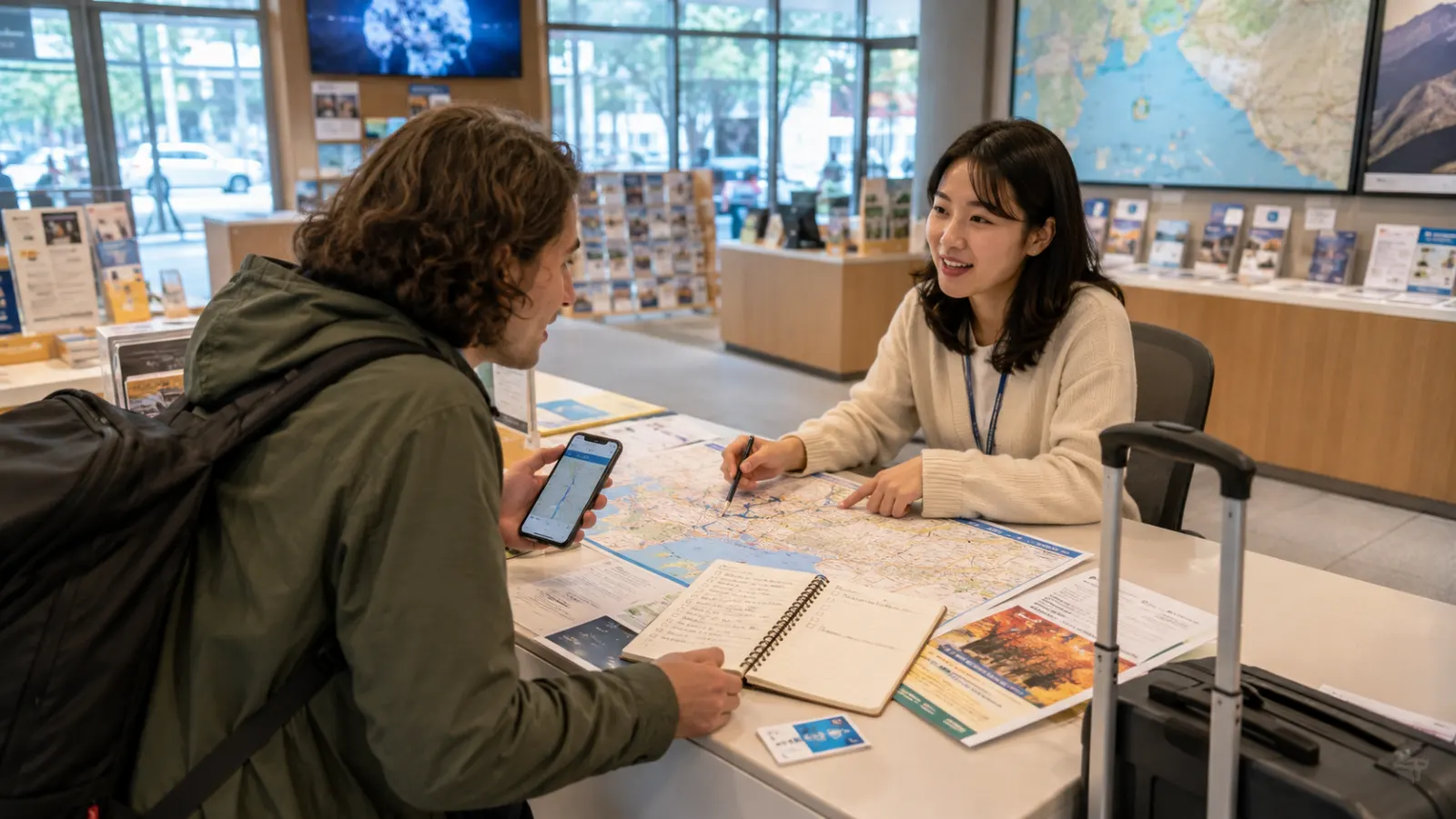
A successful bus trip begins with confirming the exact terminal, not simply the city.
Express buses and intercity buses
Korean long-distance buses are often divided into two broad categories. Express buses are commonly called 고속버스. They tend to connect major cities through designated express-bus terminals and may use highways with limited stops. Intercity buses are commonly called 시외버스. They may connect a wider range of cities, counties, and smaller terminals, sometimes with intermediate stops.
For travelers, the practical difference is that the two categories may use different terminals and booking systems. A route may appear on one platform but not another. When no result appears, this does not necessarily mean that no bus exists. You may be searching the wrong category or terminal.
Confirm the exact departure terminal
Large cities can have several bus terminals. Seoul-area departure points may include terminals in different districts. Other metropolitan areas may also separate express, intercity, airport, and local services. The terminal name on your ticket matters more than the general city name.
Before booking, check:
- Full terminal name
- Korean spelling
- Subway or bus connection
- Distance from your accommodation
- Terminal building or platform area
- Whether the route departs from an express or intercity terminal
A traveler who goes to the wrong terminal may not have enough time to cross the city before departure. Save the destination name in Korean so you can show staff or a taxi driver.
Destination terminals may be outside the center
A terminal named after a city may be located away from the tourist area, beach, mountain, or accommodation. Before purchasing a ticket, check the onward journey from the arrival terminal. Consider:
- Local bus frequency
- Taxi availability
- Last local bus
- Walking distance
- Rural transport gaps
- Weekend and holiday schedules
A direct long-distance bus may still require a taxi at the destination. For hiking, islands, or rural attractions, verify both the outbound and return connections. The final local bus may end much earlier than expected.
Booking online
Some long-distance routes can be booked through Korean bus websites or apps. English support varies by platform and route. Online booking may require:
- Account registration
- Korean mobile number
- Domestic payment method
- Foreign-card support
- Passenger information
- Ticket collection or mobile-ticket confirmation
When online payment fails, buying at the terminal may be the simplest alternative.
For busy weekends and holidays, waiting until arrival at the terminal can be risky. Ask a Korean-speaking friend, hotel staff member, tourist-information center, or appropriate booking service for help when necessary.
Avoid unofficial websites that add unclear fees or provide uncertain cancellation support.
Buying tickets at the terminal
Major terminals usually have ticket counters and automated machines. At the counter, prepare:
- Destination written in Korean
- Desired departure time
- Number of passengers
- One-way or round trip
- Preferred seat type
- Return date if needed
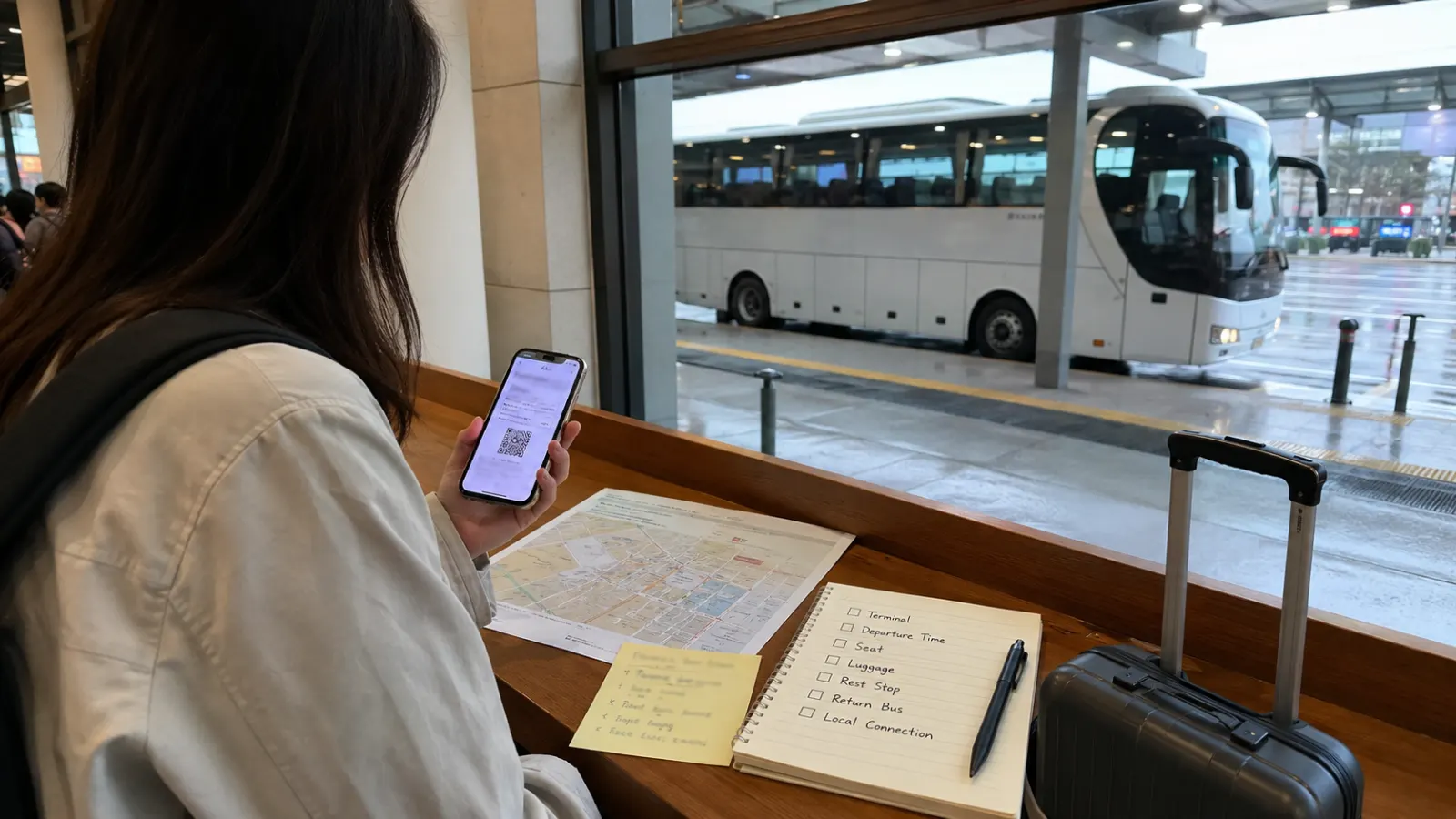
Automated machines may provide limited foreign-language support. Some accept international cards, while others may not. Check the printed or mobile ticket immediately. Confirm:
- Departure date
- Departure time
- Departure terminal
- Destination terminal
- Bus grade
- Seat number
- Platform number when shown
Do not wait until boarding to notice that the date or terminal is wrong.
Bus grades and seat layouts
Long-distance buses may offer different service levels. Common concepts include:
- General or standard buses
- Superior or premium-style buses
- Wider reclining seats
- Fewer seats per row
- Additional legroom
- Privacy partitions or individual screens on some vehicles
Names and features vary by operator and route. A higher-grade bus may be worthwhile for a long journey, overnight travel, or passengers who need more space. Standard buses are usually sufficient for shorter trips. The bus grade does not guarantee freedom from traffic delays.
Traffic can change the arrival time
Long-distance buses use roads, so congestion affects travel time. Delays are more likely during:
- Friday evenings
- Sunday afternoons
- National holidays
- Long weekends
- Summer vacation
- Chuseok
- Lunar New Year
- Major festivals
- Heavy rain or snow
Do not schedule a tight airport, train, ferry, or tour connection immediately after the estimated bus arrival. Build extra time into the itinerary. A route that is usually fast can take much longer during holiday traffic.
Boarding the correct bus
Arrive early enough to locate the platform. Large terminals can have multiple floors, separate gates, shopping areas, and buses leaving for destinations with similar names. Before boarding, compare:
- Destination sign
- Departure time
- Bus company
- Platform
- Seat number
- Ticket barcode
Show the ticket to the driver when unsure. Do not board only because the bus is parked at the expected gate. Platforms can handle several departures in sequence.
Luggage storage
Large bags are generally placed in the luggage compartment under the bus when available. Keep valuables, medication, passports, electronics, and essential documents with you. When using the luggage compartment:
- Confirm the bus destination
- Remember where the bag was placed
- Use a visible luggage tag
- Avoid loose straps
- Take a photo of the bag
- Retrieve it promptly after arrival
At intermediate stops, make sure you do not remove a similar-looking bag. Small items can usually stay with the passenger when they do not block the aisle or another seat.
Rest stops
Longer express-bus journeys may stop at a highway rest area. The driver may announce the available time only in Korean. Watch other passengers and confirm when the bus will depart. Remember:
- Bus company
- Bus color
- Plate or vehicle number
- Parking location
- Seat number
Set a timer and return early. The bus may not wait for a missing passenger. Take your phone and ticket with you. Do not depend entirely on recognizing the bus from a distance in a crowded rest area.
Food, drinks, and behavior
Closed drinks and quiet snacks may be tolerated, but strong-smelling or messy food can disturb other passengers. Keep calls brief and quiet. Use headphones for videos and music. Seats are assigned on most long-distance services. Do not move to another passenger’s seat without checking.
Some passengers recline their seats, but extreme reclining can create conflict. Adjust gradually and consider the person behind you.
Missing the bus
Tickets are usually valid for a specific departure. If you arrive late, the bus may leave without you. The ability to refund or change the ticket depends on the timing, booking method, and applicable ticket conditions. Go to the ticket counter immediately. Do not assume you can use the same ticket on the next bus.
A new ticket may be required, particularly after the scheduled departure time.
Canceling or changing a ticket
Cancellation fees and deadlines can depend on how close the request is to departure. Before booking, check:
- Refund deadline
- Change procedure
- No-show treatment
- Foreign-card refund method
- Mobile-ticket cancellation
- Round-trip ticket conditions
Some systems require canceling and purchasing a new ticket rather than editing the existing reservation. Refunds to an international card may take additional processing time.
Return journeys need planning
A rural destination may have only a few daily buses. Do not assume you can arrive at the terminal and choose any convenient return time. Before leaving the origin city:
- Check the final return bus.
- Save the destination terminal name.
- Confirm whether return tickets can be booked.
- Check local transport to the terminal.
- Prepare a backup route.
- Keep emergency taxi funds.
This is particularly important for beaches, temples, hiking areas, islands, and county-level destinations.
Bus or train?
Choose a long-distance bus when:
- The terminal is closer to your destination
- No convenient train route exists
- A direct bus avoids transfers
- The fare is more suitable
- You are visiting a smaller city
Choose a train when:
- Arrival time needs to be more predictable
- Traffic is expected to be heavy
- You need more walking space
- You prefer station facilities
- The rail station is conveniently located
Compare door-to-door time, not only the scheduled ride duration.
Quick Summary
- Korean express and intercity buses may use different booking systems and terminals.
- Confirm the full Korean terminal name at both ends of the journey.
- Allow extra time for road congestion and important onward connections.
- Plan return transport early when visiting rural or low-frequency destinations.