Taking Ferries to Korean Islands: Booking, Weather, and Boarding Tips
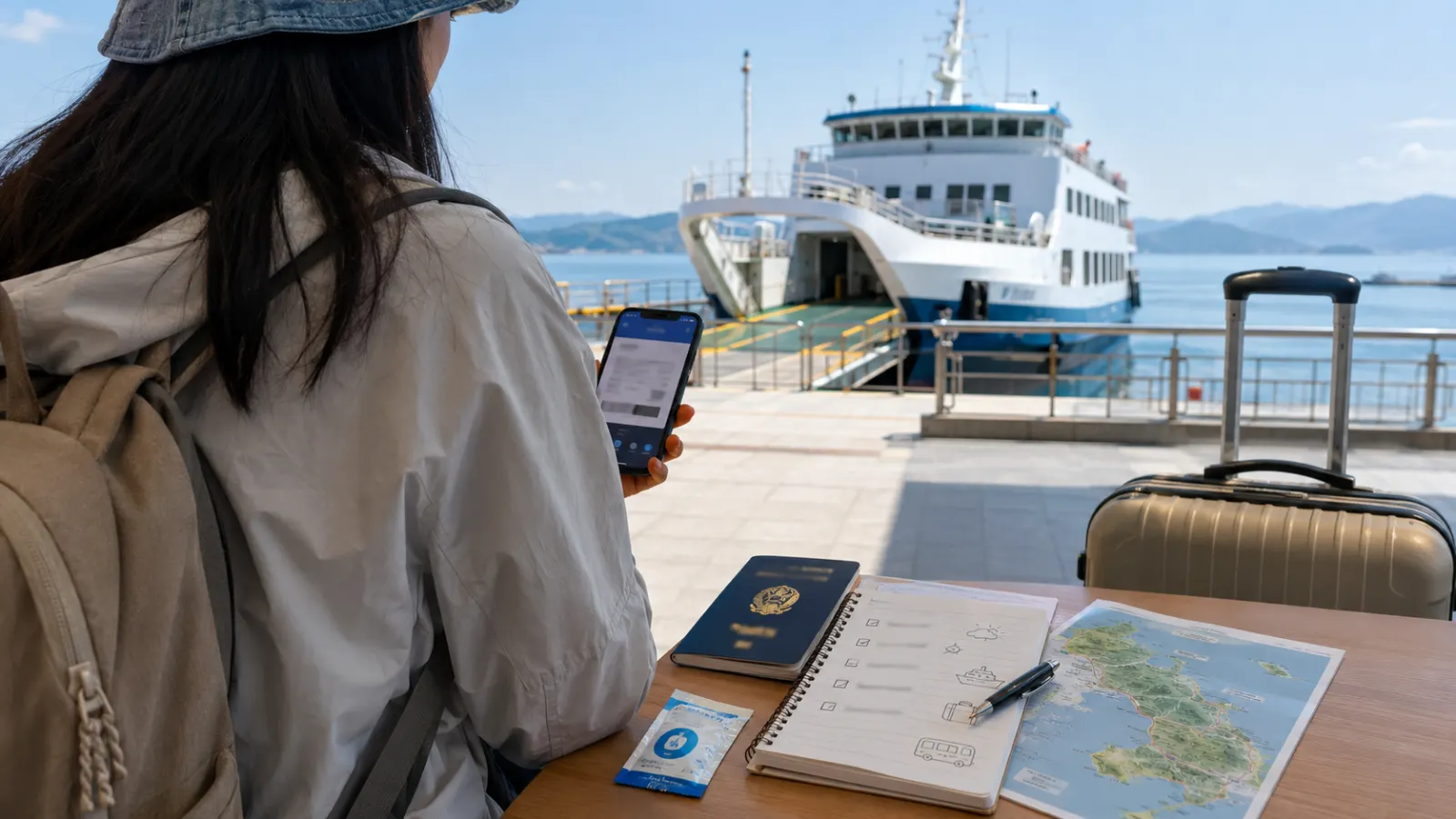
Korea has hundreds of inhabited and uninhabited islands, but many are not connected by bridges or airports. Reaching them can require a passenger ferry from a coastal terminal, sometimes followed by a local bus, taxi, or smaller boat.
Island ferry travel can be scenic and practical, but it is less predictable than taking a city train. Weather, sea conditions, seasonal schedules, identification rules, vehicle reservations, and limited return services all need to be checked before departure.
Start with the correct island and terminal
Some Korean islands have similar names. Others can be reached from more than one port. Before booking, confirm:
- Exact island name in Korean
- Departure terminal
- Arrival port
- Ferry operator
- Travel date
- Passenger or vehicle ticket
- One-way or round trip
- Final local destination
The port may be far from the nearest train station or city center. Search the full Korean terminal name instead of navigating only to the city. A city can have separate passenger terminals for different islands and routes. Save the island, port, accommodation, and terminal names in Korean.
Passenger ferries and vehicle ferries
Not every ferry carries vehicles.
A passenger-only vessel may be faster but offer limited luggage space. A car ferry may transport cars, motorcycles, bicycles, and freight, but reservations and boarding procedures can be more complicated.
When bringing a vehicle, check:
- Vehicle type
- Registration number
- Driver information
- Length or size category
- Reservation requirement
- Loading deadline
- Fuel or safety restrictions
- Rental-car permission
- Insurance coverage
- Return sailing
Do not assume a Korean rental car can be taken onto an island ferry. Ask the rental company and ferry operator first.
Identification may be required
Ferry operators may verify passenger identity for ticketing and boarding. Foreign travelers should carry an original accepted identification document, usually the same document used for the booking. Enter names carefully. Middle names, spacing, and passport order can create confusion when the reservation system is designed mainly around Korean names.
Children may have separate documentation requirements. Do not rely only on a photograph of your passport unless the operator explicitly says it is accepted.
Booking systems can be difficult for foreigners
Some routes can be booked online, while others rely on operator websites, Korean phone reservations, local ticket offices, or same-day sales. Foreign residents may face problems involving:
- Korean phone verification
- Korean-only interface
- Domestic card payment
- Name-length limits
- Resident or citizen categories
- Foreign-card rejection
When online booking is not practical, contact the ferry terminal, tourism office, accommodation, or operator directly. An island guesthouse may know the route well, but payment and ticket responsibility still remain with the traveler. Do not buy through an unofficial seller without clear cancellation and refund terms.
Weather can cancel the trip
Ferries are more affected by wind, waves, visibility, and marine warnings than ordinary ground transportation. A sunny day in Seoul does not prove that a coastal route is operating. Check the sailing status:
- The evening before
- The morning of travel
- Before leaving for the terminal
- Before the return journey
The operator makes the final sailing decision. Build flexibility into accommodation, rental cars, onward transport, and flights. A cancellation can leave you on the mainland or island for an extra night. Do not schedule an international flight immediately after a weather-sensitive island connection.
Arrive earlier than you expect
A ferry ticket may need to be collected at the terminal. Vehicle passengers often have earlier loading requirements than foot passengers. Arrive with enough time to:
- Find the correct building
- Park or unload
- Present identification
- Collect tickets
- Check baggage
- Locate the boarding gate
- Buy motion-sickness medicine
- Confirm the return schedule
Small terminals can still become crowded on weekends and holidays. Missing check-in can mean losing the sailing even when the vessel is still visible at the dock.
Seating and cabin types
Ferries vary widely. A short route may have ordinary seated cabins. A longer route may offer floor seating, recliners, private rooms, shared cabins, outdoor decks, restaurants, or vending machines. Before booking, check:
- Assigned or unassigned seating
- Shoes-off floor room
- Private cabin
- Shared sleeping space
- Accessibility
- Food availability
- Restrooms
- Outdoor deck
- Charging points
- Pet rules
A “room” may be a shared floor space rather than a private cabin. Bring socks and comfortable clothing when a shoes-off seating area is used.
Motion sickness
Even travelers comfortable on large ships can feel sick on smaller ferries. Helpful preparation can include:
- Eating a light meal
- Avoiding excessive alcohol
- Choosing a stable seating area
- Looking toward the horizon
- Getting fresh air where permitted
- Carrying water
- Using appropriate motion-sickness medicine
Ask a pharmacist about medication and timing based on your health and current medicines. Do not wait until severe nausea begins if you already know you are prone to motion sickness.
Luggage rules
Passenger baggage allowances and storage arrangements vary. Large suitcases may need to be placed in a shared storage area. Keep passports, money, medication, electronics, and accommodation information with you. Label your bags and avoid blocking aisles.
For bicycles, camping equipment, fishing gear, surfboards, or pets, contact the operator before travel. Additional fees or reservations may apply. Do not assume an item allowed on a train will automatically be accepted on a ferry.
Island transportation after arrival
The ferry port may not be near your hotel, beach, hiking trail, or village. Before traveling, check:
- Local bus timetable
- Taxi availability
- Rental car or scooter
- Accommodation pickup
- Bicycle rental
- Walking distance
- Last connection
- Payment method
Some islands have limited public transportation and few taxis. Arrange pickup in advance when arriving late or carrying heavy luggage. Download maps and addresses before sailing because mobile reception may be weaker in remote areas.
Return tickets matter
The outbound ferry may have many seats while the preferred return sailing sells out. Book the return journey early when:
- Traveling on a weekend
- Visiting during a holiday
- Bringing a car
- Attending a festival
- Using the final sailing of the day
- Connecting to a flight or train
Always check the last ferry. Missing it can require another night of accommodation. A round-trip booking does not protect you from weather cancellation, so maintain a backup plan.
What to do after cancellation
When a sailing is canceled:
- Confirm whether the ticket will be refunded or changed.
- Ask when the next expected sailing is.
- Contact accommodation.
- Change ground transportation.
- Keep cancellation evidence for insurance.
- Avoid pressuring staff to operate in unsafe conditions.
- Recheck weather and marine notices.
Refund procedures can differ by operator and payment channel. A ticket purchased through a third party may need to be refunded through that seller rather than at the terminal.
A practical ferry checklist
Before booking:
- Confirm island and ports
- Check passenger or vehicle ferry
- Review identification
- Understand payment and refund rules
- Check local island transportation
- Book the return trip
Before boarding:
- Check operating status
- Carry original ID
- Arrive early
- Prepare for motion sickness
- Keep valuables with you
- Save accommodation details offline
Ferry schedules and operating status are inherently changeable. Use the operator or terminal as the final source on the day of travel rather than relying on an old travel blog.
Quick Summary
- Confirm the exact Korean island, departure terminal, and arrival port before booking.
- Ferry schedules can change or be canceled because of marine conditions.
- Vehicle transport usually requires additional reservation and earlier boarding.
- Book the return sailing and plan local island transportation before departure.