Health
How Acupuncture and Traditional Korean Medicine Clinics Work
By New In Korea TeamPublished Updated
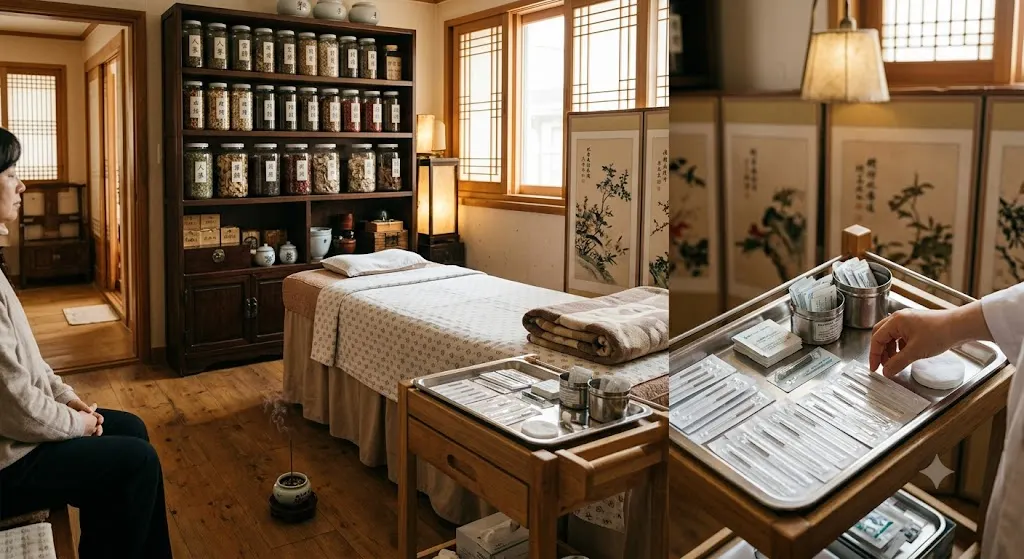
If you're curious about trying acupuncture or another traditional Korean medicine treatment while living in Korea, or a Korean friend has suggested visiting a hanuiwon (한의원) for something you'd normally see a Western-style doctor for, understanding how this genuinely separate branch of Korea's healthcare system actually operates, what it treats, and how insurance coverage works helps you approach it as an informed patient rather than either dismissing it or expecting it to function identically to Western medical care.
Here's how Korean traditional medicine clinics actually work.
Traditional Korean Medicine as a Parallel, Licensed System
- Traditional Korean medicine (한의학) operates as a fully licensed, government-recognized parallel medical system, distinct from but coexisting alongside Western-style medicine, hanuiwon practitioners (한의사) complete specific accredited educational and licensing requirements, this isn't an informal or unregulated practice but a formally recognized branch of Korea's overall healthcare system.
- Many Koreans use both systems, sometimes for different types of concerns, sometimes in combination for the same condition, as touched on in how physical therapy and rehab clinics work in Korea, understanding traditional medicine and Western orthopedic treatment as genuinely different treatment philosophies, rather than competing options where one is universally superior, reflects how many Korean patients themselves approach the choice.
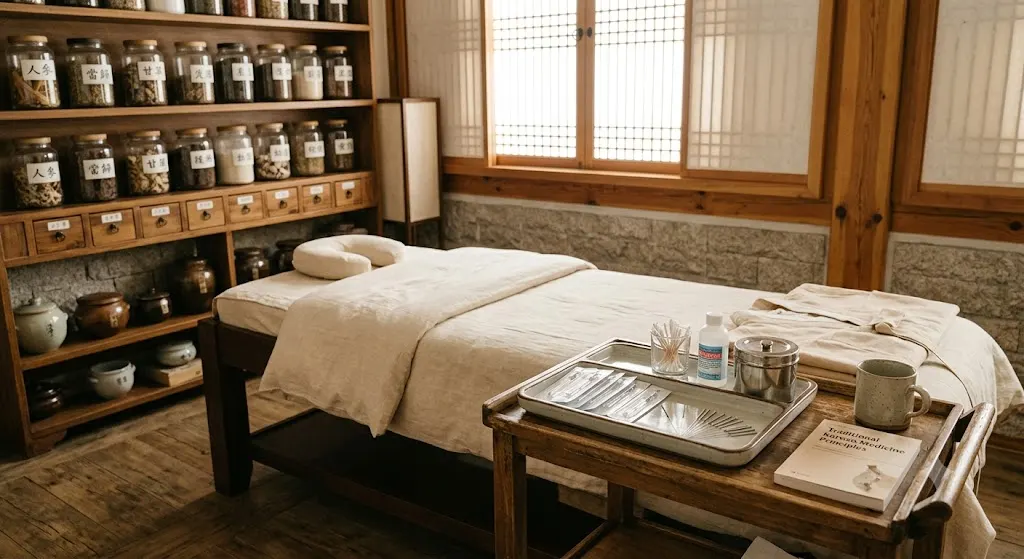
- Common treatments include acupuncture, cupping, herbal medicine prescriptions, and various manual therapy techniques, each with its own specific application and, according to traditional Korean medicine theory, therapeutic purpose.
What Conditions People Commonly Seek Treatment For
- Musculoskeletal pain and tension, back pain, neck stiffness, joint discomfort, represents one of the most common reasons people visit a hanuiwon, sometimes as a primary treatment approach, sometimes as a complement to Western orthopedic or physical therapy treatment for the same condition.
- General wellness and stress-related concerns, fatigue, digestive issues, and general vitality concerns are commonly addressed through herbal medicine consultations, reflecting a more holistic treatment philosophy distinct from Western medicine's typically more condition-specific diagnostic approach.
- Postpartum recovery support, some traditional medicine treatment specifically supports postpartum recovery, sometimes used alongside or as an alternative to the joriwon postpartum care center approach covered separately, reflecting traditional Korean approaches to this specific recovery period.
What National Health Insurance Covers
- Acupuncture coverage under NHI has expanded meaningfully in recent years for certain conditions and treatment courses, though coverage isn't as comprehensive as standard Western medical treatment, understanding your specific treatment's current coverage status directly with the clinic before assuming full or partial coverage matters for accurate cost expectations.
- Herbal medicine prescriptions generally have more limited NHI coverage compared to acupuncture treatment, often representing a larger out-of-pocket cost component of traditional medicine treatment, worth understanding this cost structure before committing to an extended herbal treatment course.
- Cupping and certain other manual therapy techniques have varying coverage status depending on the specific treatment and clinical context, checking directly with your specific clinic about current coverage for your specific planned treatment avoids assuming a uniform coverage structure that doesn't actually apply.
What a Typical Visit Involves
- An initial consultation, generally involving traditional diagnostic methods distinct from Western medical examination, pulse diagnosis, tongue examination, and a detailed discussion of your symptoms and overall constitution according to traditional Korean medicine theory.
- A recommended treatment plan, which may include a specific number of acupuncture sessions, an herbal medicine prescription with a specific dosing schedule, or a combination approach, understanding the recommended treatment course and its expected duration matters for planning both time and cost commitment.
- Follow-up visits and treatment adjustment, similar to how ongoing Western medical treatment involves progress reassessment, traditional medicine treatment courses generally involve periodic reassessment and potential adjustment based on how you're responding.
Considerations for Foreign Patients
- Language support varies significantly by clinic, similar to other Korean healthcare settings, larger clinics or those in areas with more foreign residents may have better English communication capacity, though traditional medicine terminology itself can be genuinely difficult to translate precisely even with reasonable general English support.
- Understanding treatment philosophy differences matters for setting appropriate expectations, traditional Korean medicine's diagnostic and treatment approach differs conceptually from Western biomedical models, approaching a hanuiwon visit with openness to this different framework, while still applying reasonable judgment about your own health needs, tends to produce a more satisfying experience than expecting an identical framework to Western medical consultation.
- Combining treatments responsibly, if you're using both Western medical treatment and traditional medicine for the same condition, informing both providers about your parallel treatment helps avoid any potential interaction concerns, particularly relevant if herbal medicine is involved alongside any prescribed Western medication.
Quick Summary
- Traditional Korean medicine operates as a fully licensed, parallel medical system with its own accredited practitioners, distinct from but coexisting alongside Western-style medicine in Korea's overall healthcare landscape.
- Musculoskeletal pain, general wellness concerns, and postpartum recovery represent common reasons for seeking traditional medicine treatment, often used alongside rather than instead of Western medical care.
- Acupuncture coverage under National Health Insurance has expanded for certain conditions, though herbal medicine and some other treatments generally carry higher out-of-pocket costs, worth confirming current coverage directly with your specific clinic.
- Approaching a hanuiwon visit with openness to its genuinely different diagnostic and treatment philosophy, while informing all your healthcare providers about any parallel treatment, helps you use this system thoughtfully and safely.