Health
How Allergy Testing and Management Work in Korea for Foreigners
By New In Korea TeamPublished
If you've developed unexplained symptoms in Korea and suspect a new allergy, whether environmental, food-related, or seasonal, or you're managing a known allergy from home and unsure how testing and treatment translate to the Korean healthcare system, allergy care here follows a fairly structured medical pathway, but knowing which type of specialist to see and what testing actually involves saves unnecessary appointments.
Here's how allergy testing and management actually work in Korea.
Where to Start: Which Specialist Handles What
- Allergy and clinical immunology specialists (알레르기내과), sometimes part of a larger internal medicine department at hospitals, handle comprehensive allergy testing and long-term management for complex or unclear allergy presentations.
- Dermatologists (피부과) are the more common first stop for skin-related allergic reactions specifically, hives, contact dermatitis, or unexplained skin irritation, rather than a general allergy specialist, particularly for a straightforward skin-focused concern.
- ENT specialists (이비인후과) commonly handle allergic rhinitis and seasonal allergy symptoms affecting the nose, sinuses, and throat, a very common reason for allergy-related clinic visits in Korea given the country's notable seasonal pollen and, particularly in certain months, fine dust concerns.
- General practitioners or internal medicine clinics can often provide an initial assessment and refer you to the appropriate specialist if your symptoms don't clearly point to one specific category from the outset.
What Allergy Testing Actually Involves
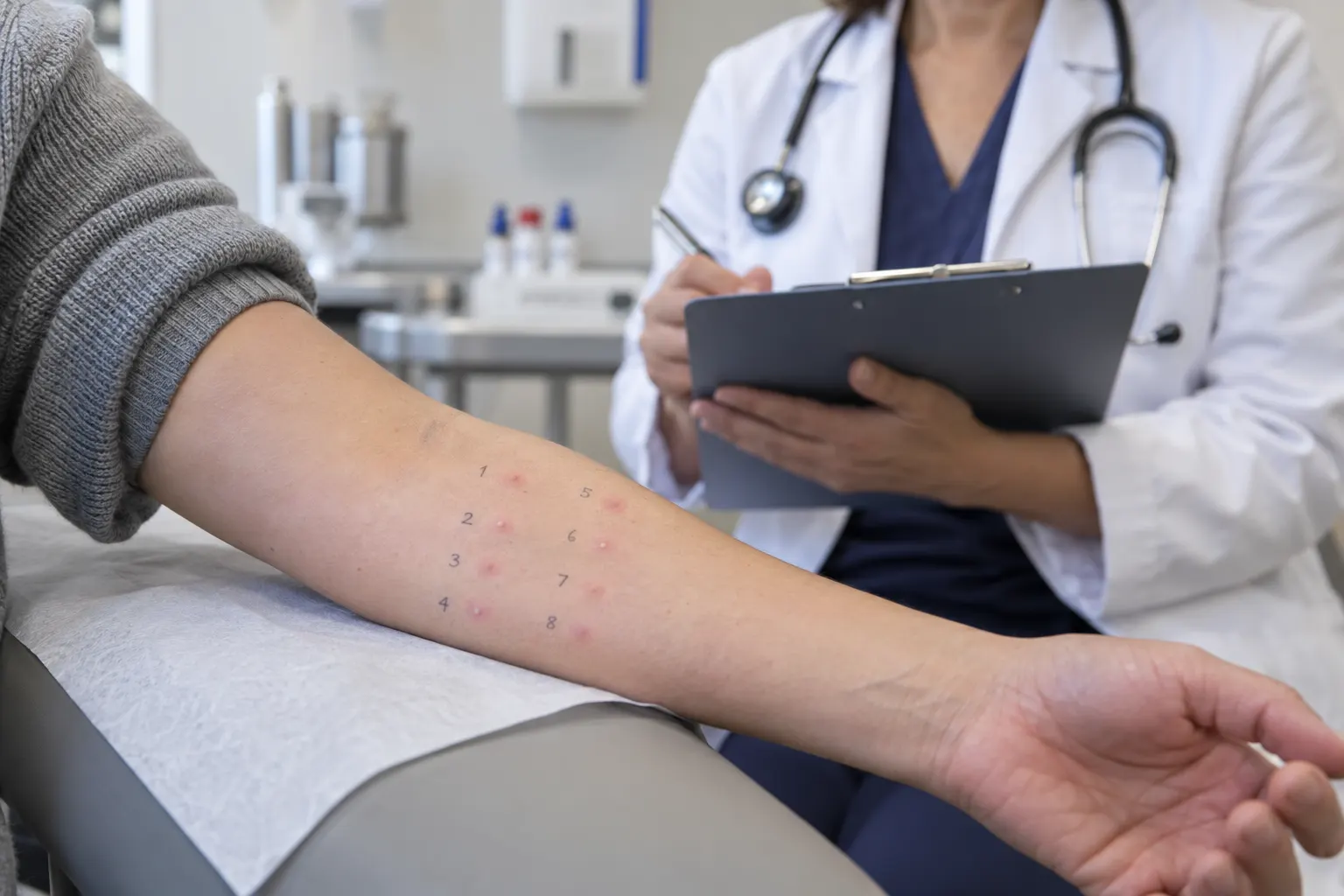
- Skin prick testing, a common initial diagnostic method, involves exposing small areas of skin to a panel of common allergens and observing reaction, generally covers a standard panel of frequently relevant allergens rather than testing for literally every possible substance.
- Blood tests (specific IgE testing) offer an alternative or supplementary testing method, particularly useful if skin testing isn't appropriate for your specific situation or if a more targeted blood-based confirmation is needed.
- Testing panels available in Korea are generally calibrated toward allergens common in the Korean environment and diet, if you have a suspected allergy to something less common locally, discussing this specifically with your doctor, rather than assuming a standard panel automatically covers your specific concern, matters for getting an accurate test.
National Health Insurance Coverage for Allergy Care
- Allergy specialist consultations and standard diagnostic testing are generally covered under NHI at the standard partial copay structure, similar to other medical specialist visits.
- Ongoing allergy management, including prescribed medication, is generally covered similarly to other prescription medication under NHI, though specific newer or specialized treatments may have different coverage levels worth confirming with your specific provider.
- Allergy immunotherapy (allergy shots), if pursued as a longer-term management approach, involves its own specific coverage and treatment timeline considerations, worth discussing directly with a specialist if this is a treatment path you're considering rather than assuming standard coverage automatically applies.
Common Situations Foreign Residents Encounter
- New seasonal allergy symptoms developing after moving to Korea, sometimes surprising residents who didn't previously experience significant seasonal allergies, reflects genuine exposure to a new environmental allergen profile, Korea's specific pollen seasons and, in certain periods, elevated particulate matter levels can trigger symptoms in people without a prior history of seasonal allergy issues.
- Food allergy management in a new food culture, understanding Korean ingredient labeling and communicating specific food allergies at restaurants, given less universal allergen labeling standardization compared to some other countries, requires more proactive communication, bringing a translated card describing your specific allergy clearly helps when dining out.
- Managing an existing, previously diagnosed allergy with Korean healthcare providers, bringing documentation of your prior diagnosis and any current treatment plan from home helps a new provider understand your situation efficiently rather than starting the diagnostic process entirely from scratch.
Common Mistakes and Misunderstandings
- Assuming allergy testing here covers an identical panel to what you might have received in your home country, testing panels are calibrated toward locally relevant allergens, worth discussing your specific concerns directly rather than assuming automatic equivalence.
- Not communicating food allergies clearly enough at restaurants, given less standardized allergen labeling in much of Korea's food service industry compared to some other countries, proactive, clear communication matters more here than passive reliance on menu labeling alone.
- Delaying evaluation of new symptoms, assuming unfamiliar seasonal or environmental symptoms will simply resolve without investigation, when a relatively straightforward specialist visit could clarify and effectively manage a genuine new allergy.
- Not bringing prior diagnosis documentation when transferring ongoing allergy management to a Korean provider, translated documentation of your history helps establish continuity of care more efficiently.
Quick Summary
- Different specialists handle different allergy presentations in Korea, dermatologists for skin reactions, ENT specialists for seasonal and respiratory allergies, and dedicated allergy/immunology specialists for complex or unclear cases.
- Skin prick and blood-based (specific IgE) testing are both used diagnostically, with testing panels generally calibrated toward locally common allergens rather than universally comprehensive coverage.
- National Health Insurance generally covers standard allergy consultations, testing, and prescribed medication at the usual partial copay structure, similar to other medical specialties.
- New seasonal allergy symptoms developing after moving to Korea reflect genuine exposure to a different environmental allergen profile, worth taking seriously and evaluating rather than assuming symptoms will resolve on their own.