How Korean Eye Emergencies and Urgent Eye Care Work for Foreigners
If something gets in your eye, your vision suddenly changes, or an eye turns red and painful in Korea, you may wonder whether to wait for a clinic or go straight to an emergency room. Urgent eye care in Korea is available through ophthalmology clinics, hospital eye departments, and ERs, and sudden vision problems should be treated as urgent. Knowing where to go first saves valuable time.
This is general information, not medical advice. If you think your vision is at risk, seek care right away or call 119.
The Quick Answer: Where to Go
- Neighborhood ophthalmology clinic (안과): suitable for redness, irritation, mild pain, styes, and minor infections, usually with same-day visits.
- Hospital eye department or ER: better for sudden vision loss, severe pain, chemical exposure, eye injuries, or anything after trauma.
- 119: for severe injury or if you cannot get there safely.
If you are unsure, go to a hospital with an emergency department, since they can triage your symptoms and send you to an eye specialist.
Symptoms That Should Not Wait
Seek urgent care for:
- Sudden loss or sharp change in vision
- Flashes of light, a curtain over your vision, or many new floaters
- Severe eye pain, especially with nausea or headache
- A chemical splash, which needs immediate rinsing with clean water for a prolonged period while you get help
- A penetrating injury or a foreign object stuck in the eye
- A red eye after contact lens wear that is painful or sensitive to light
Do not rub your eye or remove an embedded object yourself.
Contact Lens Wearers
Painful red eyes in contact lens wearers can indicate infection, which can progress quickly. Remove your lenses, avoid wearing them until examined, and bring the lenses and case to the clinic.
What to Expect at the Clinic
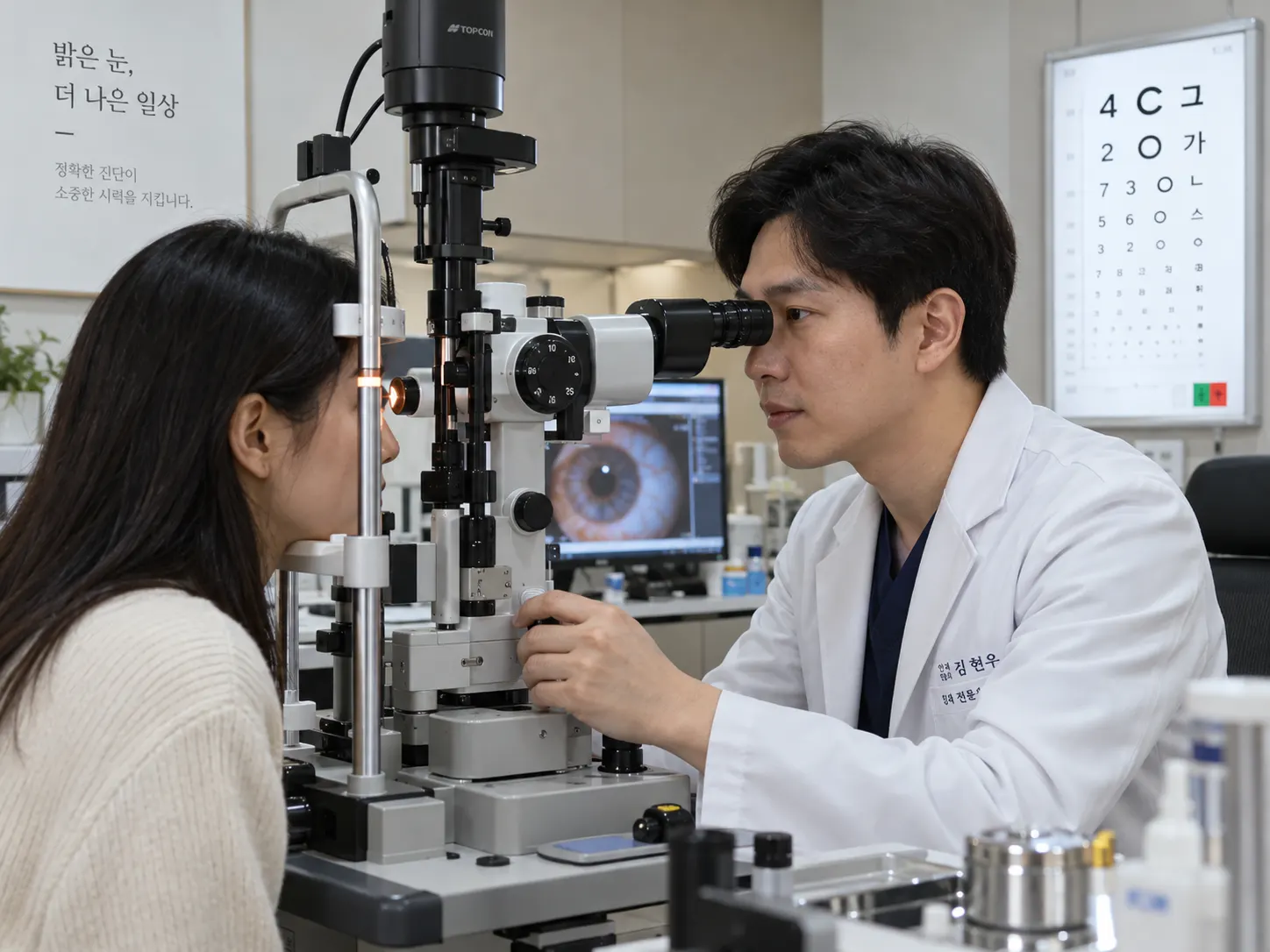
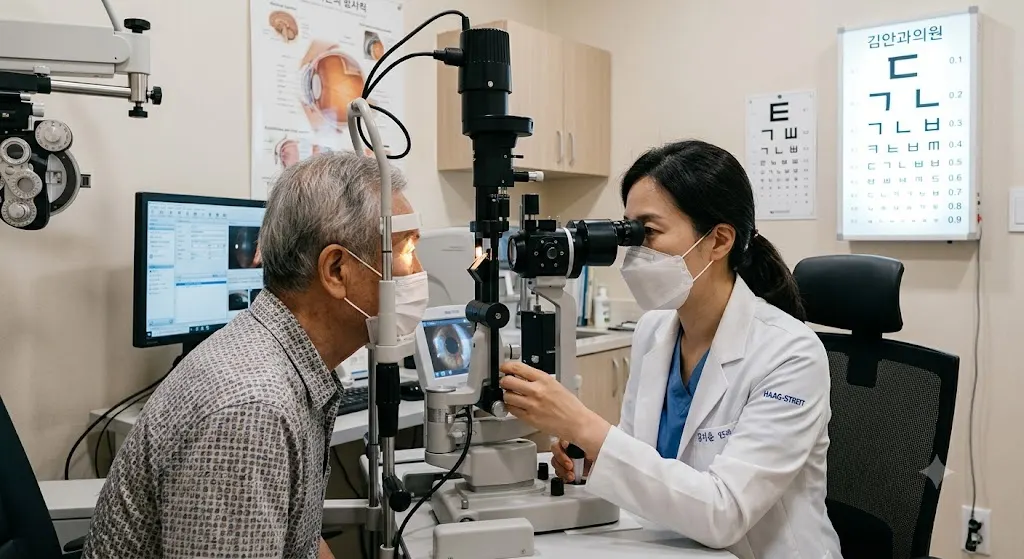
Eye clinics are efficient. The doctor examines your eye, may use a slit lamp, and may check pressure or take drops. Treatment often includes prescription eye drops, filled at a nearby pharmacy. Same-day appointments are common, and many clinics accept walk-ins.
Cost and Insurance
Eye care for medical conditions is generally covered by National Health Insurance at a partial copay, as covered in the eye exam guide, while routine glasses prescriptions and cosmetic procedures are not. ER visits cost more than clinic visits, as covered in the ER triage guide, but cost should not delay care for a serious symptom.
Language Tips
Prepare simple phrases or use a translation app:
- "눈이 아파요" (my eye hurts)
- "잘 안 보여요" (I can't see well)
- "충혈됐어요" (my eye is red)
Larger hospitals with international clinics generally offer more English support.
Common Mistakes
- Waiting on sudden vision changes. These can be urgent.
- Wearing lenses with a painful red eye. It can worsen infection.
- Using leftover eye drops. Use only what a doctor recommends.
- Going to a clinic for a serious injury. Choose a hospital with an ER.
Quick Summary
- Ophthalmology clinics handle mild eye problems, while sudden vision changes, severe pain, injuries, and chemical exposure need a hospital ER.
- Contact lens wearers with a painful red eye should remove lenses and be examined promptly.
- National Health Insurance generally covers medically necessary eye care at a partial copay.
- Use simple Korean phrases or a translation app, and choose a hospital with an international clinic if you want more English support.