Buying Glasses in Korea: Eye Exams, Frames, Lenses, and Questions Foreigners Should Ask
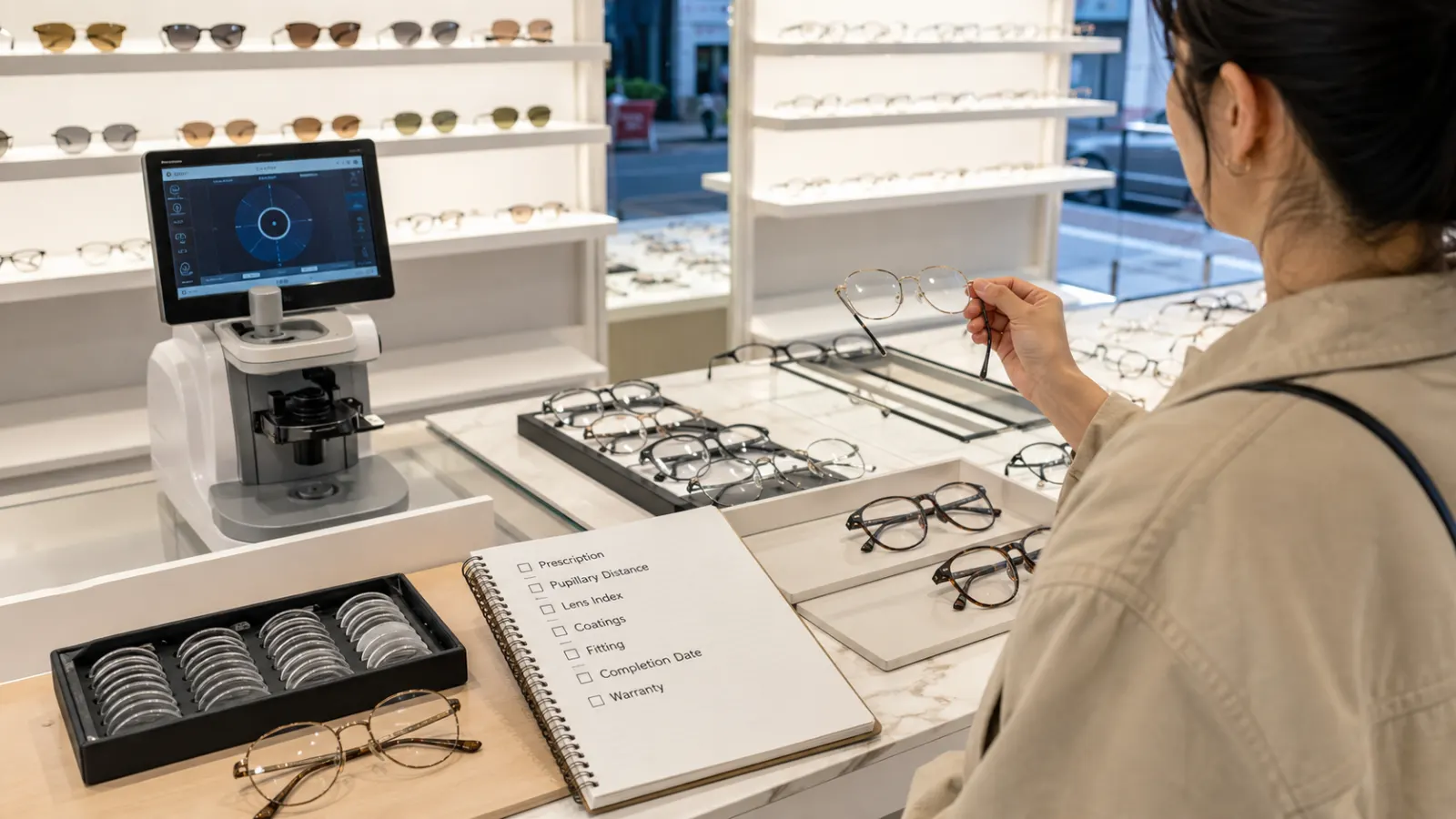
Eyeglass shops are easy to find in Korean shopping districts, subway areas, university neighborhoods, and large malls. Many can perform a basic vision test, prepare common prescriptions quickly, and offer a wide range of frame and lens prices.
The convenience can be attractive to travelers and foreign residents, but buying glasses should not be treated as a simple fashion purchase. Lens type, prescription accuracy, fitting, eye health, and after-service all matter.
Understanding Korean optical shops
An eyeglass shop is commonly called 안경점 or 안경원. Many shops provide:
- Vision measurement
- Frame fitting
- Prescription lenses
- Sunglasses
- Contact lenses
- Nose-pad replacement
- Screw tightening
- Frame adjustment
- Basic repairs
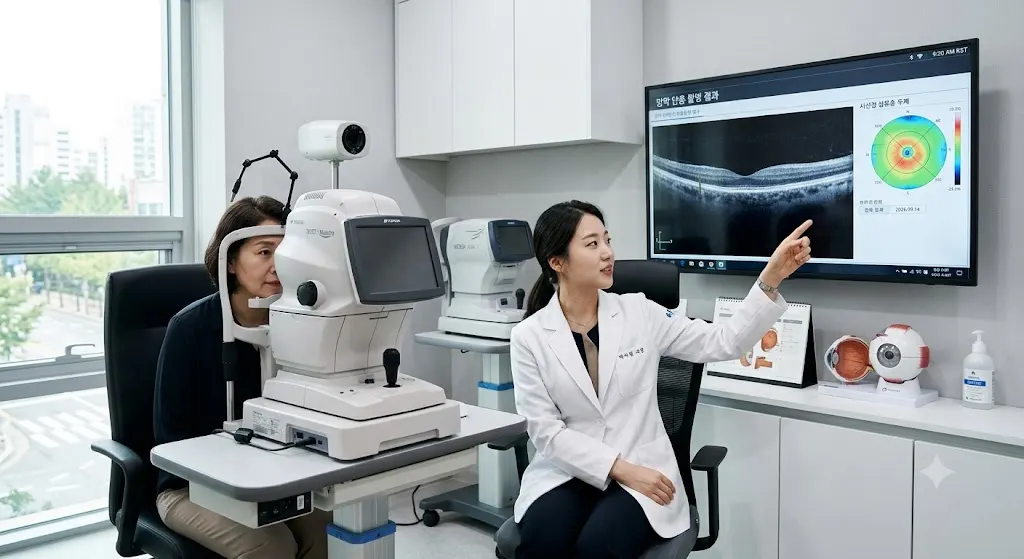
An optician can measure vision and prepare corrective glasses, but a retail eye test is not the same as a full medical eye examination.
If you have eye pain, sudden vision loss, flashing lights, severe redness, double vision, injury, or a rapidly changing prescription, visit an eye clinic rather than relying only on an optical shop.
An ophthalmology clinic is called 안과.
Do you need a prescription?
A Korean optical shop may be able to measure your vision without a separate doctor’s prescription for an ordinary glasses purchase. However, bringing an existing prescription can be useful, particularly when you have:
- Strong nearsightedness
- Astigmatism
- Progressive lenses
- Prism correction
- Significant difference between eyes
- Previous eye surgery
- A complicated medical history
- Difficulty adapting to new glasses
Bring your current glasses even when you do not have the written prescription. The shop may be able to measure the existing lenses and compare them with the new test. Do not assume your old prescription is still appropriate if your vision has changed.
Basic vision tests have limitations
A shop-based test may check distance vision, lens power, astigmatism, and visual balance. The result can be affected by:
- Fatigue
- Dry eyes
- Recent contact-lens use
- Long hours looking at a screen
- Blood-sugar changes
- Language misunderstanding
- Overly strong correction preferences
Tell the optician when your vision feels uncomfortable rather than trying to guess the “correct” answer.
A slightly weaker prescription may be more comfortable for some near-work situations, while driving or distance use may require a different priority. Discuss how you will use the glasses.
Bring your pupillary distance information
Pupillary distance is the measurement used to align lenses with your eyes. A poor alignment can cause discomfort, distortion, headaches, or difficulty adapting, particularly with strong or progressive lenses. The shop should normally measure this as part of fitting. Make sure the frame is sitting in its natural position during the measurement.
Online glasses orders sometimes ask customers to provide the measurement themselves. An inaccurate self-measurement can reduce lens quality even when the prescription is correct.
Frame prices do not tell the full story
Korean optical stores may advertise inexpensive frame packages, but the final price can increase after lens options are added. Possible additional costs include:
- Higher-index lenses
- Astigmatism correction
- Progressive lenses
- Photochromic lenses
- Polarized lenses
- Special coatings
- Blue-light filtering
- Thinner custom designs
- Premium lens brands
- Rush service
Ask for the total price before the lenses are ordered or cut. A useful question is: “What is included in this price, and what is optional?”
The shop should be able to separate the frame price, lens price, coating cost, and any discount.
Lens thickness and index
People with stronger prescriptions may be offered higher-index lenses. These can reduce thickness and weight, although the final result also depends on frame size, shape, and prescription.
A very large frame can produce thick lens edges even with upgraded material. A smaller frame may provide a lighter and more attractive result. Ask the optician to compare:
- Expected thickness
- Weight
- Optical clarity
- Cost
- Frame compatibility
- Edge appearance
- Distortion
The highest index is not automatically the best option for every prescription.
Blue-light filters and optional coatings
Blue-light filtering is heavily marketed in many countries, including Korea.
Some users prefer the appearance or reduced glare from particular coatings, while others notice color changes or reflections. Marketing claims can be broader than the practical benefit a customer experiences.
Ask what the coating actually changes and whether it affects:
- Lens color
- Reflections
- Night driving
- Screen appearance
- Scratch resistance
- Cleaning
- Warranty
Anti-reflective and scratch-resistant coatings may be useful independently of blue-light filtering. Do not accept an upgrade only because it is described as necessary for all screen users.
Progressive and reading lenses
Progressive lenses require more precise measurements and adaptation than ordinary single-vision glasses. Discuss:
- Reading distance
- Computer distance
- Driving needs
- Frame height
- Previous progressive-lens use
- Adaptation period
- Remake policy
A frame that is too shallow may limit the usable zones of a progressive lens.
If you mainly work at a desk, office or computer lenses may be more suitable than general progressive lenses. Explain your actual working distance rather than asking simply for “reading glasses.”
How fast can glasses be made?
Simple single-vision glasses with common lens powers may be prepared quickly when the lenses are in stock. More complicated lenses may require additional time, including:
- Strong prescriptions
- Unusual astigmatism
- Progressives
- Prism correction
- Specialized coatings
- Imported lenses
- Custom tinting
Travelers should not assume every pair can be completed the same day. Ask for the completion date before paying, particularly when leaving Korea soon. Leave time for fitting corrections after collection.
Frame fitting is part of the purchase
Even an accurate prescription can feel wrong when the frame is poorly fitted. Check:
- Nose pressure
- Temple pressure
- Frame level
- Distance from eyelashes
- Lens height
- Slipping
- Ear discomfort
- Head movement
- Field of vision
Wear the glasses for several minutes inside the shop. Look far away, read your phone, walk around, and move your head. Ask for another adjustment when the frame slips or feels uneven. Small adjustments are normal.
After-service and repairs
Many shops provide basic fitting adjustments, screw replacement, or nose-pad replacement after purchase. The exact policy varies. Before buying, ask:
- Are future adjustments free?
- What happens if the frame breaks?
- Is there a lens warranty?
- Is there an adaptation or remake period?
- Can another branch provide service?
- How long are prescription records stored?
- Can the shop provide a copy of the measurements?
Keep the receipt and written lens information. Travelers should request an English or clearly numbered record of the lens prescription when possible. This can help if the glasses are damaged after returning home.
Buying contact lenses
Contact lenses should not be selected only by lens power. Fit, diameter, base curve, material, oxygen transmission, replacement schedule, and eye condition matter. Do not assume that a glasses prescription can be copied directly into a contact-lens order. Strong prescriptions may require conversion, and astigmatism needs can differ.
If you have never worn contacts, have eye disease, or experience pain and redness, consult an appropriate eye-care professional. Never buy decorative lenses without understanding hygiene, replacement, and fit.
Warning signs during a purchase
Be cautious if a shop:
- Refuses to explain the prescription
- Pressures you into expensive lens options
- Cannot separate frame and lens prices
- Promises impossible medical benefits
- Does not measure fitting carefully
- Ignores discomfort during testing
- Will not explain remake or warranty terms
- Recommends contact lenses without discussing fit
An inexpensive purchase can still be good quality, but the explanation should be clear.
A practical shopping checklist
Bring:
- Current glasses
- Previous prescription if available
- Contact-lens information
- List of eye conditions or surgeries
- Typical screen and reading distances
- Korean address and phone number
- Departure date if traveling
- Sunglasses clip or case when compatibility matters
Before paying, confirm:
- Total price
- Lens material
- Coatings
- Prescription
- Completion date
- Fitting service
- Warranty
- Remake policy
Korea can be a convenient place to buy glasses, but the best result comes from careful measurement rather than speed alone.
Quick Summary
- Korean optical shops can often measure vision and prepare ordinary glasses without a separate prescription.
- A retail vision test does not replace medical examination when symptoms or eye disease are present.
- Ask for the total frame-and-lens price before ordering.
- Confirm fitting, warranty, remake policy, and a written copy of your lens details.