Health
How Korean Hospital Emergency Room Triage and Wait Times Actually Work
By New In Korea TeamPublished Updated
If you've visited a Korean hospital emergency room and been confused about why some patients seem to be seen quickly while others wait considerably longer despite arriving earlier, or wondered whether your specific situation genuinely warrants an ER visit versus a next-day clinic appointment, understanding Korea's emergency room triage system and realistic wait time expectations helps you navigate an ER visit more effectively and know what to expect.
Here's how Korean hospital emergency room triage and wait times actually work.
Understanding the Triage System
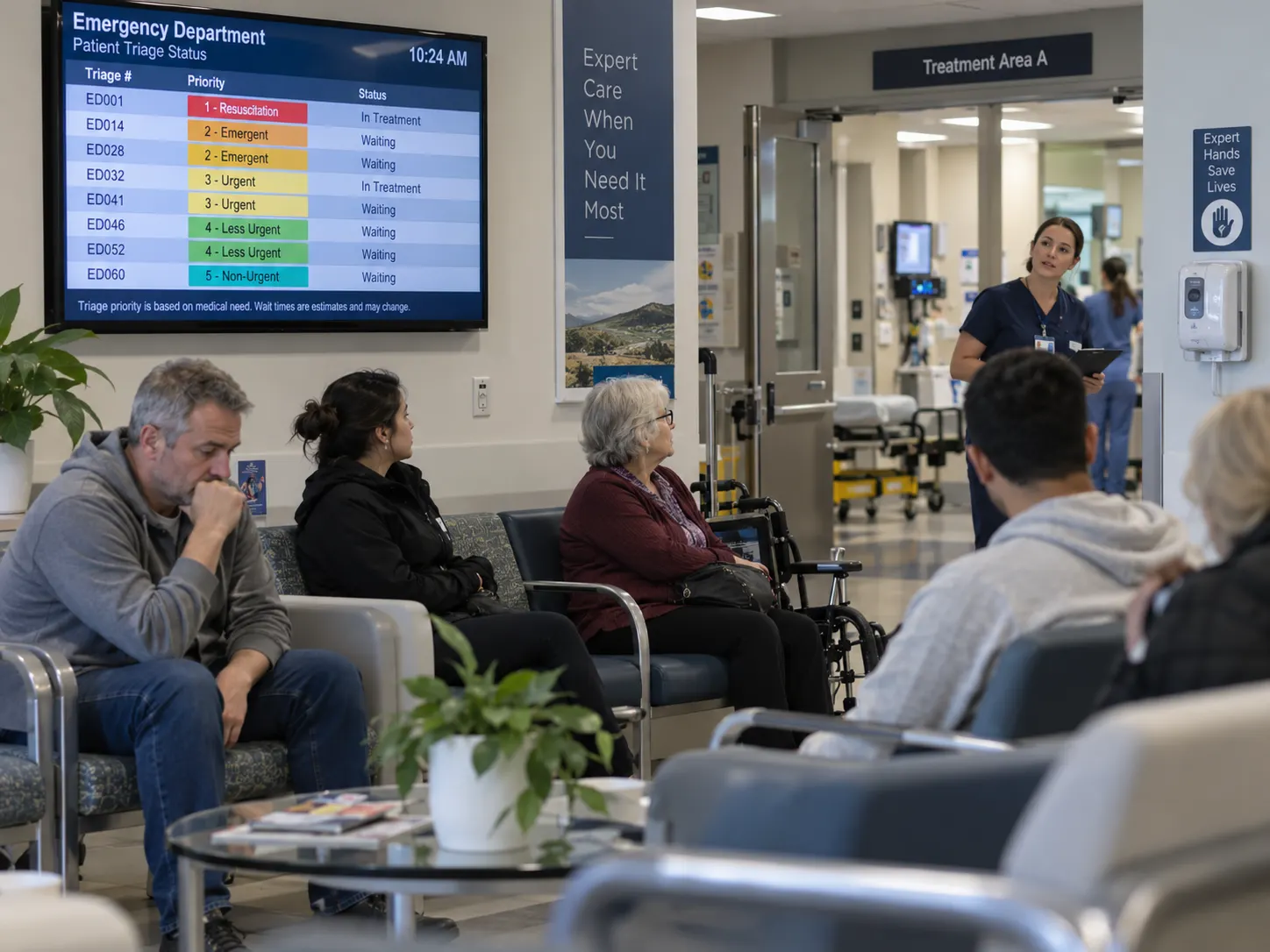
- Korean emergency rooms generally use a severity-based triage system, similar in principle to emergency triage systems in many countries, patients are seen based on the urgency of their condition rather than strictly arrival order, meaning a patient with a more time-sensitive condition will generally be seen before someone who arrived earlier with a less urgent concern.
- Initial assessment upon arrival generally involves basic vital signs check and a brief description of your symptoms, this initial assessment determines your triage category and expected priority level, understanding that this brief initial check isn't your full evaluation, but rather the sorting mechanism that determines your place in the actual treatment queue.
- Genuine emergencies are prioritized immediately, regardless of when other patients arrived, this system exists specifically to ensure the most urgent cases receive prompt attention, understanding this rather than assuming a strict first-come-first-served model helps set more accurate wait time expectations for your own specific situation.
Realistic Wait Time Expectations by Situation Type
- Genuinely urgent, life-threatening conditions generally receive very rapid attention, the triage system specifically exists to ensure this happens regardless of overall ER volume at that moment.
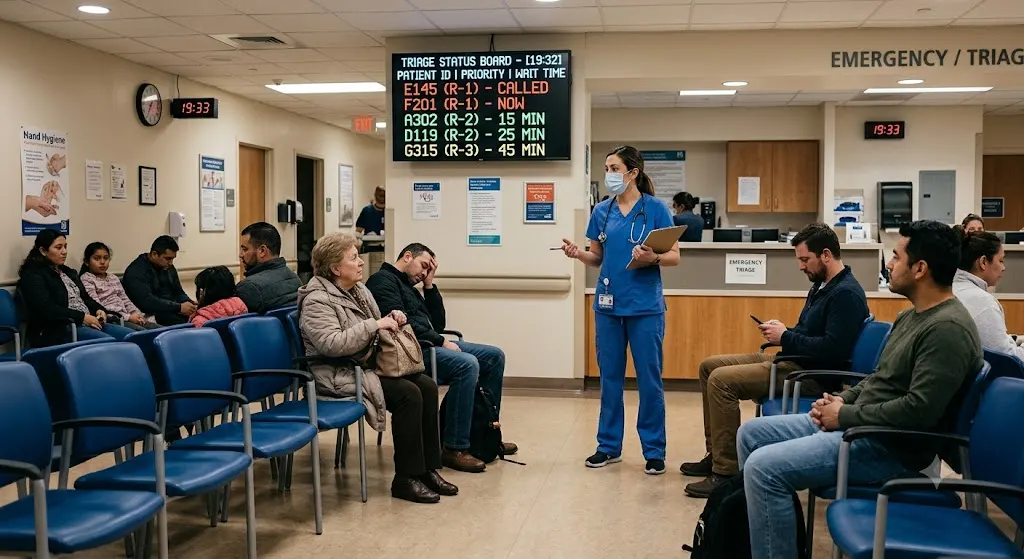
- Moderate urgency conditions, significant pain, concerning but non-life-threatening symptoms, generally face variable wait times depending on current ER volume and how many higher-priority cases are being treated simultaneously, a wait of an hour or more isn't unusual for this category, particularly at busier hospitals or during peak times.
- Lower urgency concerns that technically qualify for ER visit but aren't genuinely urgent, sometimes face considerably longer waits, understanding whether your specific situation might be more efficiently and quickly addressed through a next-day regular clinic visit instead, as covered in how to handle a medical emergency in Korea, matters for choosing the appropriate care pathway for non-emergency situations.
When to Actually Choose the ER vs. a Regular Clinic
- Genuine emergency symptoms, severe chest pain, difficulty breathing, severe injury, signs of stroke, warrant immediate ER visit or 119 ambulance call regardless of time of day, these situations shouldn't wait for a next available clinic appointment.
- After-hours urgent but non-life-threatening concerns, a significant but not clearly emergency-level concern occurring outside regular clinic hours, sometimes appropriately handled through ER visit given the lack of alternative access at that specific time, though understanding this may mean facing the ER's variable wait time for a non-highest-priority triage category.
- Concerns that could reasonably wait for regular clinic hours, even if uncomfortable or concerning, if genuinely not urgent and regular clinic access will be available within a reasonable timeframe, choosing a standard clinic visit during regular hours generally provides both faster overall service and lower cost than an ER visit for the same non-emergency concern.
Cost Differences Between ER and Regular Clinic Visits
- Emergency room visits generally cost more than an equivalent regular clinic visit, even under National Health Insurance coverage, reflecting the different cost structure and resource intensity of emergency department care compared to standard outpatient clinic visits.
- Using the ER for a genuinely non-emergency concern that could have been addressed through a regular clinic visit generally means paying a meaningfully higher cost for care that didn't actually require emergency-level resources, worth factoring this cost consideration into your decision for a borderline, non-clearly-emergency situation.
- Understanding this cost difference helps inform the decision between ER and regular clinic for situations genuinely on the borderline between urgent and non-urgent, though for anything with real uncertainty about severity, erring toward the ER or emergency services remains the appropriately cautious choice regardless of cost consideration.
Common Mistakes and Misunderstandings
- Assuming ER visits work on a strict first-come-first-served basis, becoming frustrated or confused when patients who arrived later are seen sooner, without understanding the underlying severity-based triage system determining actual treatment order.
- Using the ER routinely for non-emergency concerns simply due to convenience, not considering that this generally means both a higher cost and, ironically for a lower-urgency concern, potentially a longer wait than a same-day or next-day regular clinic visit would provide.
- Delaying seeking care for genuinely concerning symptoms out of uncertainty about ER wait times, when a genuine emergency should never be delayed regardless of wait time expectations, the triage system specifically exists to ensure urgent cases are prioritized promptly.
- Not understanding the cost difference between ER and regular clinic visits, being surprised by a meaningfully higher bill after using the ER for a concern that, in retrospect, could have been appropriately addressed through standard clinic care.
Quick Summary
- Korean emergency rooms use a severity-based triage system, patients are seen based on condition urgency rather than strict arrival order, understanding this explains why some patients are seen before others who arrived earlier.
- Genuinely urgent conditions receive prompt attention regardless of overall ER volume, while moderate and lower-urgency concerns face more variable wait times depending on current department volume.
- Choosing between ER and regular clinic care depends on genuine symptom urgency, ER visits generally cost more than equivalent regular clinic visits, worth factoring into decisions for borderline, non-clearly-emergency situations.
- For any genuine uncertainty about symptom severity, erring toward ER or emergency services remains the appropriately cautious choice, the triage system exists specifically to ensure urgent cases receive prompt priority regardless of wait time concerns for other patients.