How Pharmacies Work in Korea for Foreign Visitors
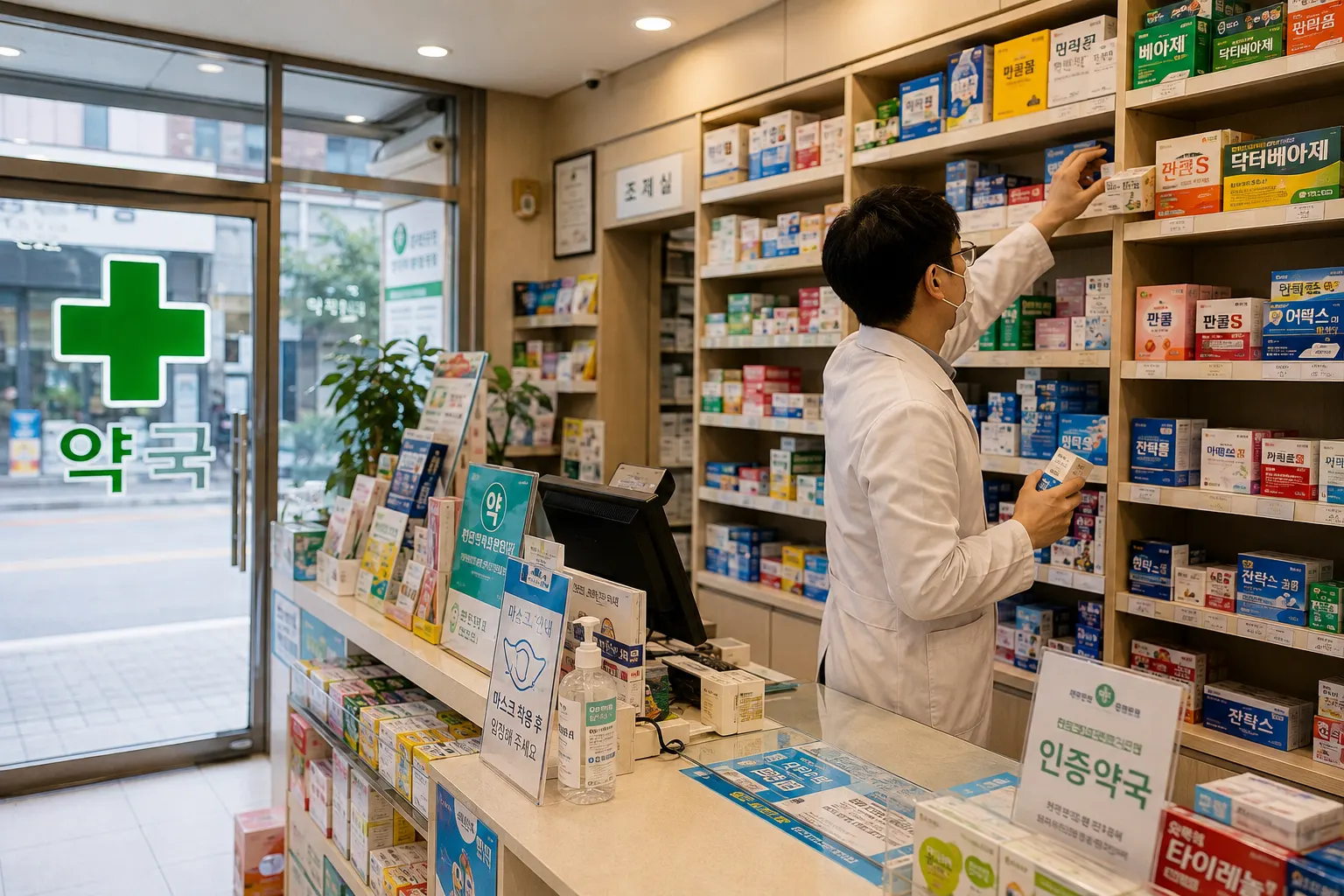
If you've walked past a Korean pharmacy and wondered why the green cross sign is everywhere, or gotten confused trying to buy something as simple as cold medicine, you're not alone. Korean pharmacies operate a bit differently from drugstores in many other countries, particularly around what requires a prescription and what a pharmacist can recommend on the spot.
Here's how pharmacies in Korea actually work, what you can buy without a doctor's visit, and where foreigners commonly get tripped up.
How to Spot a Pharmacy
Korean pharmacies (약국, yakguk) are marked with a distinctive green cross sign, similar to conventions in several other countries, and they're everywhere, especially near hospitals, clinics, and subway exits. They're separate from convenience stores and drugstore chains like Olive Young, which sell cosmetics and only a very limited range of basic over-the-counter items like pain relievers or bandages.
Most pharmacies are independently run, though some function similarly to chain stores in branding. Hours vary, but many operate roughly 9am–7pm on weekdays, with reduced hours or closures on Sundays, so if you need medication outside those hours, a 24-hour pharmacy near a major hospital or a hospital's own emergency pharmacy counter is usually the fallback.
What You Can Buy Without a Prescription
Korean pharmacists have more flexibility than in some countries to recommend and sell over-the-counter medication directly, without needing to see a doctor first, for common issues like:
- Colds, mild fevers, and sore throats
- Headaches and general pain relief
- Digestive issues like indigestion or mild diarrhea
- Allergies and minor skin irritations
- Basic first aid supplies
You can typically describe your symptoms to the pharmacist, and many can recommend an appropriate over-the-counter option on the spot, a service that functions almost like a mini-consultation. This is especially useful for short-term visitors who don't want to book a clinic appointment for something minor.
What Requires a Prescription
Korea is stricter than some countries about what counts as prescription-only, and a few categories commonly surprise foreign visitors:
- Antibiotics are prescription-only in essentially all cases, unlike some countries where certain formulations are available over the counter.
- Stronger pain medication beyond basic over-the-counter analgesics generally requires a doctor's visit.
- Many allergy and asthma medications that might be over-the-counter elsewhere require a prescription in Korea.
- Sleep aids and anxiety medication are tightly controlled and require a prescription plus, in some cases, additional documentation given Korea's strict regulations on controlled substances.
If you regularly take a prescription medication from home, it's worth checking before arrival whether the equivalent is available in Korea and whether it requires a new local prescription, since bringing large quantities of certain medications into the country can also run into customs restrictions depending on the drug.
How Pharmacy Pricing and Insurance Work
- For visitors without Korean National Health Insurance, over-the-counter medication is paid fully out of pocket, though prices are generally reasonable, often just a few thousand KRW for basic items like pain relievers or cold medicine.
- For residents enrolled in National Health Insurance, prescription medication costs are partially subsidized, meaning your out-of-pocket cost at the pharmacy is typically a small copay rather than the full price.
- If you've just seen a doctor, the pharmacy prescription is usually filled at a separate pharmacy near the clinic, not inside it, since Korean regulations generally separate prescribing from dispensing.
Common Misunderstandings
A frequent assumption is that pharmacies function like walk-in clinics for anything beyond very minor issues. In reality, pharmacists can recommend over-the-counter treatment for mild, common symptoms, but they can't diagnose more serious conditions or issue prescriptions themselves, if symptoms are more significant, ongoing, or unclear, you'll be directed to a nearby clinic or hospital.
Another common mix-up is expecting drugstore chains like Olive Young or convenience stores to carry a similar range of medication to pharmacies abroad. In Korea, actual medicine, even basic over-the-counter items, is concentrated in licensed pharmacies rather than general retail, so don't assume a convenience store will have what you need beyond very basic pain relief or digestive aids.
What to Bring or Know Before You Go
- Basic descriptions of your symptoms in simple English are usually workable, since many pharmacists in areas with foreign traffic have at least some English ability, though this varies by neighborhood.
- Translation apps are commonly used by both foreigners and pharmacists when language is a barrier, and it's a normal, expected part of the interaction rather than an inconvenience.
- If you're on a specific medication long-term, bringing the original packaging or a doctor's note describing the generic ingredient name can help a Korean pharmacist identify an equivalent, since brand names differ by country.
Quick Summary
- Korean pharmacies (약국) are marked with a green cross and can recommend over-the-counter treatment directly for common issues like colds, headaches, and minor digestive problems.
- Antibiotics, stronger pain medication, and sleep aids are prescription-only and generally stricter than in some other countries.
- Without National Health Insurance, medication is paid fully out of pocket but is usually inexpensive for basic items; insured residents pay a reduced copay.
- Pharmacies are separate from drugstore chains like Olive Young, which mainly sell cosmetics and only very basic over-the-counter items.