Korean Health Checkups for Foreign Residents: What the National Screening Covers
A health checkup in Korea can feel surprisingly efficient. Eligible residents may be invited to complete a national screening that includes basic measurements, blood tests, and other examinations based on age and risk factors. The confusing part for foreigners is knowing whether they qualify, where to go, what is included, and whether extra tests suggested by the clinic are part of the free screening.
The national program is useful, but it should not be treated as a complete medical examination for every possible condition. Understanding the difference between covered screening and optional clinic packages can prevent unnecessary expense and unrealistic expectations.
What is the Korean national health screening?
Korea’s National Health Insurance Service operates health-screening programs intended to identify common health risks before symptoms become serious. The standard examination may include items such as:
- Height and weight
- Waist measurement
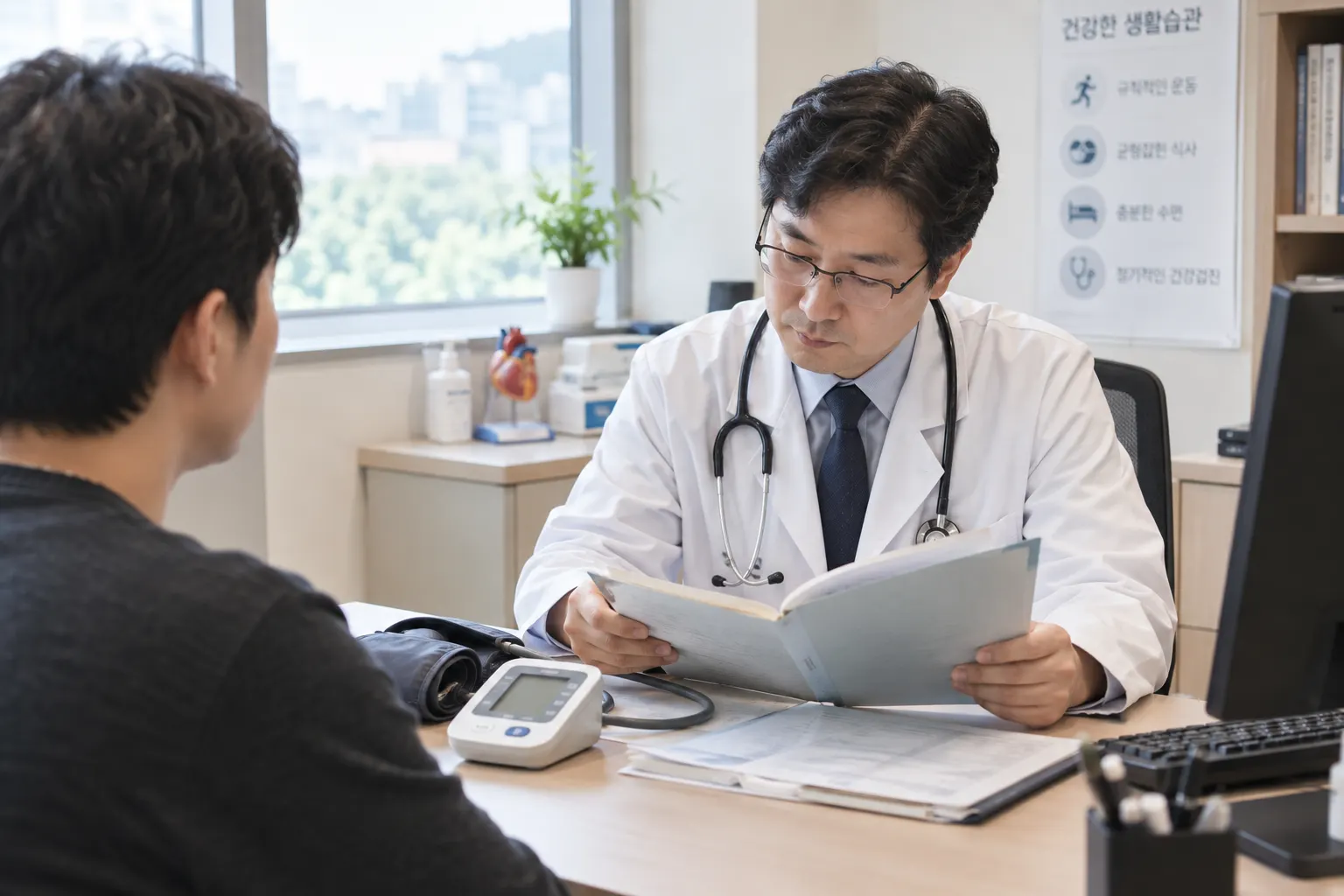
- Blood pressure
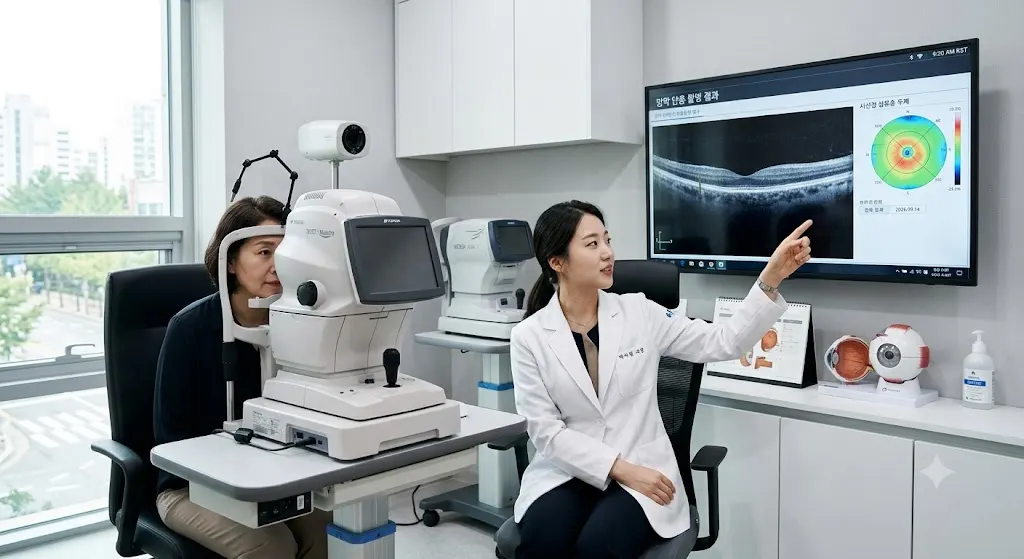
- Vision and hearing checks
- Medical history questions
- Blood tests
- Urine tests
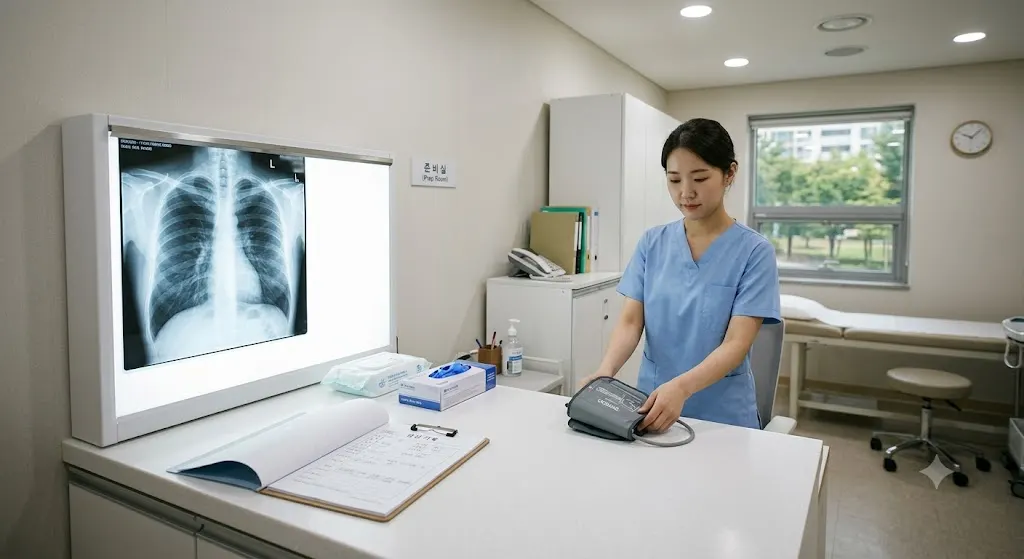
- Chest imaging in applicable cases
- Evaluation of lifestyle risks
- Additional items based on age or eligibility
The exact list can vary. Age, sex, insurance category, screening cycle, and medical history may affect which examinations are included. The general screening should be understood as a broad preventive check, not a detailed investigation of every organ or symptom.
Can foreign residents receive the screening?
Foreign residents enrolled in Korean National Health Insurance may be eligible for national health checkups under the applicable screening rules.
Being a foreign resident does not automatically mean every person is eligible at the same time. Eligibility may depend on insurance status, age, employment category, previous screening date, and the type of program.
Some employees receive reminders through their workplace. Others receive notices from the National Health Insurance Service. A resident may also check eligibility directly rather than waiting for a letter.
This is important after moving because notices may be sent to the registered address. An outdated address can cause you to miss useful information.
How to check whether you are eligible
Before booking a clinic, confirm your current eligibility. Useful options include:
- Checking the National Health Insurance Service website or app
- Calling the NHIS foreign-language consultation line
- Asking your employer’s human-resources department
- Contacting a designated screening clinic
- Visiting an NHIS office for assistance
Prepare your residence card or insurance information when making an inquiry.
Do not assume that a clinic offering private checkup packages can automatically confirm your national-program eligibility. Ask specifically whether the clinic provides the NHIS national health screening and whether it can verify your coverage.
Where can you get the examination?
Not every medical facility performs every national screening.
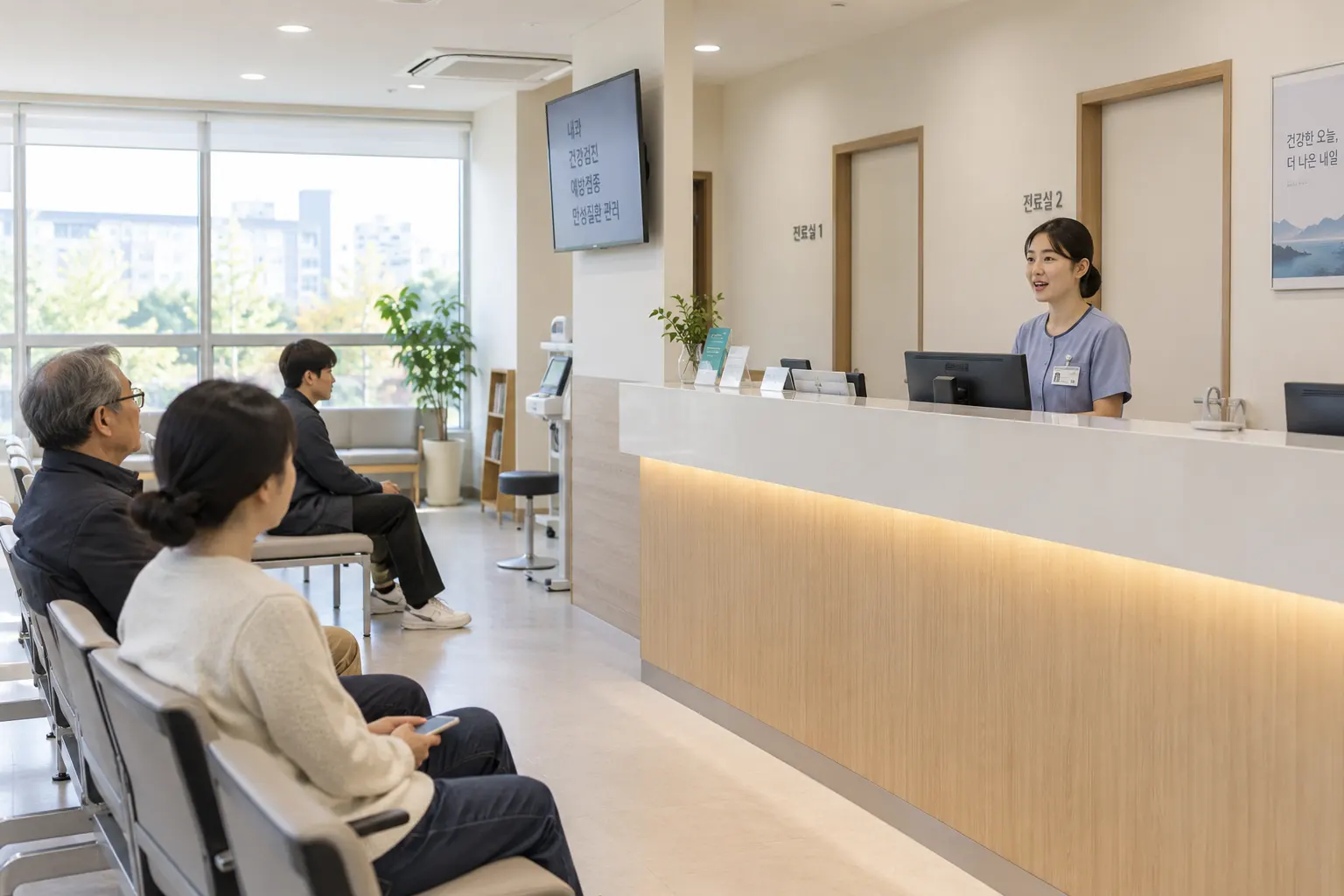
Clinics and hospitals that participate in the program may display information about 건강검진, meaning health checkup. Some facilities specialize in high-volume screening, while others provide it alongside ordinary medical services.
A local internal-medicine clinic may be convenient for a basic examination. A larger screening center may offer more language support, organized changing rooms, multiple tests in one visit, and optional packages.
Before visiting, ask:
- Do you provide the national NHIS health screening?
- Is an appointment required?
- Is English support available?
- What identification should I bring?
- Do I need to fast?
- How long will the visit take?
- How will I receive the results?
A clinic near your home is often sufficient for a routine screening. A major hospital is not automatically necessary.
Fasting instructions matter
Many screening programs require fasting because food and drinks can affect blood-test results.
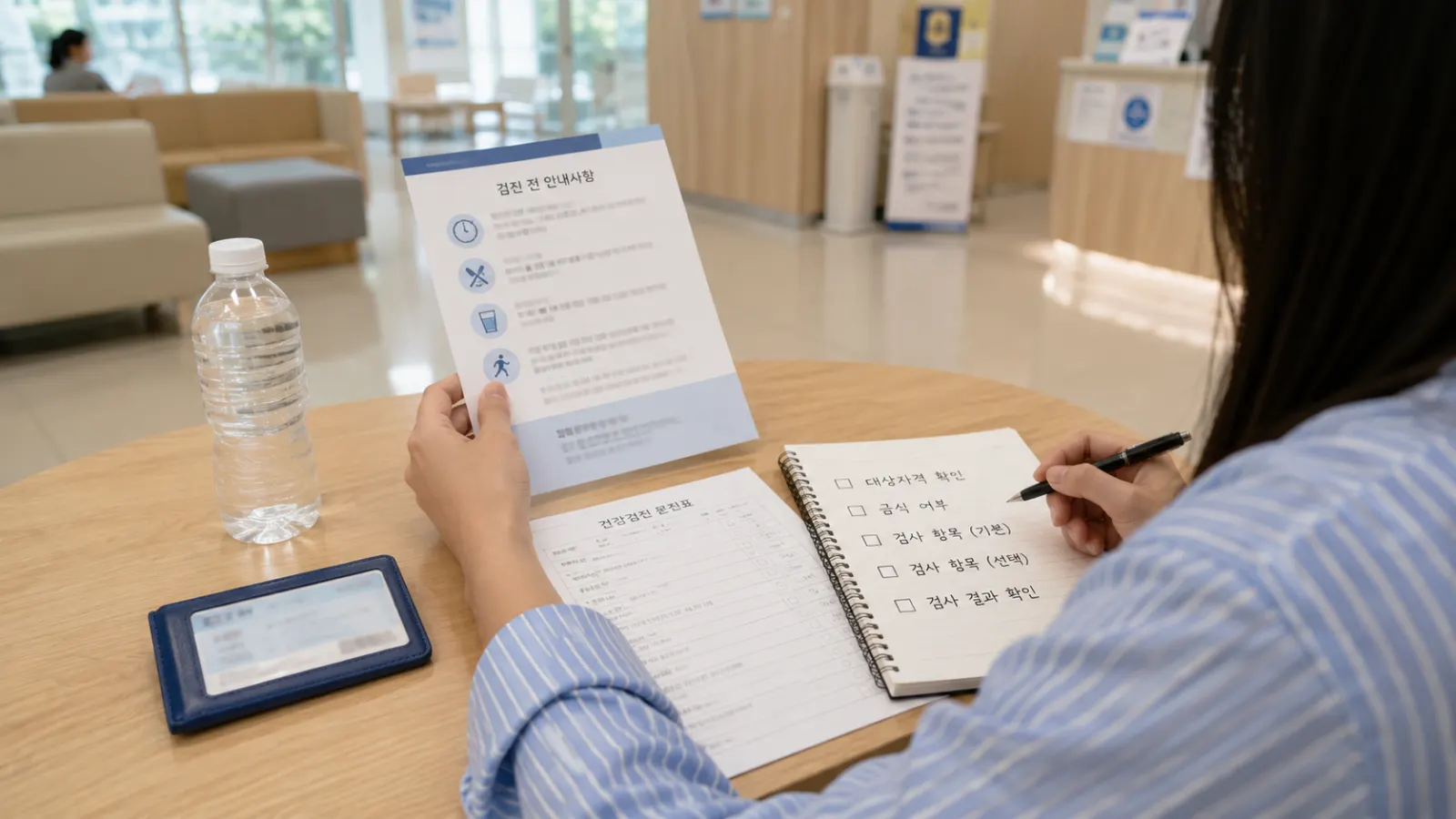
The clinic may tell you not to eat for a certain number of hours before the examination. Water, coffee, alcohol, supplements, cigarettes, and regular medication may also require specific instructions.
Do not stop prescription medication on your own. Ask the clinic or prescribing doctor what to do, especially if you take medicine for diabetes, blood pressure, thyroid disease, or another ongoing condition.
Morning appointments are often easier because you can fast overnight and eat after the examination. Bring a snack for afterward if you tend to feel weak following blood tests.
What is usually free, and what may cost extra?
The general national health checkup is covered for eligible participants under the applicable program. Certain cancer screenings may also be fully or partially covered depending on the examination and eligibility.
However, clinics often offer optional additions such as:
- Abdominal ultrasound
- Thyroid ultrasound
- Advanced tumor-marker blood tests
- Sedated endoscopy
- Detailed cardiac testing
- Vitamin panels
- Brain imaging
- Full-body imaging
- Premium private screening packages
These extras may not be included in the national program.
A staff member may recommend an additional test because of your age, symptoms, family history, or clinic package. That recommendation may be reasonable, but you should still ask about price and purpose.
Useful questions include:
- Is this included in the national screening?
- Is this medically necessary today?
- What problem is the test looking for?
- How much will I pay?
- Is there a covered alternative?
- Can I decide after receiving the basic results?
Do not assume everything performed on the same day is free.
Screening is not the same as symptom-based care
A health screening is designed for people who may not have obvious symptoms.
If you have chest pain, severe abdominal pain, unexplained bleeding, a new lump, breathing difficulty, significant weight loss, neurological symptoms, or another concerning problem, tell the clinic clearly. You may need a regular medical appointment rather than waiting for a screening result.
Similarly, a normal screening does not prove that every condition has been ruled out. The basic program checks selected risk areas, not the entire body. Use the screening as a preventive tool, not as a substitute for medical care when symptoms are present.
Understanding the results
Results may be mailed, provided online, or issued directly by the clinic. Some documents use categories indicating normal findings, possible risk, or need for follow-up. Foreign residents may find the report difficult because medical terms and explanations are often written in Korean. When reviewing the results:
- Translate the full document rather than only the final category.
- Look for blood pressure, glucose, cholesterol, liver results, and weight-related indicators.
- Check whether a repeat test is recommended.
- Note any referral or follow-up instructions.
- Ask for an explanation if a value is outside the reference range.
One abnormal number does not automatically mean you have a disease. It may need confirmation, comparison with previous results, or interpretation based on your health history.
Cancer screening follows separate rules
Korea also operates screening programs for selected cancers. Eligibility depends on factors such as age, sex, risk category, and screening interval. The program may include screening related to stomach, colorectal, breast, cervical, liver, or lung cancer under applicable conditions.
Do not assume that every cancer test is available to every resident each year. Confirm your personal eligibility before making an appointment. Also remember that screening tests have limitations. Ask how results will be delivered and what happens if further examination is recommended.
Workplace examinations can be different
Some employers require workers to complete health examinations. These may overlap with national screening, but the administrative purpose can differ. If your company asks for a health checkup, confirm:
- Which examination is required
- Whether the employer has selected a clinic
- Whether the company pays any additional fees
- Whether results go to you, the employer, or both
- Whether the national screening can satisfy the requirement
- What deadline applies
Do not purchase a private package before confirming what the workplace actually needs.
A practical appointment checklist
Bring:
- Residence card or accepted identification
- Insurance information
- Glasses or contact-lens information
- Medication list
- Previous screening results if relevant
- Clinic instructions
- A Korean phone number and current address
Wear clothing that is easy to change. Avoid bringing valuables, and ask whether jewelry must be removed for imaging. After the examination, save the results in a personal medical folder. Comparing changes over several years can be more useful than viewing one report in isolation.
Quick Summary
- Eligible foreign residents enrolled in Korean National Health Insurance may receive national health screenings.
- Confirm eligibility, fasting rules, and the participating clinic before visiting.
- Optional ultrasounds, imaging, and premium tests may cost extra.
- A screening is preventive care, not a complete diagnosis or a replacement for treatment of symptoms.