How Pharmacies and Clinics Work in Korea for Foreigners
A foreigner in Korea can usually find a pharmacy or clinic very quickly, especially in Seoul and other large cities. The harder part is knowing where to go, what to say, whether you need an appointment, and how payment works if you do not speak Korean well.
Korea’s healthcare system is practical and often fast, but it is not always obvious to newcomers. A mild cold, stomach issue, skin rash, prescription refill, or sudden fever can become stressful when you do not know the difference between a pharmacy, local clinic, hospital, and emergency room.
Pharmacies are easy to find, but they are not convenience stores
Korean pharmacies are called yakguk. They are usually located near clinics, hospitals, subway stations, and neighborhood shopping streets. If you see several small medical clinics in one building, there is often a pharmacy nearby because patients commonly visit a clinic first and then take the prescription to the pharmacy.
A common misunderstanding is that pharmacies in Korea work like general health shops. They do sell some over-the-counter medicine, but many stronger medicines require a doctor’s prescription. You may be able to buy basic cold medicine, pain relief, digestive medicine, allergy medicine, ointment, eye drops, or motion sickness medicine without seeing a doctor. But antibiotics, many prescription-strength medicines, and some chronic-condition medications usually require a prescription.
This can surprise people from countries where pharmacists can directly provide more treatments. In Korea, the pharmacist can recommend non-prescription options, but the clinic is often the first stop when symptoms are stronger, unclear, or ongoing.
When to go to a pharmacy first
For minor problems, a pharmacy may be enough. This is especially true when you already know the issue and it does not feel serious. A pharmacy may be a practical first stop for:
- Mild cold symptoms without breathing difficulty
- Minor indigestion or stomach discomfort
- Motion sickness
- Small cuts or simple skin irritation
- Mild allergy symptoms
- Basic pain relief
- Heat patches, cold patches, or bandages
- Eye dryness or simple irritation
- Hangover-related discomfort
The key is to describe symptoms clearly. If you do not speak Korean, prepare a short translation on your phone. Instead of saying “I feel bad,” write specific symptoms such as “sore throat,” “runny nose,” “diarrhea,” “itchy skin,” “fever since yesterday,” or “headache after drinking alcohol.”
Do not expect the pharmacist to diagnose a complicated problem. If symptoms are severe, repeated, or unusual, go to a clinic or hospital.
Local clinics are often the most useful first medical stop
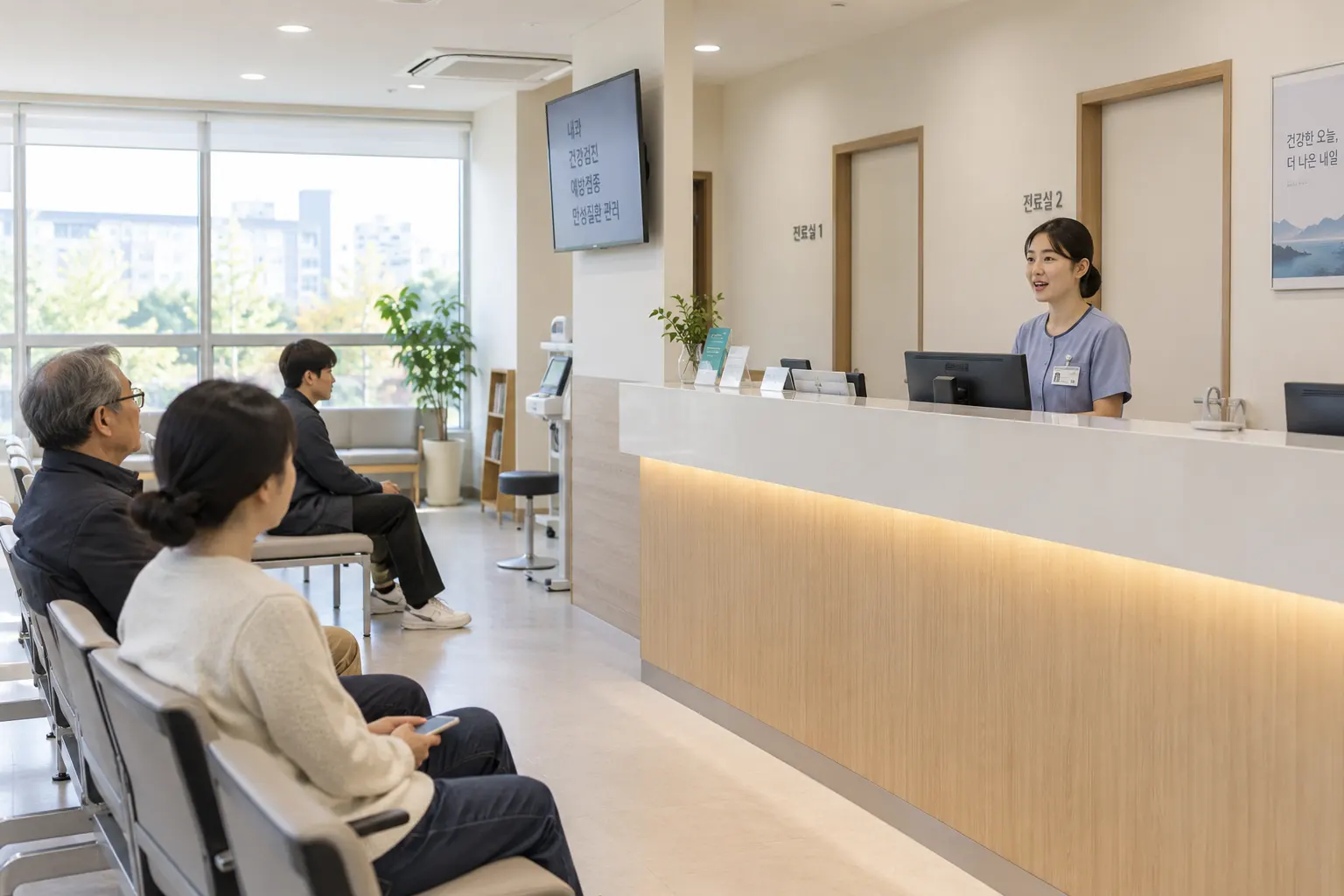
A Korean local clinic is called uiwon. These are small neighborhood medical offices, often located in commercial buildings. They usually focus on one field, such as internal medicine, ear-nose-throat, dermatology, orthopedics, pediatrics, ophthalmology, or dentistry.
For many everyday health issues, a local clinic is faster and cheaper than going directly to a large hospital. You can often walk in without a long appointment process, although waiting times vary by location and time of day.
This is one of the biggest differences from some countries. Foreigners may assume that “hospital” is the normal place for any medical issue. In Korea, a neighborhood clinic is often the better first choice for common symptoms.
For example, if you have a sore throat, cough, and fever, an ENT clinic or internal medicine clinic may be more practical than a large hospital. If you have back pain after exercise, an orthopedic clinic may be more appropriate. If you have a rash, a dermatology clinic may handle it quickly.
Hospital, clinic, or emergency room?
Choosing the right place matters. Korea has many medical options, but going to the wrong level can waste time and money. Use this rough guide:
- Pharmacy: very mild symptoms or basic over-the-counter medicine.
- Local clinic: common illness, mild injury, prescriptions, follow-up, non-emergency pain.
- General hospital: more complex testing, specialist referral, stronger concern, ongoing symptoms.
- Emergency room: severe symptoms, major injury, chest pain, breathing difficulty, loss of consciousness, stroke-like symptoms, heavy bleeding, or sudden serious condition.
The mistake point is waiting too long because you are embarrassed about language. If something feels urgent, do not try to solve it through a pharmacy. Korea’s emergency number is 119, and emergency services can connect help in serious situations.
For non-emergency problems, however, a local clinic is often the most efficient option.
What to bring to a clinic
If you are a tourist, bring your passport, travel insurance information, and a payment card or cash. If you are a resident, bring your foreigner residence card and National Health Insurance information if you are enrolled.
Useful things to prepare include:
- Passport or residence card
- Korean phone number, if you have one
- List of symptoms and when they started
- Current medications
- Allergies
- Travel insurance or private insurance details
- Translation app
- Korean address, if needed for forms
For chronic conditions, bring the exact medicine name, not just a rough description. A photo of the package can help, but the ingredient name is better. Brand names can differ by country.
How payment usually works
If you are enrolled in Korea’s National Health Insurance, many clinic visits and prescriptions are partially covered. You still pay out of pocket, but the amount may be lower than private-pay treatment.
If you are a tourist or not covered by Korean insurance, you usually pay the full amount yourself and claim reimbursement later through travel insurance, if applicable. Ask for receipts and medical documents before leaving if you need to file a claim.
The cost can vary widely depending on the clinic type, tests, treatment, prescription, language service, and insurance status. A simple local clinic visit may feel affordable compared with some countries, but scans, procedures, emergency care, dental treatment, and specialized care can become expensive.
Do not assume everything is cheap. Always ask if you are unsure, especially before tests or procedures.
Prescriptions and medicine pickup
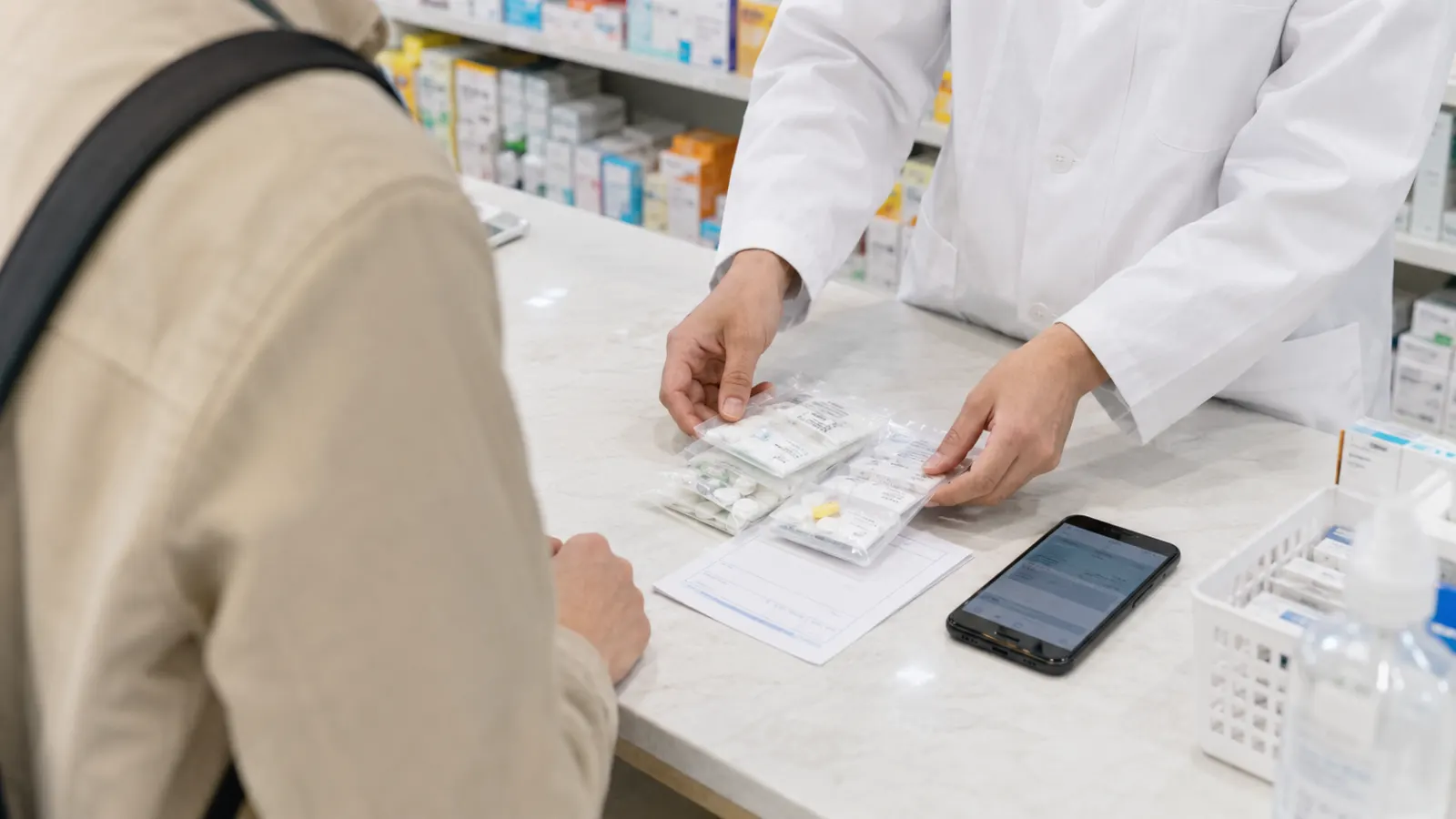
After seeing a doctor, you may receive a prescription. In many cases, you take that prescription to a nearby pharmacy. The pharmacy prepares the medicine, explains how to take it, and gives you a printed or packaged dosage guide.
Korean pharmacies often package medicine by dose. For example, instead of receiving one bottle, you may receive small paper or plastic packets for morning, lunch, and evening. This is convenient, but it can be confusing if you cannot read Korean.
Before leaving, check:
- How many times per day to take the medicine
- Whether to take it before or after meals
- Whether it may cause drowsiness
- Whether to avoid alcohol
- How many days to take it
- What to do if symptoms do not improve
If you are unsure, ask the pharmacist to write simple English instructions or use a translation app.
Language can be the real barrier
Korea’s medical system can be efficient, but English availability is inconsistent. Large international clinics and major hospitals may offer English support, but small neighborhood clinics may not. Some doctors speak English well; others may understand medical terms but prefer Korean.
This does not mean you cannot use local clinics. It means you should prepare. A practical method is to write a short symptom note before entering: “I have had a sore throat and fever for two days. I do not have any medicine allergies. I took ibuprofen yesterday. I would like to know if I need medicine or a test.”
Simple, specific sentences work better than long explanations.
For more serious or complicated conditions, consider going to a larger hospital, international clinic, or bringing a Korean-speaking friend. For mental health, women’s health, chronic disease management, or specialist care, language comfort matters more because the conversation is more detailed.
What tourists should do differently from residents
Tourists should focus on fast access and documentation. For minor illness, a pharmacy or local clinic may be enough. For anything that may require insurance reimbursement, ask for proper receipts and diagnosis documents.
Residents should think about continuity. Choose a local clinic near home or work for common issues, keep records of prescriptions, and understand how your insurance applies. If you have a chronic condition, build a relationship with a clinic or hospital that can provide repeat care.
Students should check whether their university has a health center or recommended nearby clinics. Workers should ask whether their company has guidance for health insurance, annual checkups, or partner clinics.
The best option depends less on nationality and more on how long you are staying.
Quick Summary
- Pharmacies in Korea are useful for minor symptoms, but many stronger medicines require a doctor’s prescription.
- Local clinics are often the best first stop for common illness, mild injury, and prescription needs.
- Bring identification, insurance information, symptom notes, medication names, and allergy details.
- Tourists should keep receipts for insurance claims, while residents should focus on consistent local care.