Getting a Medical Certificate in Korea: What Foreign Residents Should Ask For
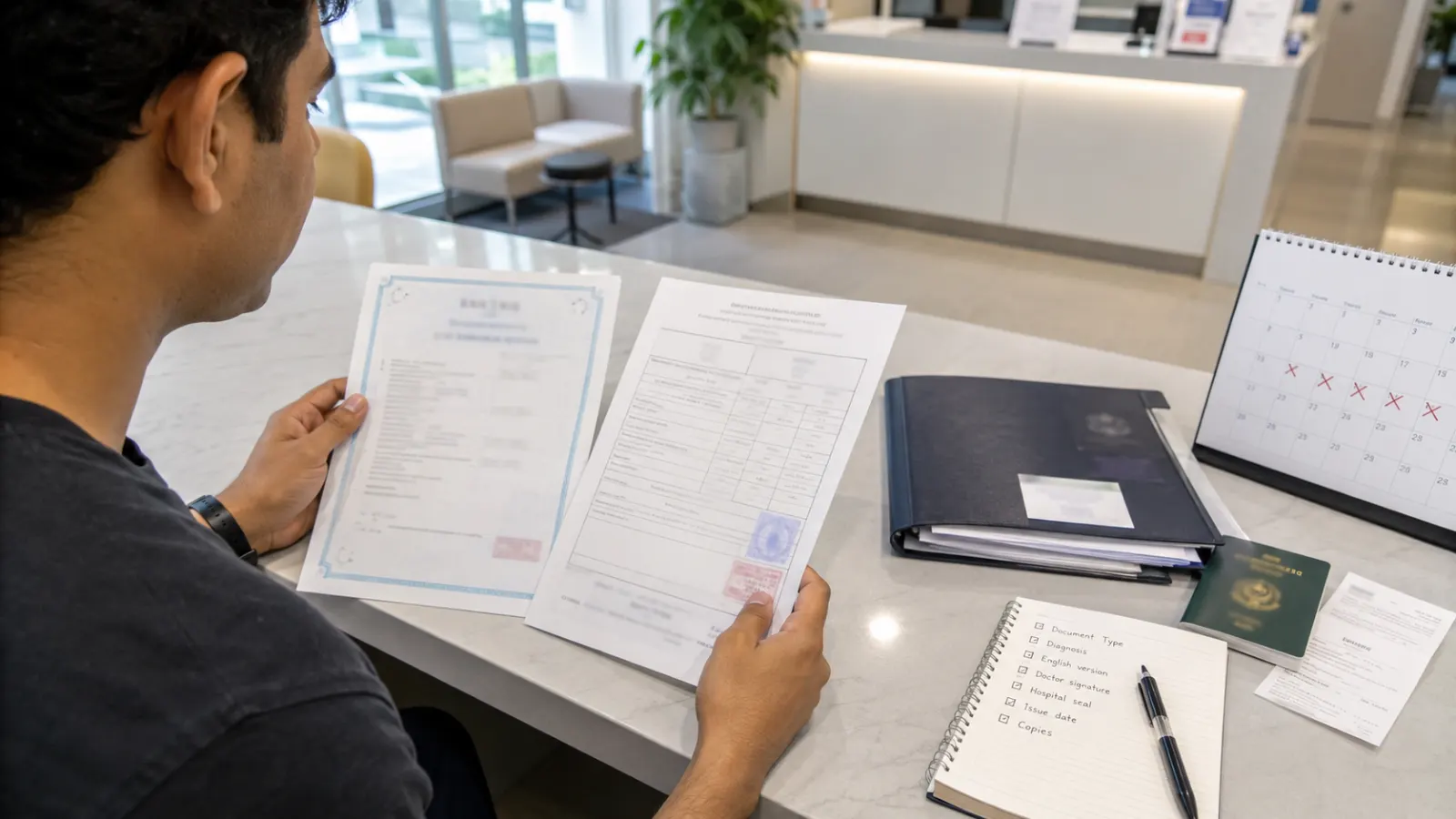
Foreign residents may be asked to provide a medical document for work, school, insurance, a visa process, sports participation, sick leave, or travel. The request may sound simple, but Korean clinics issue several different documents, and the wrong one may not satisfy the organization asking for proof.
Before visiting a clinic, confirm exactly what information, format, language, and issue date are required.
Medical documents are not all the same
A clinic or hospital may issue different types of documents. These can include:
- Diagnosis certificate
- Medical opinion
- Treatment confirmation
- Hospitalization certificate
- Discharge summary
- Prescription record
- Test result
- Medical report
- Fitness certificate
- Sick-leave confirmation
- Injury certificate
Each document serves a different purpose. A receipt proves payment. It does not necessarily prove the diagnosis or recommended rest period. A prescription proves medication was ordered. It may not explain why the patient was unable to work.
Do not ask only for “a medical paper.” Show the clinic the exact request from the employer, school, insurer, or authority.
Ask the receiving organization first
Before booking, ask:
- Exact document name
- Required information
- Korean or English
- Original or digital copy
- Doctor’s signature
- Hospital seal
- Issue-date limit
- Diagnosis required or optional
- Rest period
- Test results required
Some employers need only confirmation that you attended a clinic. Others require the diagnosis and recommended absence dates. An insurer may require a more detailed report, itemized receipt, and test results. A visa or licensing process may require a designated form or approved hospital.
The clinic cannot guess what another organization will accept.
Diagnosis certificates
A diagnosis certificate generally provides formal medical information about a diagnosed condition. It may include:
- Patient name
- Date of birth
- Diagnosis
- Diagnosis code
- Date of diagnosis
- Treatment period
- Doctor
- Medical institution
- Issue date
The clinic may charge a separate document fee. Ask whether the diagnosis will be written in Korean only and whether an English version is available.
Medical terminology may not translate directly into the wording expected by an overseas insurer or employer. When the document is for international use, explain the purpose before issuance.
Treatment confirmation
A treatment confirmation may show that the patient visited or received treatment on specific dates. This can be sufficient when an employer or school needs attendance evidence but does not require detailed medical information. It may protect more privacy than a full diagnosis certificate.
Ask the receiving organization whether it truly needs the diagnosis. Employers should not automatically receive more private medical information than necessary.
Sick leave and recommended rest
A doctor may document that a patient needs rest or should avoid certain activities. However, the clinic does not decide the employer’s final leave policy. The document can support the request, while company rules determine how the absence is recorded, whether paid sick leave is available, and whether annual leave is used.
Before leaving the clinic, check that the document includes:
- Visit date
- Recommended rest dates
- Work restrictions
- Follow-up date
- Doctor’s signature or seal
Do not assume that an ordinary receipt will show the rest period.
School documents
Schools may request medical evidence for:
- Absence
- Examination postponement
- Disability support
- Sports exemption
- Infectious illness
- Dormitory accommodation
- Return to class
- Field-trip cancellation
Universities and language programs may have their own form. Download or print it before the appointment when possible. Ask whether the school needs a diagnosis, treatment date, or specific statement that the student was unable to attend.
Do not wait until the academic appeal deadline has passed.
Insurance claims
Private and travel insurers may request a group of documents rather than one certificate. Commonly requested items can include:
- Diagnosis certificate
- Itemized bill
- Payment receipt
- Prescription
- Pharmacy receipt
- Test results
- Medical report
- Admission and discharge record
- Accident details
Ask the insurer before paying for expensive documents. Some certificates cost more than the reimbursement for a small clinic visit. Keep both paper originals and scans. Foreign insurers may require English documents or certified translations.
Workplace injuries
When an injury happened during work or because of work, explain this clearly at the clinic. Accurate documentation should record:
- Date and time
- Location
- Activity
- Injury mechanism
- Symptoms
- Employer information when relevant
Do not change the story to make administrative processing easier. A workplace injury may involve separate reporting and insurance procedures. Seek appropriate official guidance when the employer disputes what happened. Keep photographs, messages, schedules, witness information, and medical records.
Traffic accidents
Traffic-accident treatment may involve vehicle insurance, police records, and specialized billing. Tell the clinic that the injury is related to a traffic accident before registration or treatment. Bring available information such as:
- Accident date
- Insurance contact
- Claim number
- Police record
- Other driver’s information
- Personal identification
Do not assume ordinary health-insurance billing and vehicle-insurance billing are handled in the same way. Ask the clinic which documents will be issued for the claim.
English certificates
Not every clinic can issue a detailed English medical certificate. A large hospital or international clinic may offer English documentation more easily, but additional fees and processing time may apply. Before visiting, ask:
- Is an English certificate available?
- Is the diagnosis translated?
- Is the doctor’s signature included?
- Is the hospital seal included?
- How long does issuance take?
- Can it be reissued later?
- Does it include passport spelling?
Check the name carefully. It should match the passport or receiving institution’s record. Do not translate or modify an official certificate yourself and present it as hospital-issued.
Document fees
Medical treatment and document issuance are separate charges. The cost can depend on:
- Document type
- Language
- Number of pages
- Copies
- Specialist report
- Test-image copy
- Urgency
- Hospital policy
Ask for the document fee before issuance. When several copies are needed, request them together. Reissuance later may require another visit or identity verification.
Collecting records later
Hospitals protect medical information, so collecting records for another person may require authorization and identification. When you may leave Korea soon, obtain the necessary documents before departure. Ask whether the hospital provides:
- Online access
- Email delivery
- Postal delivery
- Authorized representative collection
- Digital imaging
- English summary
Do not assume the clinic will send sensitive medical records through ordinary email.
Check the document before leaving
Verify:
- Legal name
- Date of birth
- Visit date
- Diagnosis
- Recommended rest period
- Treatment dates
- Doctor’s name
- Hospital name
- Signature or seal
- Issue date
- English spelling
Correcting an error immediately is easier than requesting a revised certificate from overseas.
Quick Summary
- Confirm the exact medical document required before visiting the clinic.
- A diagnosis certificate, treatment confirmation, receipt, and medical report serve different purposes.
- Ask separately about English versions, document fees, and processing time.
- Check names, dates, diagnosis, rest period, signature, and seal before leaving.