How to Handle a Medical Emergency in Korea as a Foreigner
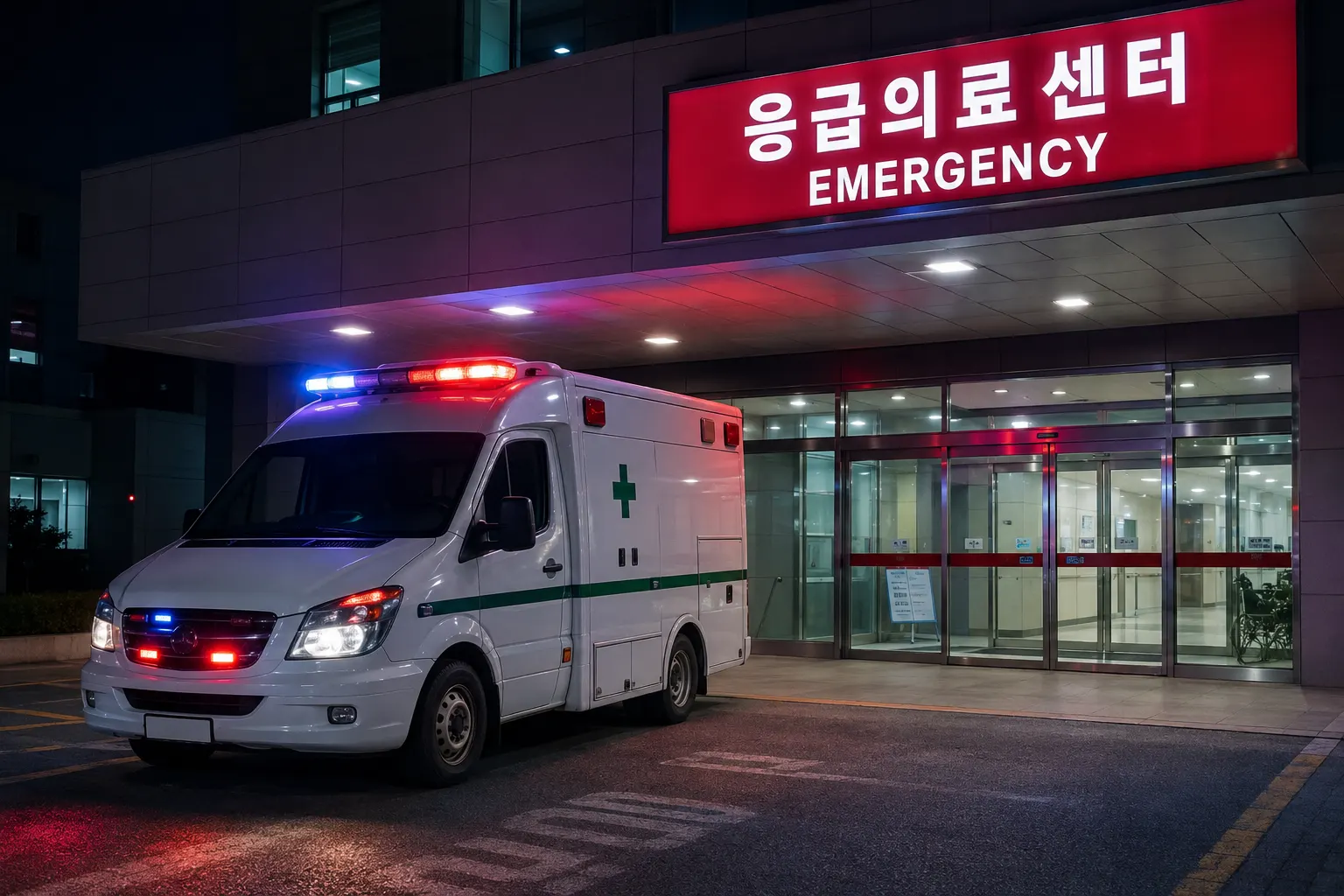
If you've ever wondered what actually happens if you have a real medical emergency in Korea, who to call, what an ambulance costs, whether the hospital will understand you, it's worth knowing before you need it rather than figuring it out in the moment. Korea's emergency medical system is generally fast and effective, but a few specific things work differently from what many foreign residents assume, and knowing them in advance genuinely matters in a crisis.
Here's how Korea's emergency medical system actually works, and what to know before you need it.
Calling for Help
- 119 is Korea's emergency number for fire, ambulance, and rescue services, equivalent to 911 in the US or 999 in the UK, this is the number to call for any medical emergency requiring an ambulance.
- 112 is the separate number for police emergencies, worth knowing the distinction since dialing the wrong one wastes valuable time in a genuine emergency.
- 119 dispatchers increasingly have access to interpretation services for non-Korean speakers, though response speed and language support can vary, speaking slowly and clearly, stating your location as precisely as possible, matters more than achieving perfect Korean.
Ambulance Costs and What to Expect
- Ambulance service through 119 for genuine emergencies is generally free, a meaningful difference from some countries where ambulance transport carries a significant separate charge regardless of the situation.
- The ambulance crew will generally take you to the nearest appropriate hospital capable of handling your specific emergency, rather than a hospital of your choosing, for genuinely life-threatening situations, this is appropriately prioritized over convenience or a preferred facility.
- Non-emergency use of 119 ambulance service is generally discouraged and, in some cases, can result in being redirected or advised to seek other transportation, reserving 119 for genuine emergencies helps ensure the system remains responsive for critical situations.
What Happens at the Hospital
- Emergency rooms at larger hospitals in major cities generally have at least some English-speaking staff capacity, though this isn't guaranteed at every facility, particularly smaller hospitals or those outside major urban centers.
- You'll generally be asked for ID and insurance information relatively early in the process, having your ARC or passport accessible, along with basic insurance information if you have Korean National Health Insurance or travel insurance, streamlines this step.
- Payment for emergency treatment, for insured residents, follows the standard partial-copay structure similar to other medical care, for uninsured visitors, costs are paid out of pocket, though genuine emergency care is provided regardless of ability to immediately pay, given Korea's emergency medical treatment regulations.
Multilingual Support Resources
Korea maintains a multilingual medical information and interpretation service specifically to help foreign residents and visitors navigate healthcare situations, useful for non-emergency questions about where to seek care, but also relevant context to know exists if you need language support during a hospital visit that isn't a life-threatening emergency requiring immediate 119 dispatch. For genuine emergencies, don't delay calling 119 while trying to first locate a language service, the emergency response system itself increasingly has interpretation support built in.
Preparing Before You Need It
A few things are worth having in place before an emergency happens, rather than trying to organize them in the moment:
- Save your address in Korean in your phone, in a form you can quickly show a dispatcher or share via text if speaking is difficult in the moment.
- Keep a basic list of any existing medical conditions, medications, and allergies accessible, translated if possible, useful for any hospital staff treating you regardless of language barrier.
- Know your nearest major hospital, particularly one with an international clinic or known English-language capacity if you have a choice in a less acute situation.
- Register with National Health Insurance if eligible, or confirm your travel insurance coverage details, so payment logistics aren't an added stressor during an already difficult situation.
Common Misunderstandings
A frequent assumption is that emergency care will be difficult or prohibitively expensive without extensive preparation. In practice, Korea's emergency response system is generally fast, ambulance service for genuine emergencies is free, and hospitals are legally required to provide emergency treatment regardless of immediate ability to pay, the practical concerns, language barriers and cost clarity, matter more for planning ahead than for whether you'll actually receive care in a genuine emergency.
Quick Summary
- Call 119 for medical emergencies in Korea, ambulance service for genuine emergencies is generally free, and dispatchers increasingly have access to interpretation support.
- Emergency rooms at larger city hospitals generally have some English-speaking capacity, though this varies, and payment logistics follow standard insurance or out-of-pocket structures depending on your coverage status.
- Having your address saved in Korean, a list of medical conditions and medications, and awareness of your nearest major hospital prepared in advance reduces stress if an emergency occurs.
- Korea's emergency medical treatment regulations require hospitals to provide emergency care regardless of immediate ability to pay, addressing a common but often unfounded worry among foreign residents.