How National Health Insurance Actually Works for Foreign Residents in Korea

If you've just moved to Korea for work, study, or a longer stay, health insurance is one of those things you assume you'll figure out later. Then a hospital bill arrives, or your employer asks for a document you've never heard of, and suddenly it matters a lot. Korea's National Health Insurance Service (NHIS) system is efficient once you understand it, but the rules for foreigners are different enough from most home countries that confusion is almost guaranteed at first.
This guide covers how the system actually works, who has to join, what it costs, and where people commonly get stuck.
Who Is Required to Join
Since 2019, foreign residents staying in Korea for six months or longer are required to enroll in National Health Insurance, with very few exceptions. This isn't optional the way private insurance often is in other countries. If you hold a long-term visa, you're expected to be in the system, even if you rarely visit a doctor.
There are two main paths into NHIS:
- Workplace subscriber: If you're employed by a Korean company, your employer registers you automatically, and premiums are split between you and the employer, deducted directly from your paycheck.
- Regional subscriber: If you're not employed locally (freelancers, some students, spouses of Korean nationals, early retirees), you enroll individually and pay the full premium yourself.
The distinction matters because regional subscriber premiums are calculated differently, and people are often surprised by which category they fall into.
What It Actually Costs
For workplace subscribers, premiums are a percentage of your reported salary, split roughly in half with your employer. Most people never see the full number because it's deducted before pay reaches their account.
Regional subscribers see the real cost, and it can feel high compared to home countries where healthcare might already come from taxes or a separate private plan. NHIS calculates regional premiums using a formula based on income, property, and sometimes vehicle ownership, though the criteria have been adjusted to be more income-based in recent years. Students and some visa categories may qualify for reduced rates, but this isn't automatic; you often need to request the reduction directly at the local NHIS branch, not just enroll and hope it applies.
This is where a lot of foreign residents lose money without realizing it. If you don't proactively check whether a reduced premium applies to your visa type, you may simply be billed at the standard rate.
What NHIS Covers, and What It Doesn't
Once enrolled, NHIS covers a meaningful portion of most standard medical costs: doctor visits, prescriptions, basic surgery, and hospitalization typically leave you paying a percentage rather than the full amount, often somewhere in the 20–60% range depending on the treatment and facility type.
What it doesn't cover well:
- Cosmetic procedures and most dental work beyond basic care
- Some newer or imported medications
- Private hospital rooms and certain elective treatments
- Long recovery stays beyond what's medically necessary
This is different from countries where a single private plan handles almost everything, or where public insurance is close to comprehensive. In Korea, NHIS is the foundation, and many long-term residents add private supplemental insurance for dental, cancer-specific coverage, or income protection during illness. Whether that's worth it depends on your age, existing health, and how long you plan to stay.
Common Points of Confusion
"I already have insurance from my home country, do I still need this?"
Yes, in almost all cases. Having private international insurance doesn't exempt you from mandatory enrollment if you meet the six-month residency threshold. Some people try to defer enrollment and end up owing back premiums for the entire period they were uninsured, calculated retroactively.
"Why is my premium so different from my coworker's?" Workplace subscribers pay based on salary. If two coworkers have different pay or different employer contribution structures, their deductions won't match, even doing similar jobs. "Can I use my card at the hospital like at home?"
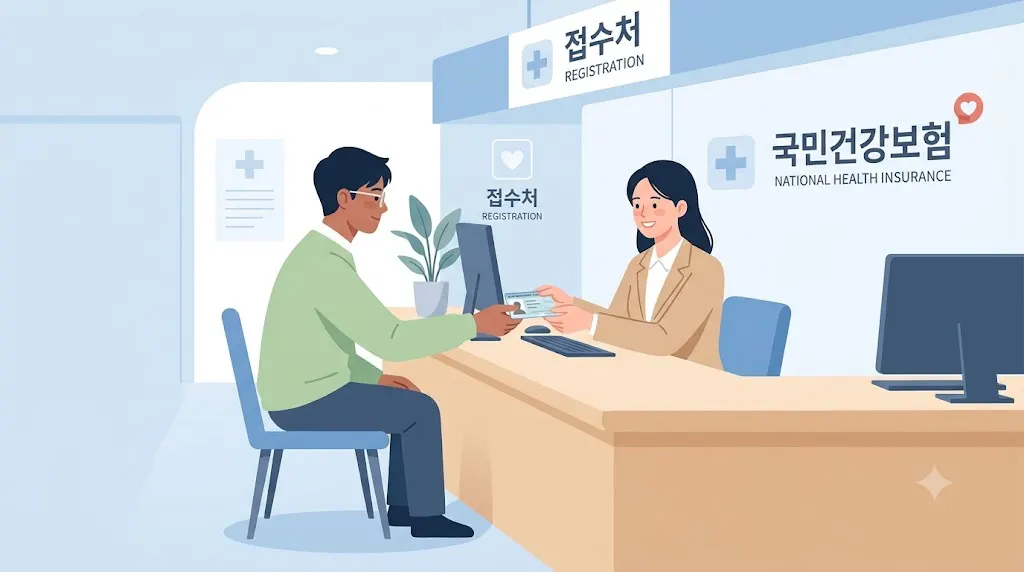
Mostly yes for payment, but the paperwork differs. You'll need your Alien Registration Card (ARC) at registration, and larger hospitals may ask you to fill out intake forms only in Korean, so bringing a Korean-speaking friend or using a translation app before your first visit saves real time.
"What happens if I leave Korea for a few months?"
Short trips don't usually affect your enrollment, but longer absences can trigger review of your subscriber status. If you're planning an extended trip abroad, it's worth confirming with NHIS or your employer's HR team rather than assuming nothing changes.
A Few Practical Steps Worth Taking Early
- Confirm your subscriber type (workplace or regional) as soon as you arrive.
- If you're a regional subscriber, ask specifically about visa-based premium reductions at your local NHIS office rather than assuming the standard rate is fixed.
- Register for the NHIS mobile app or website early. It lets you check payment history, request refunds for overpayment, and see designated hospitals near you.
- Keep your ARC on you for any medical visit; without it, you may be billed at the higher non-insured rate on the spot and have to request reimbursement later.
- If you're weighing private supplemental insurance, compare it against your actual usage pattern rather than buying it out of general anxiety about hospital bills.
Compared to systems in the US, where insurance is tied to employer plans with wide cost variation, or the UK's NHS, where most care is free at the point of use, Korea sits somewhere in between: mandatory, reasonably affordable, but with real gaps that catch people off guard if they assume it works like healthcare "back home."
Quick Summary
- Foreign residents staying 6+ months are legally required to join NHIS, with premiums differing significantly between workplace and regional subscribers.
- Regional subscribers should actively check for visa-based premium reductions rather than assuming the standard rate applies.
- NHIS covers a solid share of standard medical costs but excludes most dental, cosmetic, and some newer medications, which is why some residents add private coverage.
- Always bring your ARC to medical visits, and confirm your subscriber status early to avoid retroactive premium bills.