How Postpartum Care Centers (Joriwon) Work in Korea
If you're expecting a child in Korea and heard other parents mention "joriwon," a specialized postpartum care facility that isn't common in many other countries, and wondered whether it's actually necessary, what it costs, or whether foreign families use them, it's worth understanding both what these centers actually offer and whether the investment makes sense for your specific situation before the birth itself, since booking often needs to happen well in advance.
Here's how postpartum care centers work in Korea, and what to know if you're considering one.
What a Joriwon Actually Is
A joriwon (산후조리원) is a specialized postpartum recovery facility where new mothers stay for a period, typically one to two weeks, immediately following childbirth, receiving structured recovery care, newborn care support, and rest, distinct from both the hospital where delivery happens and simply recovering at home.
- The stay generally begins shortly after hospital discharge, following delivery, rather than at the hospital itself, joriwon facilities are separate businesses from delivery hospitals, though some hospitals have affiliated or nearby recommended joriwon partnerships.
- Services typically include newborn care support (feeding guidance, basic care instruction, sometimes overnight newborn care allowing the mother more consistent rest), postpartum physical recovery support, and meals specifically designed around traditional Korean postpartum nutrition practices.
- This is a genuinely widespread and mainstream practice among Korean families across a range of income levels, not a niche luxury service, though the specific facility quality and cost tier varies considerably.
What It Actually Costs
- Pricing varies enormously based on facility quality, location, and room type, ranging from a more modest standard tier to significantly higher-end facilities with private suite-style rooms and additional premium services.
- A standard two-week stay at a mid-range facility represents a meaningful but not extreme cost for many Korean families' overall birth-related budget, higher-end facilities in Seoul in particular can run considerably more.
- Some costs may be partially offset through specific regional government support programs for postpartum care, availability and eligibility criteria vary by district, worth checking your specific local government's current postpartum support offerings, since some districts offer meaningful subsidies or vouchers.
Do Foreign Families Actually Use These?
- Foreign residents giving birth in Korea increasingly do use joriwon facilities, particularly those who've been in Korea long enough to understand the practice and its genuine value, rather than viewing it as an unfamiliar or unnecessary add-on.
- English-language support varies significantly by facility, some higher-end or more internationally-oriented facilities, particularly in Seoul, have staff accustomed to foreign clients, while smaller or more traditional facilities may operate primarily in Korean.
- Booking well in advance matters, popular facilities, particularly well-regarded ones in desirable areas, can book up months ahead of an expected due date, researching and reserving a spot earlier in pregnancy, rather than waiting until closer to delivery, avoids limited or no availability when you actually need it.
What a Typical Stay Involves
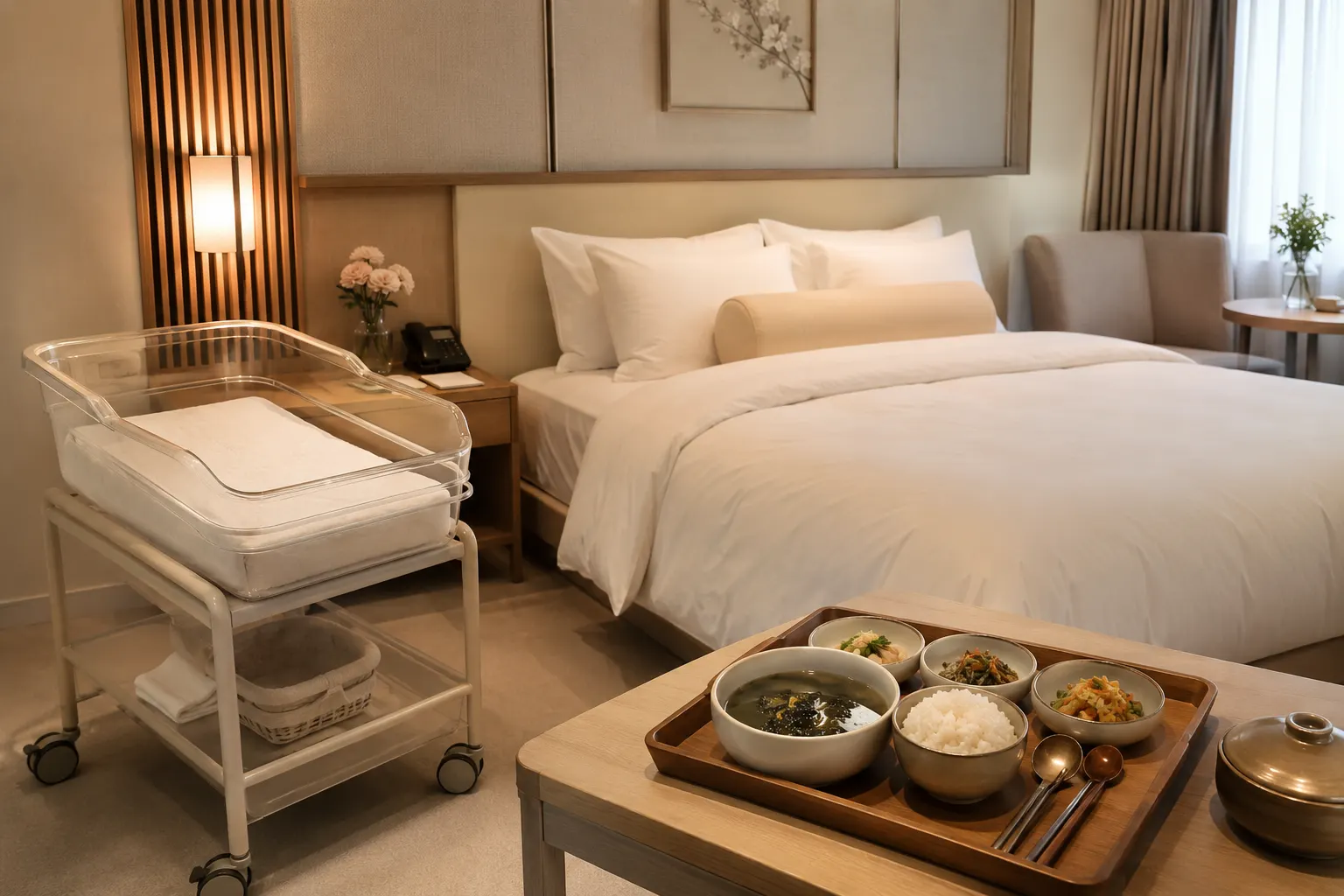
- Room accommodation, ranging from shared to private depending on the facility tier and cost, with the newborn typically kept in a separate nursery area for structured care periods, allowing the mother dedicated rest time, though rooming-in options where the baby stays with the mother are also generally available depending on preference and facility policy.
- Structured meals, specifically designed around traditional postpartum nutrition principles believed to support recovery and, for breastfeeding mothers, milk production, a distinct culinary approach from standard hospital or home meals.
- Educational sessions and support, many facilities offer classes or one-on-one guidance on newborn care, breastfeeding technique, and postpartum recovery, particularly valuable for first-time parents navigating unfamiliar territory.
- Physical recovery support, sometimes including massage or other postpartum-specific physical therapy services, aimed at supporting the mother's physical recovery process during this period.
Common Considerations for Foreign Families
- Language support needs, clarifying what language the facility can accommodate for both the mother's own communication needs and any newborn care instruction matters significantly for actually benefiting from the educational components of the stay.
- Partner and family visiting policies, some facilities have specific visiting hour restrictions or policies around overnight partner stays, worth clarifying based on your specific family's needs and expectations before booking.
- Whether the investment fits your specific situation and preferences, some foreign families find the structured environment and rest genuinely valuable given how demanding the immediate postpartum period can be, others prefer recovering at home with family support, this is a genuinely personal decision rather than an obligation, despite how mainstream the practice is among Korean families.
Quick Summary
- A joriwon is a specialized postpartum care facility where Korean mothers commonly stay for one to two weeks after childbirth, offering newborn care support, recovery-focused meals, and rest, a mainstream rather than niche practice.
- Costs vary considerably by facility tier and location, some regional government support programs may partially offset costs depending on your district's current offerings.
- Foreign families increasingly use these facilities, though English-language support varies significantly by facility, researching and booking well in advance of your due date matters given how quickly popular facilities can fill up.
- Whether a joriwon stay fits your family is a genuinely personal decision based on your specific needs, preferences, and available support system, despite how widely the practice is used among Korean families generally.